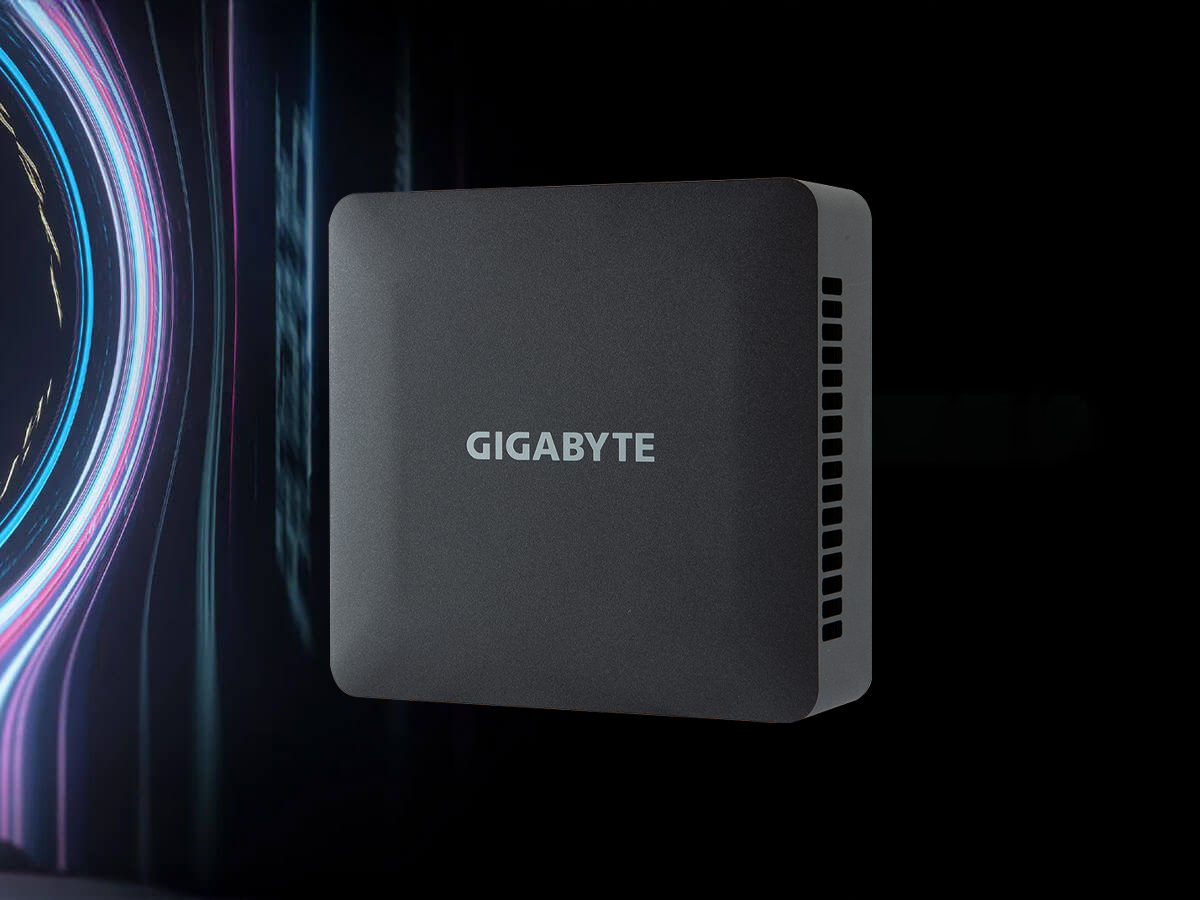
Gigabyte is quietly expanding its Brix mini PC lineup again, this time with a new model built around AMD’s upcoming “Gorgon Point” platform. After a recent low-key appearance of a Panther Lake-based Brix variant, the company has now published a product spec page for an AMD-powered version as well, hinting that a full launch and retail availability may not be far behind.
The newly listed system is labeled GB-BRR7-450. While Gigabyte hasn’t spelled out exact CPU SKUs on the page, it does confirm support for AMD Ryzen 400 series processors. Based on the model naming, the most likely match is a Ryzen 7 450-class chip from the Gorgon Point family. And if Gigabyte positions this AMD model as a high-performance alternative alongside its latest Intel-based Brix, there’s a good chance more premium processor options could follow, potentially including higher-tier “HX” variants aimed at power users and AI-focused workloads.
Even without full CPU details, the spec sheet reveals a mini PC designed for serious upgrades. Memory support goes up to 96GB of DDR5 RAM, which is far beyond what most compact desktops in this category offer and should appeal to creators, developers, and anyone running heavier multitasking or workstation-style applications.
Storage also looks flexible, with two M.2 2280 slots available. One slot supports PCIe Gen4 x4, while the other steps up to PCIe Gen5 x4, giving the system a clear upgrade path for next-generation SSD speeds. That Gen5 inclusion is especially noteworthy in a small-form-factor desktop, where cutting-edge storage support often arrives later than it does in full-size PCs.
Port selection is another strong point, making the Brix a practical small desktop for home offices, living rooms, or minimalist workstations. According to the listing, it includes:
3 USB 3.2 Gen 2 Type-A ports
2 USB 3.2 Gen 2 Type-C ports
1 USB4 port
1 USB 2.0 Type-A port
2 HDMI ports
1 2.5GbE Ethernet port
1 3.5mm audio jack
The USB4 port also means external GPU (eGPU) support is on the table, which could be attractive for users who want a compact machine most of the time but need extra graphics power for creative work or gaming when docked. Some buyers may still wish for an OCuLink connector for potentially lower-latency external GPU solutions, but USB4 remains the more widely adopted option.
Gigabyte also notes a slim design and VESA mounting support, which is ideal for hiding the mini PC behind a monitor or setting up a clean, space-saving workstation.
For now, pricing and release timing haven’t been announced. Still, the appearance of an official spec page is usually a strong sign that a broader debut is close, so anyone shopping for a compact AMD Ryzen mini PC with DDR5, PCIe Gen5 storage potential, and USB4 connectivity may want to keep this one on their radar.