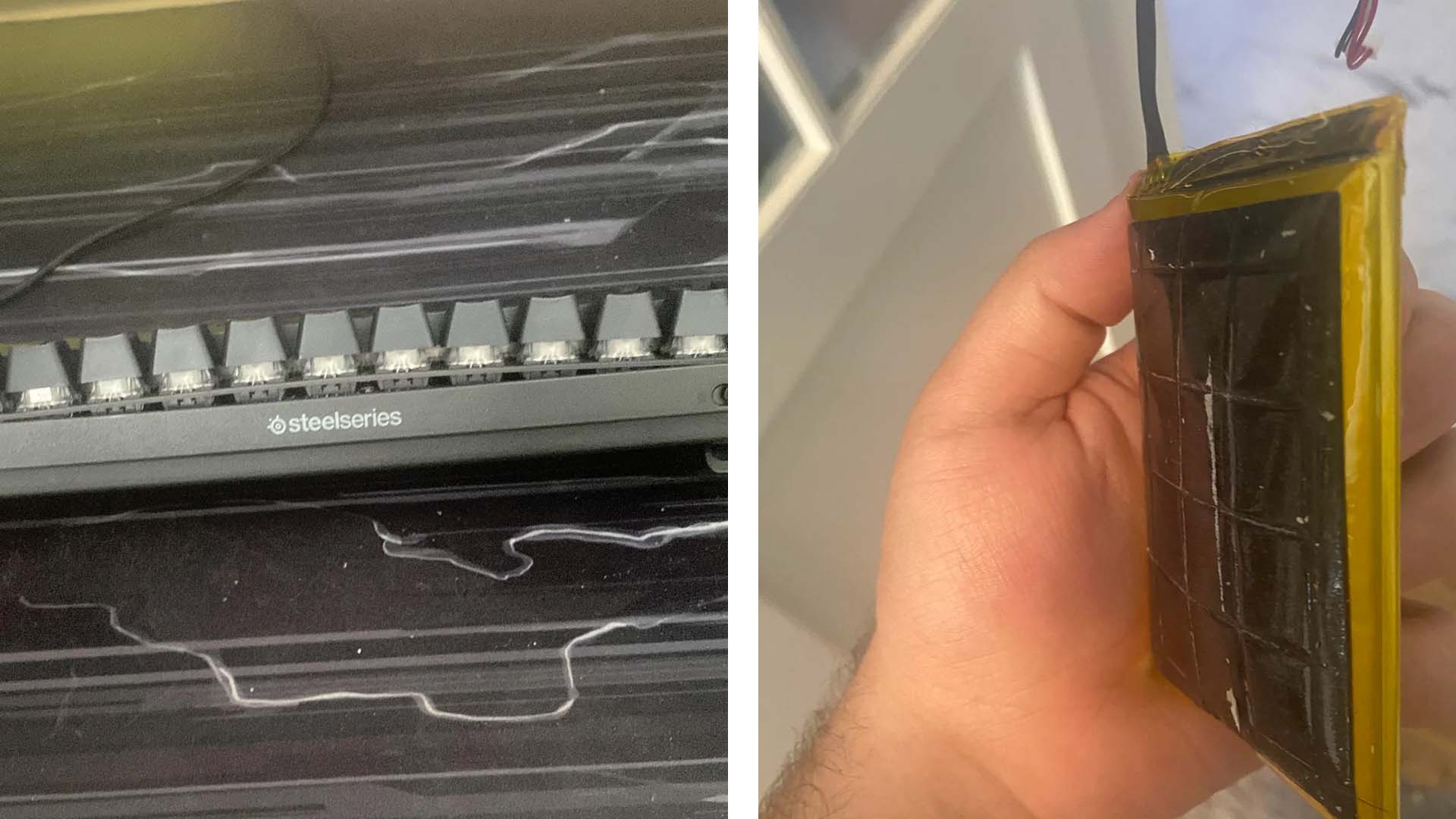
SteelSeries wireless keyboard owner faces swollen battery issue after long-term wired use
A wireless mechanical keyboard is meant to offer the best of both worlds: the freedom to play or type without a cable, and the satisfying tactile feel that mechanical switches are known for. However, one SteelSeries keyboard owner has run into a frustrating problem after using the device mostly in wired mode to avoid wireless input latency.
According to a Reddit user known as “Molti_gfx,” the SteelSeries keyboard was purchased for €100, or roughly $115, during a sale. While that may not sound unusually expensive for a premium gaming keyboard, the regular price is reportedly closer to €300. At that price, buyers would naturally expect strong build quality, smart power management, and long-term reliability.
The issue began after the keyboard’s internal battery swelled, likely due to repeated charging while the keyboard remained plugged in for extended periods. Battery swelling is a known risk with lithium-based cells when they are exposed to stress, heat, overcharging, or prolonged charging cycles. In this case, the owner used the keyboard wired because lower latency mattered more than wireless convenience.
Normally, a swollen battery in a wireless keyboard would be annoying but manageable. A user familiar with hardware repairs could remove the battery and continue using the keyboard with a USB cable. Unfortunately, this particular SteelSeries model reportedly cannot function in wired mode without the battery connected. That means the keyboard is effectively unusable until a replacement battery arrives and is installed.
This has raised questions about the keyboard’s internal design. If a wireless gaming keyboard is advertised or sold with both wired and wireless functionality, many users would expect it to work over USB even if the internal battery is removed or fails. For gamers, especially those who prefer a direct wired connection to reduce input delay, battery dependency can become a major drawback.
The situation also highlights a bigger concern with premium wireless gaming peripherals: battery management. If a keyboard is likely to be used while plugged in for long sessions, the device should ideally include safeguards that limit battery stress. A smarter design could stop charging once the battery reaches full capacity and power the keyboard directly through USB instead. This would reduce unnecessary battery wear and help prevent problems over time.
The customer is now waiting for a replacement battery to restore the keyboard’s functionality. Until then, the device remains out of action despite being capable of receiving power through a wired connection.
For buyers considering a wireless mechanical gaming keyboard, this case is a useful reminder to think about how the keyboard will actually be used. If it will stay connected by cable most of the time, a wired mechanical keyboard may be the better and more affordable choice. Wireless models are convenient, but they also introduce battery-related risks that wired keyboards avoid entirely.
At a regular price near €300, users are right to expect more thoughtful engineering, especially from a premium gaming brand. A high-end keyboard should not become unusable simply because its battery fails, particularly when the owner wants to use it in wired mode.