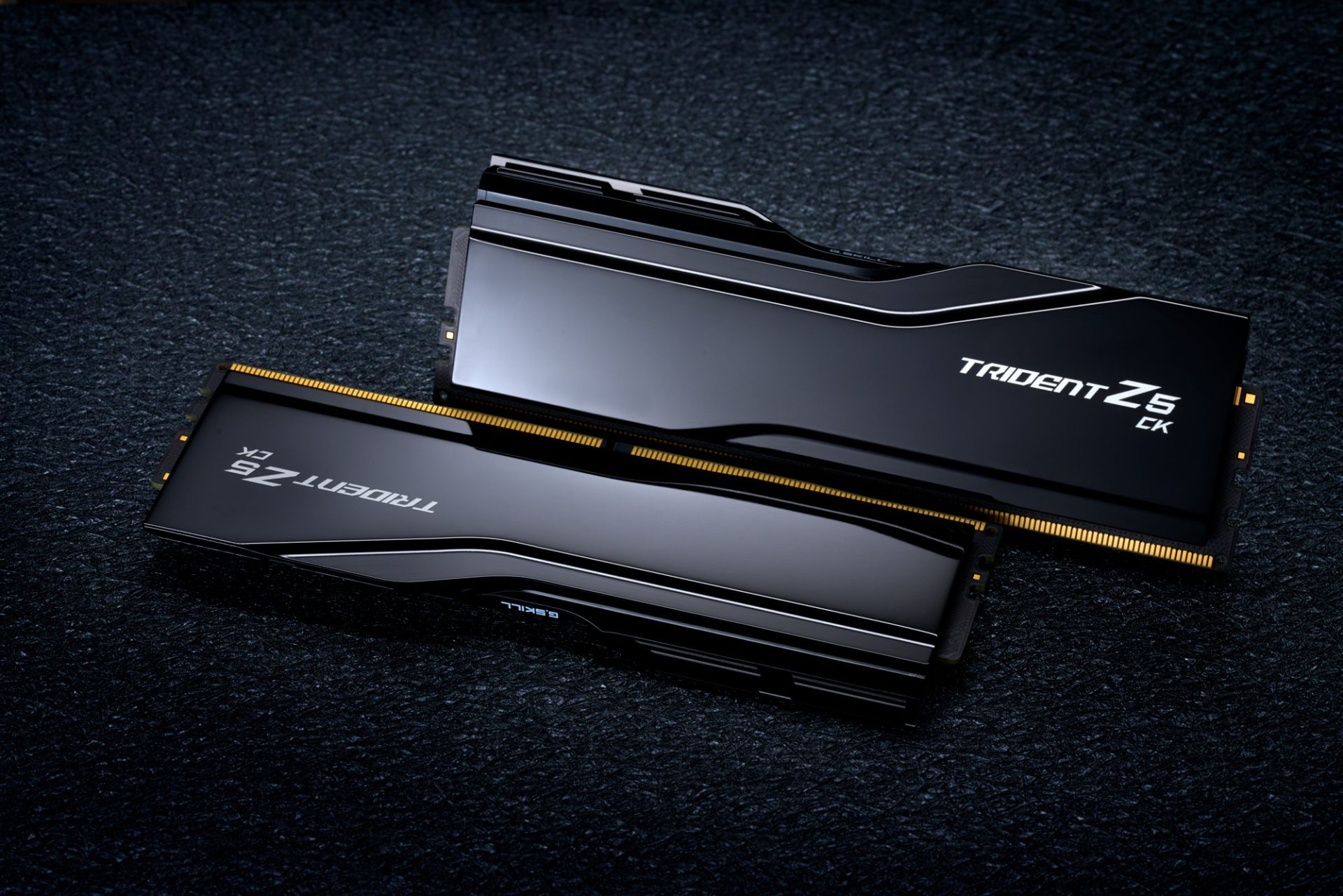
G.SKILL Pushes DDR5 Memory to 9200 MT/s at Just 1.1V With Trident Z5 CK CUDIMM Kit
G.SKILL has shown off an impressive DDR5 memory achievement, demonstrating a Trident Z5 CK CUDIMM kit running at DDR5-9200 while using only 1.1V. The high-speed 32GB kit, configured as 16GB x 2, was validated on MSI’s flagship MEG Z890 GODLIKE motherboard, highlighting how far next-generation desktop memory performance has progressed.
The demonstrated kit reached DDR5-9200 with CL74-74-74-148 timings, which is especially notable because it operates at the standard JEDEC voltage level of 1.1V. High-frequency DDR5 memory often requires increased voltage to maintain stability, so achieving this level of speed at such a low operating voltage is a strong showcase of memory binning, engineering, and platform optimization.
This development is significant for PC enthusiasts, gamers, content creators, and workstation users who want faster memory bandwidth without a major increase in power draw or heat output. As DDR5 speeds continue to climb, efficiency is becoming just as important as raw performance. A kit capable of hitting 9200 MT/s at 1.1V points toward a future where high-end memory can deliver extreme performance while remaining more power-conscious.
The DDR5-9200 16GB x 2 CUDIMM kit was stress-tested using an Intel Core Ultra 7 270K Plus desktop processor paired with the MSI MEG Z890 GODLIKE motherboard. According to the demonstration, the configuration successfully passed stability testing, showing the strength of the latest Intel desktop platform and MSI’s memory overclocking capabilities.
Another important detail is that this DDR5-9200 result was achieved on a 4-DIMM motherboard design. In the past, memory speeds this high were more commonly associated with 2-DIMM overclocking-focused motherboards, which are typically designed to maximize memory signal integrity. Seeing DDR5-9200 run on a premium 4-DIMM platform suggests that broader high-speed memory support may become more practical for advanced desktop systems.
CUDIMM technology is also becoming increasingly important in the DDR5 ecosystem. Clocked Unbuffered DIMMs are designed to improve signal stability at higher frequencies, helping memory modules scale beyond the limits of traditional UDIMM designs. As desktop platforms push into faster DDR5 speeds, CUDIMM kits are expected to play a major role in future high-performance PC builds.
For gaming PCs, faster DDR5 memory can help improve bandwidth-sensitive workloads and support smoother performance in certain titles, especially when paired with modern CPUs. For creators and professionals, higher memory speeds can benefit tasks such as rendering, compression, simulation, and AI-assisted workflows where data throughput matters. While real-world gains vary depending on the workload, the move toward faster and more efficient DDR5 memory is an important step for next-generation computing.
G.SKILL says this demonstration reflects its continued focus on developing advanced memory solutions that combine high frequency, stability, and voltage efficiency. The company has long targeted the enthusiast and overclocking markets, and this DDR5-9200 1.1V CUDIMM showcase reinforces its position in the premium memory segment.
The DDR5-9200 CUDIMM kit will be displayed at G.SKILL’s Computex 2026 booth at the Nangang Exhibition Center Hall 1, Booth I0818. Visitors will be able to see the memory demonstration in person alongside other upcoming high-performance memory technologies.
With DDR5 platforms continuing to mature, demonstrations like this suggest that ultra-fast, low-voltage memory could become an increasingly important part of future gaming desktops, creator workstations, and enthusiast PC builds.


