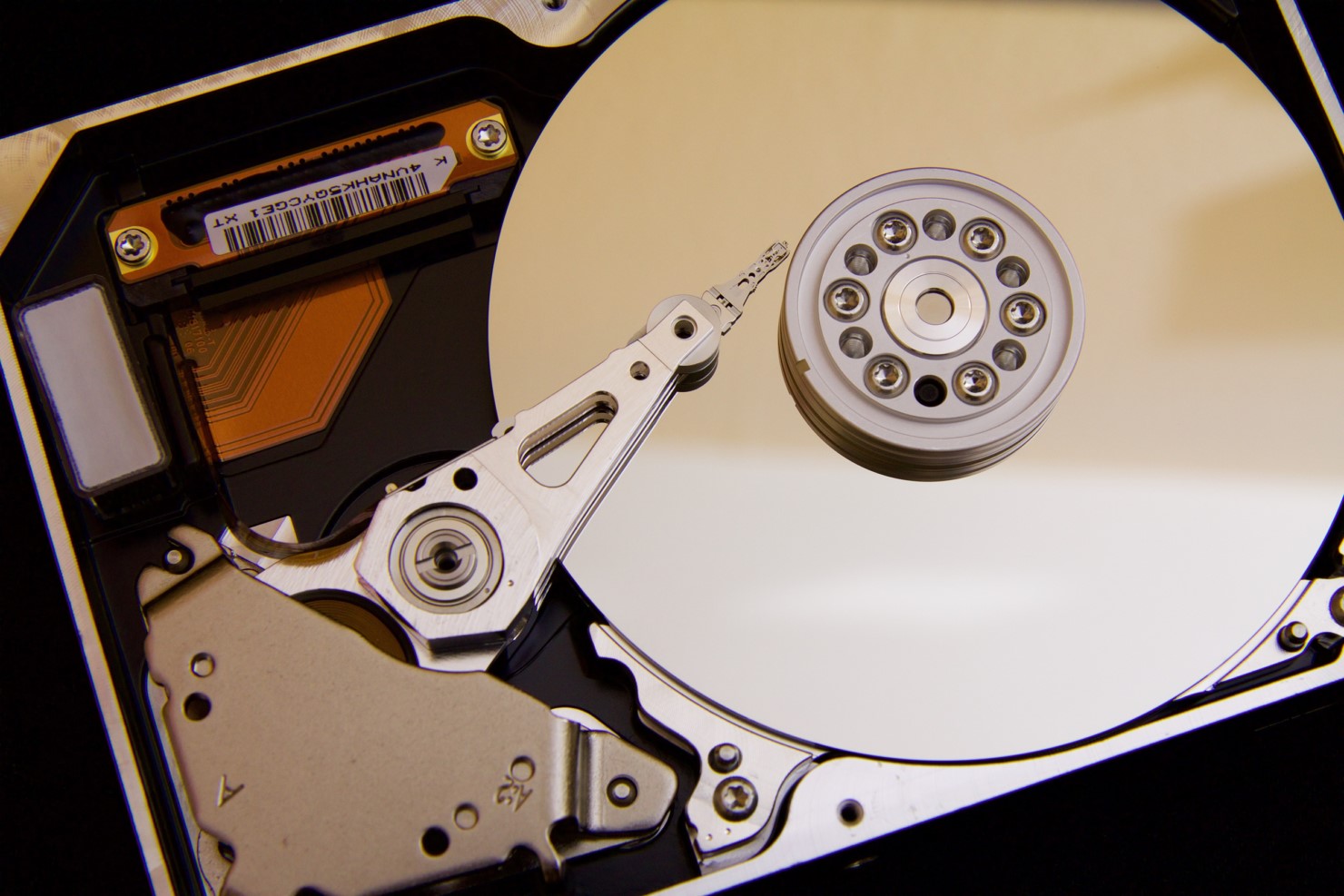
The landscape of storage technology is on the brink of a monumental leap, with the potential to dramatically increase hard disk drive (HDD) capacities. The industry anticipates that within the next decade, we could see HDDs capable of storing up to 120 terabytes (TB) of data. This burgeoning innovation revolves around the integration of heat-assisted magnetic recording (HAMR) technology with a pioneering multi-layered approach.
Revolutionizing Storage: The Promise of HAMR
The quest for more expansive data storage capabilities has long motivated researchers to think beyond traditional methods. HAMR technology has emerged as a prime candidate for setting new benchmarks in storage capacity. Through the innovative use of HAMR, combined with a novel stacking technique, the industry is looking to achieve unprecedented storage density.
Empowering Data Growth with Multi-Layered Storage
The cutting-edge technique being explored involves the combination of dual nanogranular films separated by an intermediary layer. This allows for independent magnetic recording on each layer, responsive to unique magnetic fields and temperatures. Drawing comparison to the principles of 3D packaging in other technologies, this multi-layered recording strategy stands to revolutionize how data is stored and accessed.
The critical factor in this innovation is the unique Curie temperature of each layer; the specific threshold at which magnetic materials lose their ferromagnetic properties and become paramagnetic. The ability to control these temperatures allows for distinct, high-capacity storage on each layer. Researchers speculate that by utilizing just ten platters within an HDD, storage capabilities could soar up to a staggering 120 TB.
Preparing for the Big Data Era
The imminent big data era underscores the necessity for larger storage solutions. Demand is intensifying across various sectors, particularly in artificial intelligence (AI) where large language models (LLMs) rely heavily on extensive datasets. HDDs with multi-layered recording capability would not only meet this demand but may also provide faster access and improved data manipulation.
Navigating the Path to Implementation
While the concept of multi-layered HDDs suggests a bold new direction for storage, it remains in the proposition stage. Research and development (R&D) in this area are essential for actualizing such innovative storage solutions. As it stands, there is a notable scarcity of comprehensive R&D, which means the transition to multi-layered storage won’t be immediate.
Nevertheless, the trajectory is clear: breaking away from conventional HDD technology appears to be the next step in the evolution of storage. The concept of a 120 TB HDD reflects the aspirations of an industry that continuously pushes the boundaries of what’s achievable, following the demand for increased capacity and efficiency in data storage. As researchers and manufacturers proceed, the industry looks forward to potential breakthroughs that could pave the way for implementing these futuristic storage capacities.