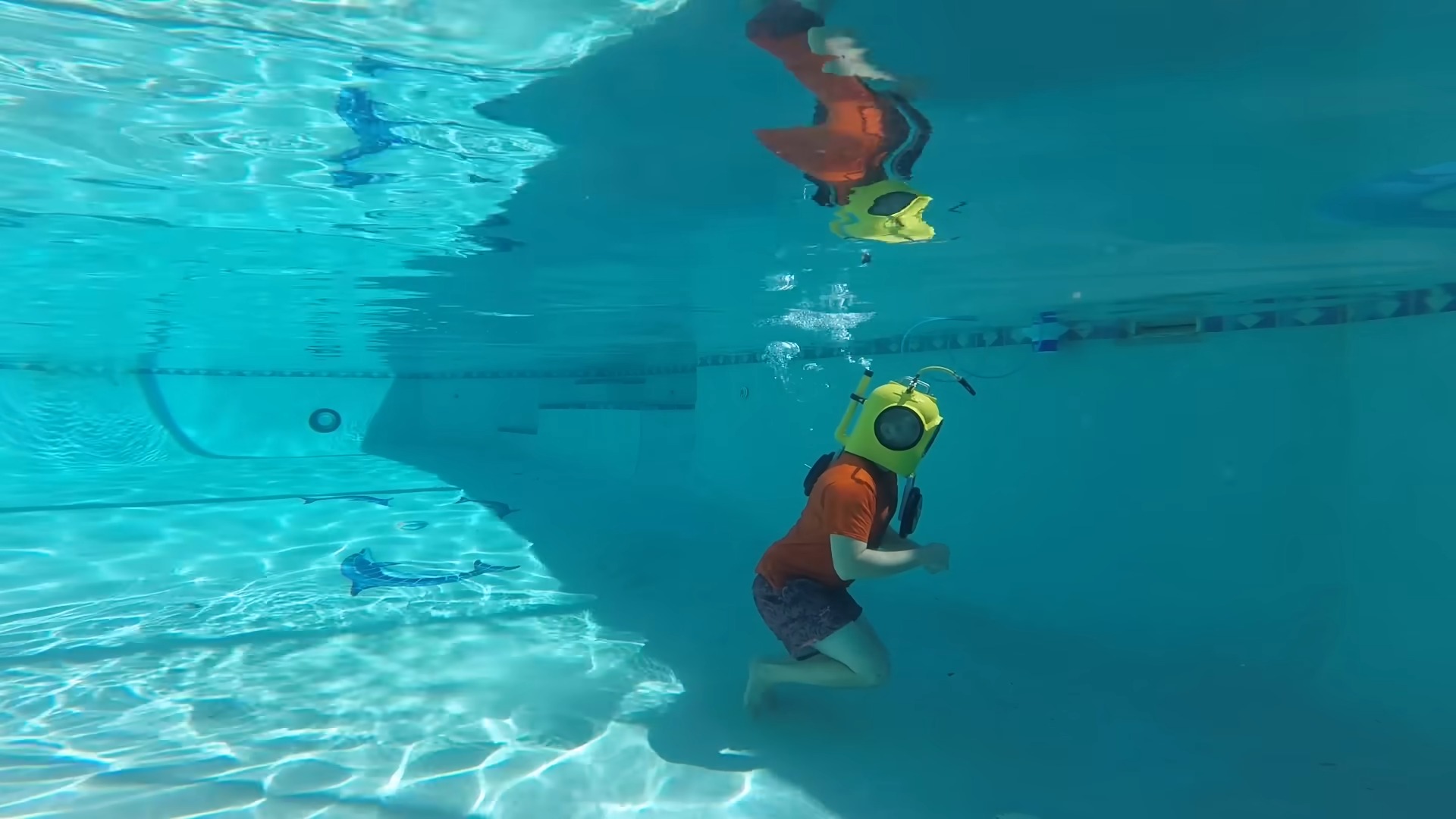
A daring new DIY project is making waves online after a maker successfully built a fully functional diving helmet using a consumer 3D printer. It’s the kind of ambitious home engineering experiment that instantly grabs attention: a classic-style diving helmet recreated with modern 3D printing, then brought to life with a working air system designed to let the wearer breathe underwater.
What makes this build especially fascinating isn’t just the 3D-printed helmet itself, but the complete floating air supply setup that goes with it. Instead of relying on traditional scuba gear, the system uses a compressor paired with a battery pack and a power inverter, creating a self-contained, surface-floating air source intended to feed the helmet. It’s a bold blend of maker ingenuity and practical engineering, showing just how far home 3D printing projects can go when someone is willing to design, test, and iterate like a real product developer.
The creator has also shared the 3D print files publicly on Thingiverse, giving other makers the chance to study the design, print their own version, and explore how the parts fit together. For people interested in 3D printing, DIY underwater gear concepts, or extreme maker projects, this is a standout example of how accessible hardware and creative problem-solving can produce something that looks like it belongs in a workshop from another era—yet is built with modern tools.
That said, it’s important to be clear about the risks. A 3D-printed diving helmet and a DIY air supply system can be dangerous if anything fails, from air delivery to seals to material strength under real-world conditions. This is not a casual weekend print, and it’s not something to treat like a toy. The project comes with an obvious warning: if anyone tries to replicate it, they do so entirely at their own risk.
Still, as a proof-of-concept, it’s an eye-catching reminder of what’s now possible with consumer-grade 3D printers, readily available components, and a serious dose of technical creativity.