Google, AMD, and Nvidia outline AI roadmaps and spotlight Taiwan’s pivotal role
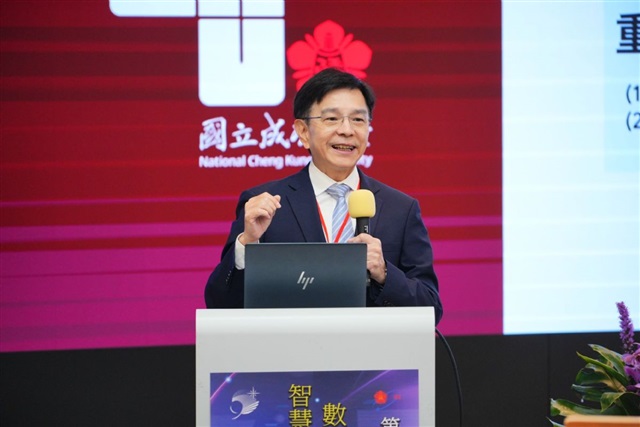
As talk of an “AI bubble” grows louder, three of the industry’s most influential players—Google, AMD, and Nvidia—came together to share how they’re building for sustainable growth in generative AI. The message was clear: the fundamentals remain strong, the opportunity stretches from cloud to edge, and Taiwan sits at the center of the global AI ecosystem. Google Chrome OS R&D General Manager Jason Ma was among the leaders underscoring that momentum, with the discussion highlighting both long-term strategy and near-term execution. Credit: NCKU
The companies emphasized that generative AI is shifting from experimental pilots to real deployments across productivity, creative tools, developer workflows, healthcare, manufacturing, and retail. Rather than fueling a short-lived surge, this next phase is about disciplined scaling—focusing on measurable outcomes, total cost of ownership, and energy efficiency alongside breakthrough performance.
A cloud-to-edge AI roadmap
– Cloud scale for training and fine-tuning: Massive models will continue to be trained in the cloud, but with growing efficiency through software optimization, smarter scheduling, and hardware-software co-design.
– Enterprise-grade inference: The heavy lift shifts to inference at scale, where latency, resiliency, and cost predictability matter most. Expect tighter integration across accelerators, networking, and storage.
– On-device and edge AI: To reduce latency, cut bandwidth costs, and strengthen privacy, more inference will move closer to users—onto PCs, laptops, and specialized edge devices. This hybrid approach blends the best of cloud and local compute.
– Open, developer-first ecosystems: Tooling, frameworks, and models that reduce complexity will be key to unlocking adoption. The goal is to make AI development accessible while preserving performance and security.
Why Taiwan is a strategic anchor
All three companies pointed to Taiwan’s unmatched strengths as a foundation for global AI progress. The country’s leadership spans advanced semiconductor manufacturing, packaging and testing, server design, power-efficient systems, and high-speed networking. Just as important is the talent pipeline and tight collaboration between universities and industry—a combination that accelerates research, prototyping, and production. This synergy positions Taiwan as both a manufacturing hub and a center of innovation for the next generation of AI hardware and systems.
Addressing AI bubble concerns with fundamentals
– Proven demand: Enterprises are moving from pilots to production, prioritizing use cases with clear ROI—automation, code generation, search, analytics, and customer experience.
– Efficiency as a priority: Energy use, thermal limits, and data center constraints are pushing new architectures, smarter compilers, and optimized runtimes.
– Security and governance: Responsible AI, data privacy, and compliance are being built into products from the ground up to enable safe, scalable deployment.
– Talent and partnerships: Cross-border collaboration—spanning academia, startups, and global tech leaders—is accelerating practical innovation and shortening time to value.
What to watch next
– Hybrid AI becomes standard: Workloads will fluidly move between cloud and device based on latency, privacy, and cost.
– Specialized accelerators and smarter software: Performance gains will increasingly come from software stacks and co-optimized hardware rather than raw compute alone.
– Sustainable AI infrastructure: Expect more emphasis on power efficiency, cooling innovation, and utilization improvements to meet both economic and environmental targets.
– Verticalized solutions: AI models and systems will be tailored to industry-specific data and guardrails for faster, safer adoption.
The takeaway
Google, AMD, and Nvidia signaled confidence that generative AI is entering a durable growth phase. With robust infrastructure, developer ecosystems, and real-world use cases converging, the focus is shifting from hype to execution. And as that shift accelerates, Taiwan’s unique blend of manufacturing excellence, system design, and research leadership will continue to make it a global cornerstone for AI—from the cloud, all the way to the devices in our hands.