Foxconn doubles down on AI with OpenAI partnership and a bold bet on trillion-dollar compute
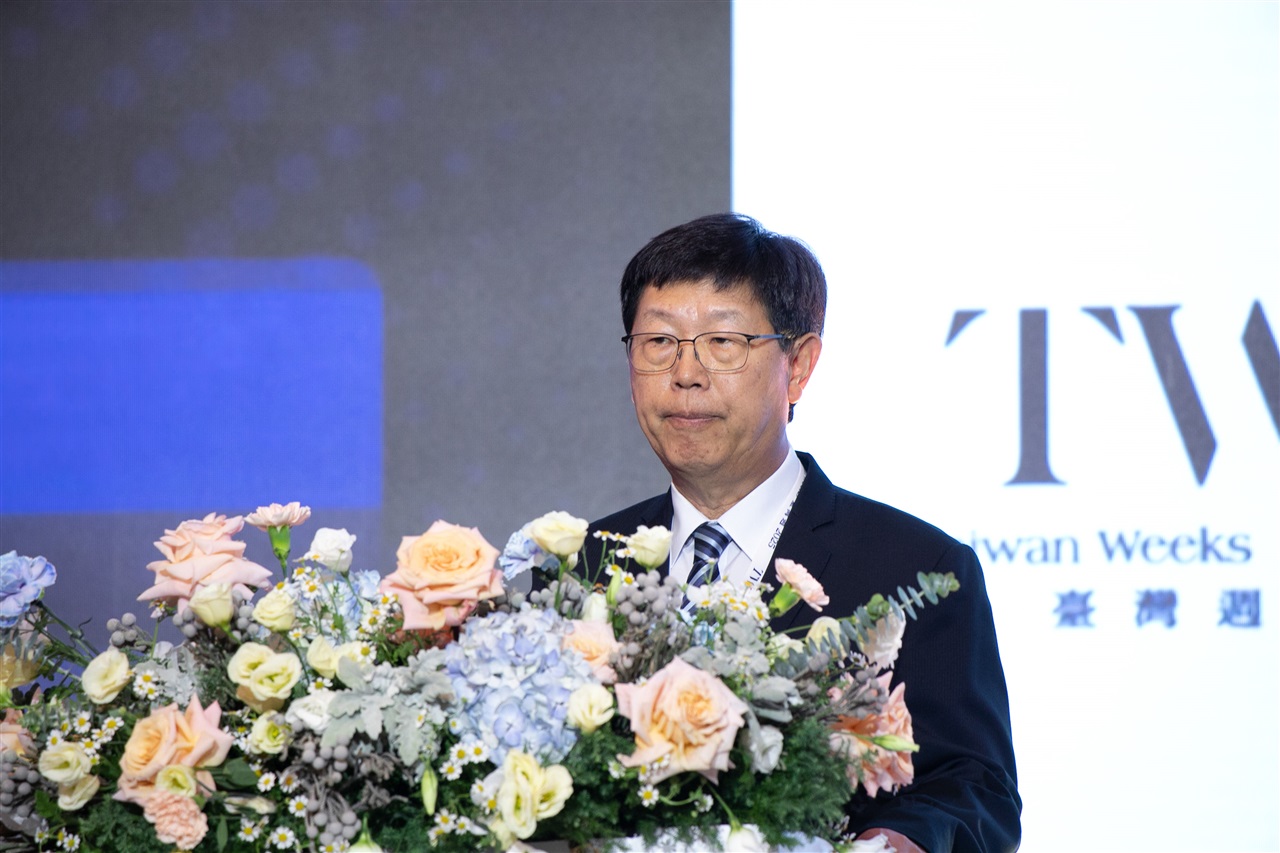
Foxconn is making artificial intelligence the center of its future, and it’s moving fast to prove it. During the company’s latest earnings call, chairman Young Liu said AI has shifted from an important growth driver to the defining force behind Foxconn’s strategy. He confirmed the company is preparing a deep partnership with OpenAI to support the world’s surging appetite for compute infrastructure, with major announcements planned for Hon Hai Tech Day on November 21–22, 2025.
Liu framed the opportunity in stark terms. Citing OpenAI CEO Sam Altman’s aim to add one gigawatt of compute every week, he estimated that at today’s AI pricing, such expansion represents a recurring market worth roughly 50 billion US dollars per week. In his view, this is the beginning of a historic infrastructure cycle, one that will reshape data centers, supply chains, and power systems on a global scale.
A partnership years in the making
The relationship between Foxconn and OpenAI has been building behind closed doors. In late September and early October 2024, Altman quietly visited Taiwan and met privately with Liu to discuss chip supply, server architecture, and deployment roadmaps for hyperscale compute. Liu later said he expects further talks with Nvidia’s Jensen Huang as OpenAI’s hardware ramp accelerates.
Foxconn is already intertwined with OpenAI’s most ambitious effort: the Stargate Project, a multi-hundred-billion-dollar plan to build the next generation of hyperscale AI campuses in the United States. Oracle serves as the principal cloud provider, and Foxconn is its largest AI server supplier—positioning the Taiwanese manufacturer at the hardware core of Stargate. Power partners are also lining up, with SB Energy expected to contribute to the energy infrastructure. Meanwhile, Foxconn’s former EV assembly site in Lordstown, Ohio, is being repurposed to produce data center equipment, signaling the company’s direct integration into the U.S. supply chain for AI hardware.
Market share momentum and a structural edge
OpenAI’s rapid expansion has already buoyed Foxconn’s server shipments. While competitors have stepped up output, industry data indicates Foxconn still holds the largest share of AI server production. Liu attributed this advantage to the company’s structural strengths: unmatched experience building at scale, deep relationships across the compute stack, and the capacity to deliver GPUs, accelerators, networking gear, racks, and power-delivery systems at the speed top customers demand.
Preparing for the era of physical AI
Liu believes today’s compute boom is only the opening act. As AI evolves from narrow, text-based systems into autonomous agents—and eventually into physical AI that can act in the real world—demand for compute will surge even more dramatically. He pointed to the path from advanced conversational models to AGI and beyond as a driver of “explosive” hardware needs, with Foxconn positioned as a critical enabler.
“Our role is to fully support partners as they roll out compute at unprecedented scale,” Liu said, urging investors and industry watchers to pay close attention to Hon Hai Tech Day. “We will share OpenAI-related updates at HHTD. Please stay tuned.”
What to watch next
– Details of the Foxconn–OpenAI partnership at HHTD 2025
– Progress on the Stargate Project and Foxconn’s manufacturing output tied to it
– Expansion of the Lordstown, Ohio facility as a U.S. hub for AI data center hardware
– Hardware roadmaps involving Nvidia GPUs, high-speed networking, and power systems
– Energy partnerships, including contributions from SB Energy, to power hyperscale campuses
Bottom line
Foxconn is staking its future on the AI compute supercycle. By aligning closely with OpenAI, expanding U.S. manufacturing, and leveraging its dominant position in AI servers, the company aims to be the backbone of the next wave of data center buildouts. If Liu’s projections hold, the race to add gigawatts of compute each week could become one of the largest technology infrastructure expansions in history—and Foxconn intends to be at the center of it.