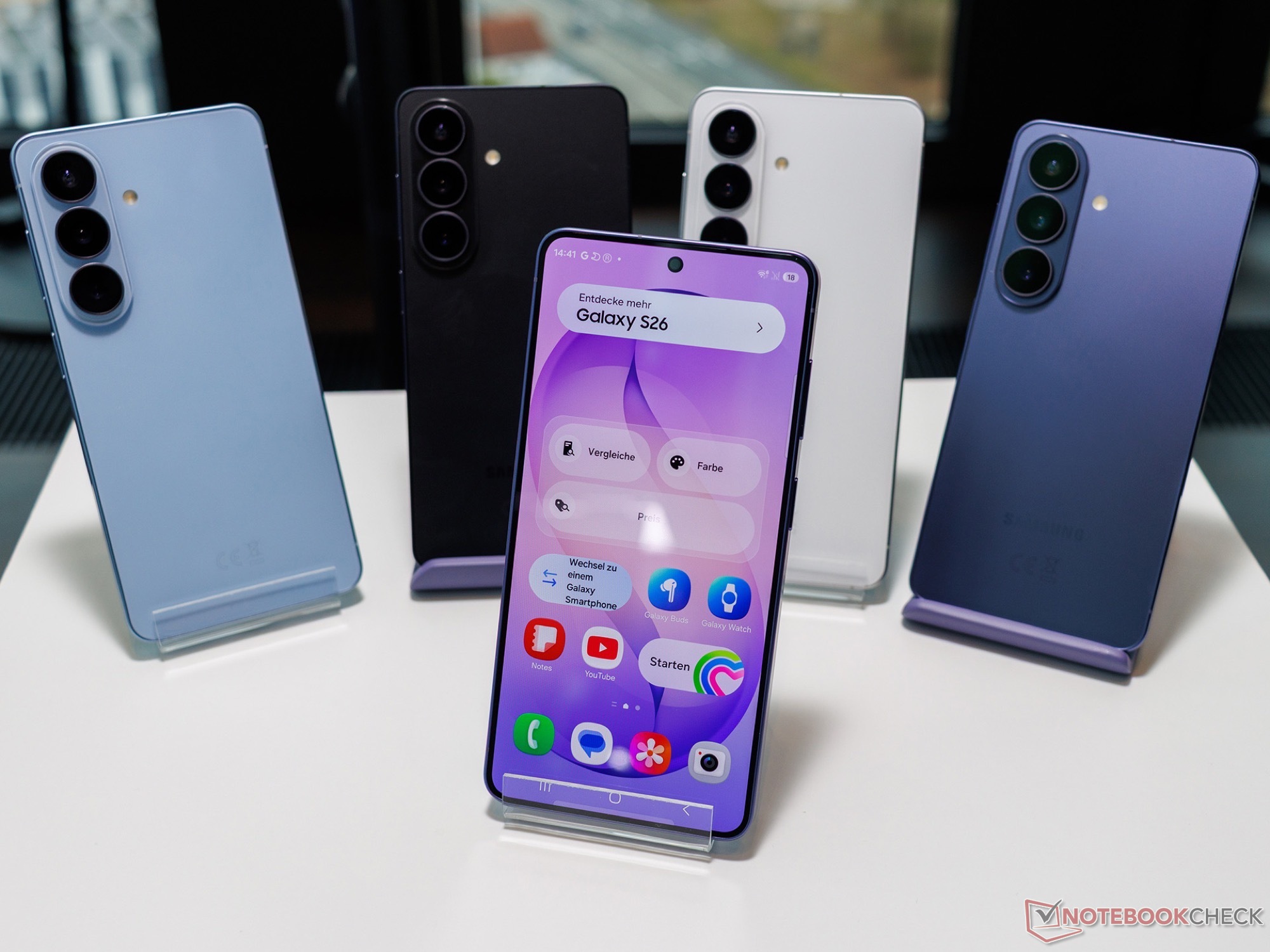
Samsung’s Galaxy S26 lineup is already stirring up debate, and it has little to do with the design. The big talking point is performance—because Samsung appears to be splitting the Galaxy S26 and Galaxy S26+ by region once again.
After the Galaxy S25 arrived globally with a Qualcomm Snapdragon processor, many buyers expected the same approach to continue. Instead, current reports point to a familiar strategy: the Galaxy S26 and Galaxy S26+ are expected to ship in Europe with Samsung’s Exynos 2600, while most other regions—including the United States and China—get the Snapdragon 8 Elite Gen 5 version.
That matters because early testing suggests the Exynos 2600 may be at a disadvantage, even though it’s produced using an advanced 2 nm process.
Battery results show a noticeable gap between versions. In one battery comparison, the US Galaxy S26 model reportedly lasted nearly three hours longer, clocking in at 9 hours and 26 minutes. That difference is hard to ignore for anyone who prioritizes all-day use—especially when two phones share the same name and price category.
Performance benchmarks also point in the same direction. In Geekbench testing, the Galaxy S26 with Exynos 2600 scored 3,085 in single-core and 10,484 in multi-core. The Snapdragon-powered model posted 3,677 and 11,163, translating to roughly 19.2% higher single-core performance and 6.5% higher multi-core performance.
Graphics performance sees a similar trend. Even with an AMD Radeon-based GPU setup in the Exynos model, it still trails Qualcomm’s flagship chip in several real-world style tests. In 3DMark Wild Life Extreme, Qualcomm’s version leads by about 9%, scoring 7,786 points. In AnTuTu v11, the Snapdragon Galaxy S26 is reportedly 20.4% ahead overall.
Gaming is where these differences become more tangible. In a gameplay-focused comparison, the Snapdragon version delivered a more stable frame rate and ran cooler—about 1.3°C lower—while using similar power. That combination of steadier performance and lower heat is exactly what mobile gamers and heavy users tend to notice first, whether they’re playing demanding titles or multitasking for long periods.
Another battery comparison suggests the European model doesn’t always fall as far behind as the most dramatic test indicates, but the broader pattern remains: the Snapdragon Galaxy S26 appears faster, more efficient, and easier to keep cool under load.
If these results hold up in wider testing, European shoppers may again feel like they’re getting the less desirable version of Samsung’s flagship. And for anyone deciding whether to upgrade, this regional chip split could become one of the most important factors to check before buying a Galaxy S26 or Galaxy S26+.