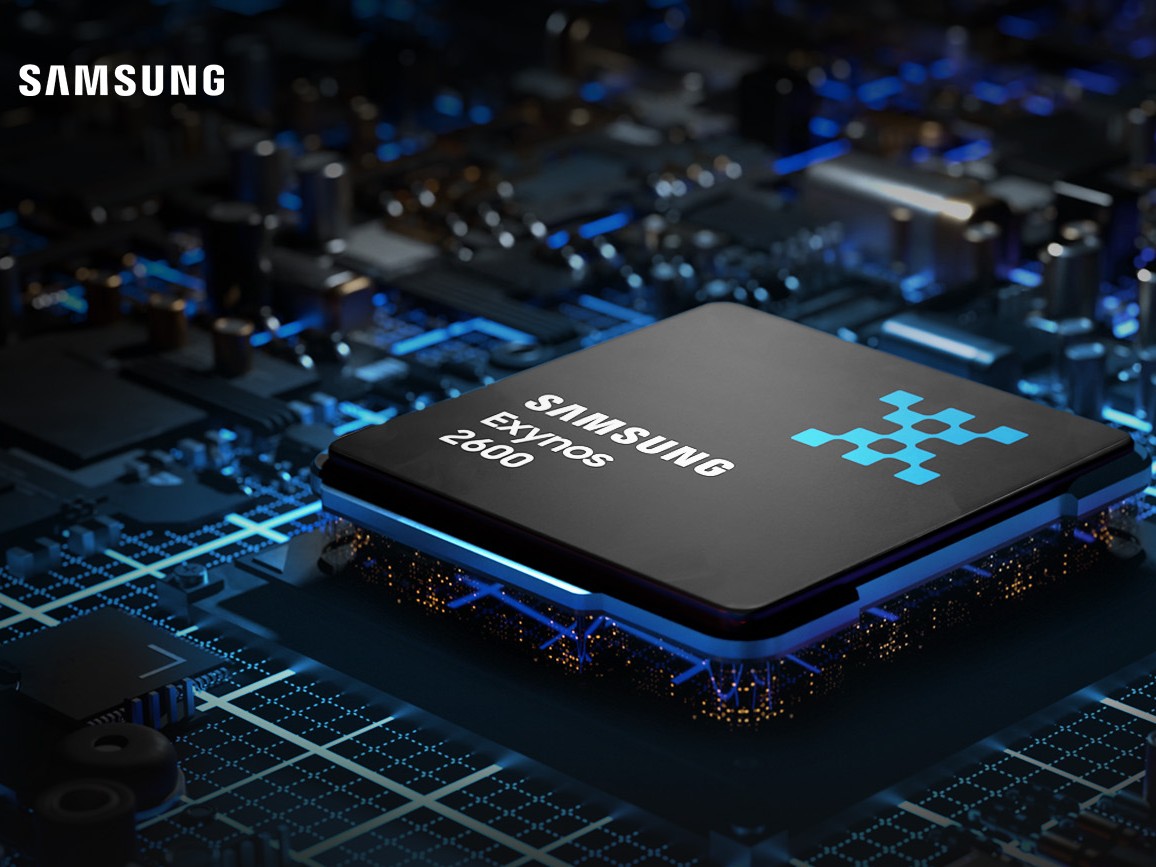
Arm has confirmed that Samsung’s upcoming Exynos 2600 processor will support SME2 (Scalable Matrix Extensions 2) right from day one, a detail that offers an early look at where Samsung is focusing its performance gains: faster on-device AI.
The Exynos 2600 is expected to debut alongside the Galaxy S26 series on February 25. Ahead of launch, leaks have suggested the chip could go head-to-head with Qualcomm’s Snapdragon 8 Elite Gen 5 for Galaxy, and in certain workloads, may even come out ahead. Arm’s SME2 confirmation adds weight to those expectations, especially for features that rely on quick, efficient AI processing without sending data off to cloud services.
So what does SME2 actually bring to the table? In practical terms, it’s an instruction set designed to accelerate matrix math, a core building block behind many AI tasks. Arm says SME2 can boost AI-powered applications such as object detection by as much as 70%. That kind of uplift matters most for real-time experiences—think instant camera analysis, quick recognition features, and interactive AI tools that need low latency.
Arm originally introduced SME2 alongside its new Lumex C1 family of CPU cores, including C1-Ultra, C1-Premium, C1-Pro, and C1-Nano. Because SME2 is tied to this platform direction, the Exynos 2600 is expected to use some combination of these cores. Early benchmarking sightings have pointed to a 10-core CPU setup, and a commonly discussed configuration is one C1-Ultra core, three C1-Premium cores, and six C1-Nano cores—an approach that balances peak bursts of performance with efficiency-focused cores for everyday loads.
However, Arm’s own wording also raises an interesting possibility. A statement attributed to Arm’s Stefan Rosinger specifically highlights compute subsystems with SME2-enabled C1-Ultra and C1-Pro, and emphasizes that SME2 helps expand CPU-based AI while reducing the latency that comes from offloading tasks to separate accelerators. That selective mention has fueled speculation that Samsung may lean more on a C1-Ultra + C1-Pro mix rather than relying heavily on C1-Premium cores, which could be more challenging to fit into a tight thermal and power envelope.
Beyond raw performance, there’s a bigger storyline riding on Exynos 2600. Its real-world results may influence confidence in Samsung Foundry’s SF2 manufacturing node and, by extension, how competitive Samsung can be in attracting major chip customers for future projects. If the Exynos 2600 delivers strong efficiency and sustained performance—especially in AI workloads that users feel every day—it could become one of Samsung’s most important mobile silicon launches in years.
With the Galaxy S26 launch nearing, the key question is no longer whether the Exynos 2600 will be AI-capable—it clearly will be. The more important test will be how well those SME2 gains translate into smoother, faster on-device AI experiences without overheating or draining the battery.