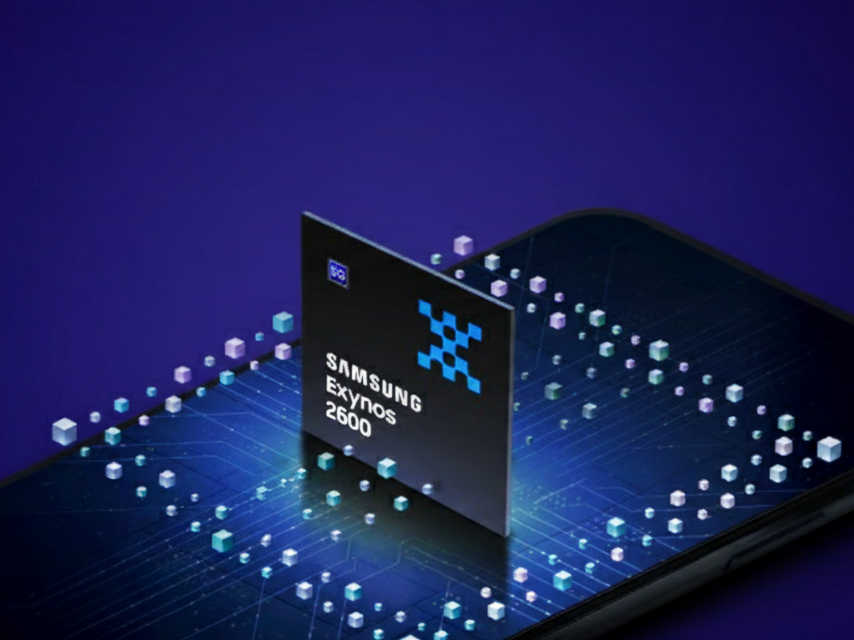
Exynos 2600 benchmarks wobble as clock speeds drop in latest tests
Samsung’s next-generation flagship chip, the Exynos 2600, has been building serious hype ahead of its expected debut with the Galaxy S26 series. Early benchmarks suggested a powerful return to form, with some reports hinting at big gains over rival processors. But the newest Geekbench entries show a notable dip in performance, and there’s a clear reason why.
Fresh Geekbench scores list the Exynos 2600 at 3,047 in single-core and 10,025 in multi-core testing. That’s a step down from late August results, where the same chip reached 3,309 single-core and 11,256 multi-core. It also places the latest Exynos numbers just below the current Qualcomm Snapdragon 8 Elite, which has been recorded around 3,186 single-core and 10,042 multi-core in devices like the Galaxy S25 Ultra.
So what changed? The newest test configuration shows reduced CPU frequencies across the board compared to earlier runs. Previously, the Exynos 2600 was logged with 6 cores at 2.76 GHz, 3 cores at 3.26 GHz, and a prime core at 3.80 GHz. The updated entry dials that back to 6 cores at 2.46 GHz, 3 cores at 2.96 GHz, and a prime core at 3.55 GHz. Lower clocks naturally mean lower scores, which likely explains the drop more than any architectural setback.
Why Samsung might be doing this comes down to two likely scenarios. One possibility is thermal and power management: pre-release silicon often gets tested at different voltage and frequency profiles to find the best balance of speed, heat, and battery life. Another is simple tuning—engineering samples frequently run through multiple firmware and scheduler revisions, and conservative clock settings can be used to validate stability before pushing back toward higher targets.
It’s worth remembering that earlier chatter painted a very bullish outlook for the Exynos 2600, with claims of CPU performance potentially edging out Apple’s latest A-series chip by double-digit percentages and GPU gains outpacing Snapdragon’s newest flagship. The latest numbers don’t align with that optimism, but they also don’t lock in the final story. Pre-launch benchmarks are snapshots, and frequency changes alone can swing results significantly.
What this means for shoppers and spec-watchers is simple: don’t read too much into a single test run, especially on pre-release hardware. If Samsung can solve any thermal or efficiency hurdles and restore higher clocks, the Exynos 2600 could still land where early expectations placed it. The final balance between peak performance and sustained efficiency will be key, particularly for real-world gaming, camera processing, and all-day battery life on the Galaxy S26 lineup.
Bottom line: the latest Geekbench scores show a drop because the Exynos 2600 is currently being tested at lower CPU speeds. As development continues, expect more revisions—and potentially a rebound—before the chip ships in retail devices.