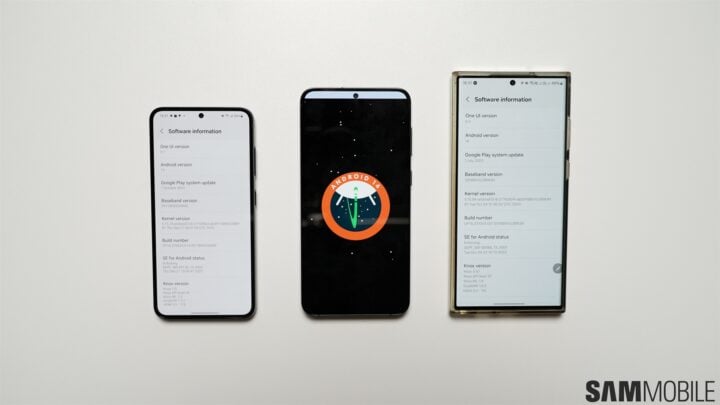
Google, with its Android operating system, has constantly sought to enhance user experience. One such introduction was the seamless updates feature that arrived in 2016. This innovative element enabled software updates to be installed in the background, thus removing the requirement for a device reboot and reducing downtime during the update process.
The method behind seamless updates involves the use of dual system partitions—termed A/B partitions—allowing the new update to be installed on a secondary partition. Once installed, the device reboots from this updated partition, effectively switching the roles of the primary and secondary partitions. The advantage doesn’t just lie in the background installation; it also offers a safeguard, providing a backup partition in the event of an issue during installation.
While this appears to be a smart and efficient method of handling updates, one significant downside is the additional internal storage required to facilitate this system—likely a contributing factor as to why Samsung has not yet adopted seamless updates for its line of Galaxy devices. But with Google’s recent moves towards making seamless updates the default for Android, what does this indicate for Samsung’s update policy?
Possibility of Change within Samsung’s Update Strategy
Insights suggest that Google could soon be making seamless updates a standard feature across all Android devices, potentially indicating a shift in update mechanisms for third-party manufacturers. However, as of now, it seems unlikely that Samsung will alter its update protocol.
The primary reason for their steadfast approach is that, while Google may prioritize seamless updates within Android itself, it has not mandated third-party manufacturers follow suit through its Google Mobile Services (GMS) licensing. Manufacturers like Samsung rely on this license to pre-install Google’s applications, such as the Play Store and YouTube. Although seamless updates were once pushed as a requirement by Google, the stipulation was scaled back to merely a recommendation.
Samsung’s stance on the issue is supported by various factors. Galaxy device software consumes substantial space, and the creation of duplicate partitions would further reduce available storage for users. Additionally, firmware updates on Galaxy devices are typically stable, with minimal instances of malfunction, making the A/B partition system less critical for these devices. Moreover, concerns such as display issues post-update, which have been observed on some Galaxy devices, are unlikely to be resolved by simply adopting seamless updates.
Users of Samsung Galaxy smartphones and tablets can, therefore, rest assured that their update experience is likely to remain consistent for the foreseeable future, without the necessity for seamless updates. Though seamless updates provide clear advantages in software management and deployment, it isn’t a one-size-fits-all solution, particularly for manufacturers like Samsung who have already optimized their update process to suit their devices’ design and customer expectations.