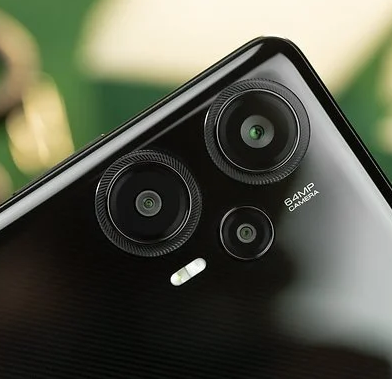
In a surprising turn of events, the Poco F6 might be positioned to outpace its own Pro variant in terms of CPU capability. The Poco F6, anticipated to be a variant of the Redmi Note 13 Turbo, and the Poco F6 Pro, akin to the Redmi K70, are slated to impress the market with their specifications. Still, a recent development has unveiled a unique situation that may intrigue tech enthusiasts.
Emerging details about their internal chipsets have hinted at a somewhat unusual scenario. Initial speculations suggested both the Poco F6 and its Redmi counterpart would house the Snapdragon 7+ Gen 3 processor. Contrary to these assumptions, new information has surfaced, courtesy of leaks indicating a different processing unit at their core.
The revelation by a prominent leak source points toward the incorporation of the Snapdragon 8s Gen 3 chipset in both the Poco F6 and the Redmi Note 13 Turbo. The Snapdragon 8s Gen 3, which is reportedly debuting on March 18, promises to pack a more robust punch than previously anticipated Snapdragon 7+ Gen 3.
This potential shift in processing power dynamics is even more fascinating when considering the Poco F6 Pro’s processor selection. The Pro model is set to feature the Snapdragon 8 Gen 2 chip. Although on par with the Snapdragon 7+ Gen 3 in terms of CPU performance, this configuration proposes an intriguing possibility: the more affordable Poco F6 could actually eclipse the Poco F6 Pro in CPU speed and efficiency.
However, it’s essential to note that the dominance of the Poco F6 might be exclusive to CPU performance. When examining the graphical processing unit (GPU), the Snapdragon 8 Gen 2’s Adreno 740 GPU is expected to outshine the Snapdragon 8s Gen 3’s Adreno 735 GPU. This would position the Poco F6 Pro as potentially the superior device for gaming and graphics-intensive tasks.
The counterintuitive scenario, where a non-Pro version of a smartphone stands to offer better CPU performance, is indeed noteworthy within the mobile technology landscape. It underlines how market competition and chipset development can lead to unexpected outcomes that ultimately benefit consumers by offering more choices tailored to their needs.
For those eager to ensure top-notch performance for their tasks, keeping an eye on the launch and in-depth reviews of these devices would be wise. The spotlight on the processor’s capabilities, especially for the Poco F6, suggests that future smartphone selections could be driven by unexpected value propositions, rather than the traditional model hierarchies.
In conclusion, the potential for the Poco F6 to outperform the Poco F6 Pro in CPU capabilities presents a fascinating discussion for those tracking mobile technology advancements. As these devices hit the market, consumers will be able to make more informed choices, striking a balance between cost and computing power that best suits their needs.


