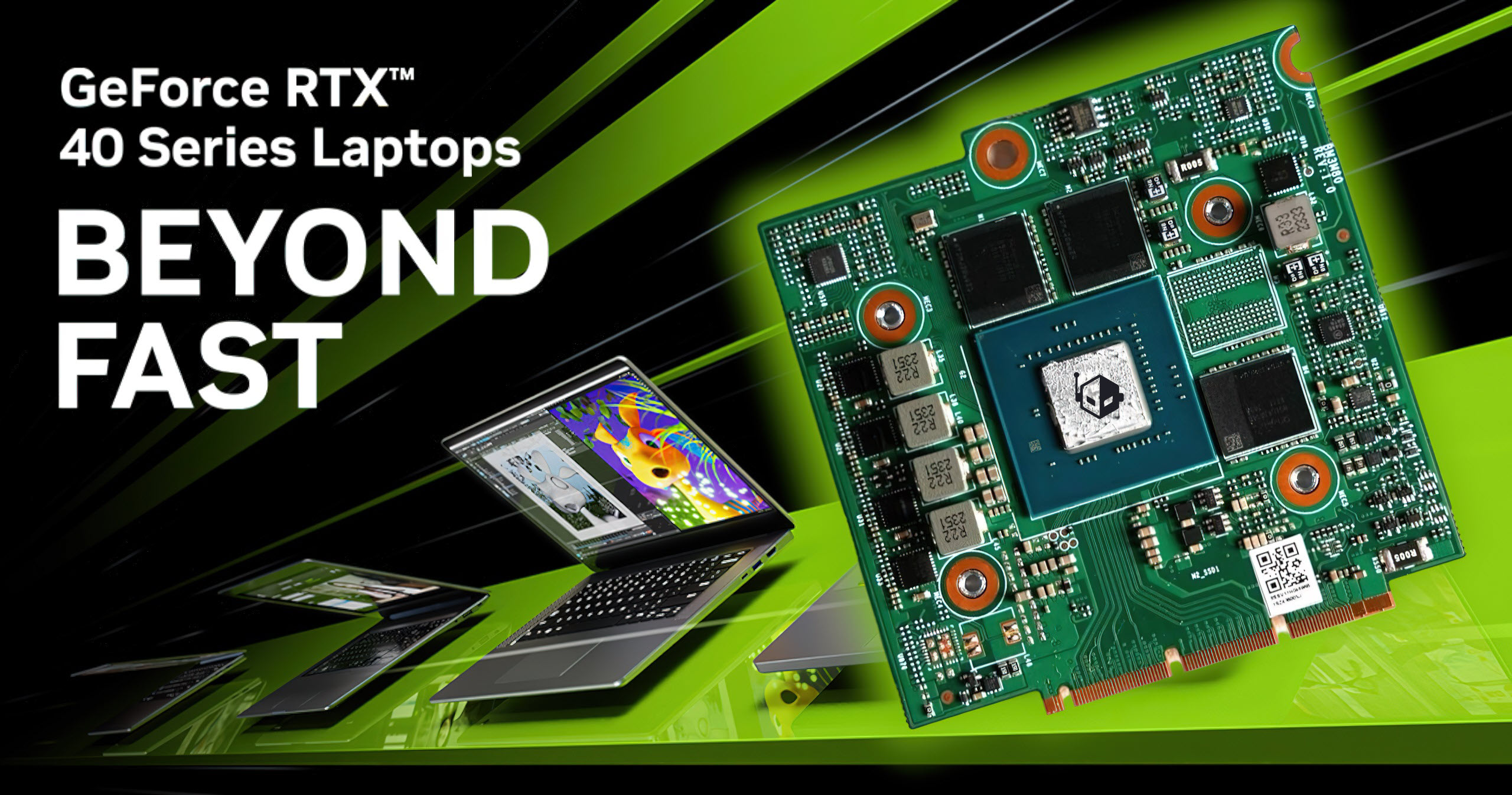
In the ever-evolving world of laptop graphics, the NVIDIA GeForce RTX 4050 GPU presents a novel take on connectivity by employing the M.2 interface – a departure from the conventional MXM. This entry-level GPU hails from NVIDIA’s RTX 40 series, known as Ada, and delivers an intriguing option for laptop users, particularly given that the desktop counterpart has yet to materialize.
The NVIDIA GeForce RTX 4050 laptop GPU targets the entry-level gaming segment, sitting in a class typically dominated by the RTX 3050 series in the sub-$200 category. Despite the absence of an Ada GPU for desktop within this range, the RTX 4050 for laptops has garnered attention with its unique characteristics.
Tech enthusiasts equipped with this GPU can expect a modest gaming performance delivered by the AD107 die featuring 2560 cores and boosted by up to 6 GB of GDDR6 memory on a 96-bit bus. This GPU clocks at a max of 1755 MHz and is designed to operate within a 50W total graphics power (TGP) envelope.
The GeForce RTX 4050 distinguishes itself most prominently in the laptop scene through its use of the M.2 interface, which is particularly unusual for discrete GPUs often linked to MXM interfaces. An example of this unprecedented design can be seen in certain Lenovo laptop series, which integrate the first motherboards designed to support these GPUs through triple M.2 connections.
With each M.2 interface operating on a PCIe Gen4 x4 standard, the RTX 4050 allows a single GPU to utilize just two of these slots. This leaves space for an additional M.2 slot to be used for expanding storage. This distinct configuration deviates from typical arrangements, revealing an adaptive use of PCIe lanes, especially since these GPUs are often engineered to use the surplus lanes of an x16 slot.
Among the manufacturers adapting to this implementation is ASUS, which has embraced this melding of storage and GPU architecture.
This innovative M.2 interface design has broader implications for laptop design and performance. The combination of graphics and storage expansion capabilities suggests a shift toward greater modular flexibility, potentially influencing future designs across the laptop market.
As technology continues to surge forward, consumers now have more to consider when searching for a laptop that balances gaming prowess with hardware flexibility. The NVIDIA GeForce RTX 4050 GPU, along with its unique triplet M.2 interface, stands as a testament to the continuous innovation that defines the competitive landscape of graphics solutions within the tech industry.