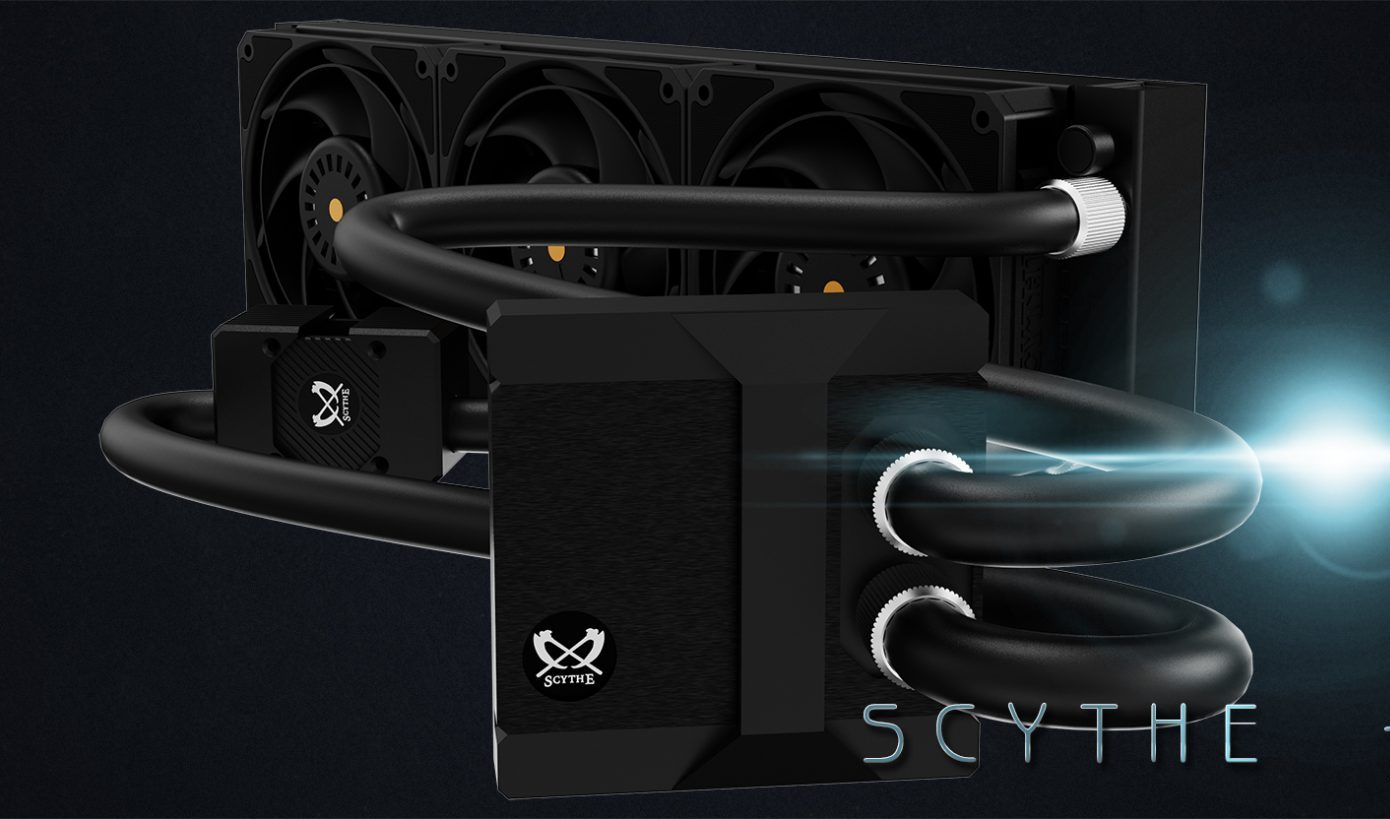
The tech community recently buzzed with the news of two striking new CPU coolers, the GT360 AIO liquid cooler, and the Orochi Twin-Tower air cooler, adorned with Scythe branding. However, amidst the excitement, it was revealed that these products are not the official offerings from the well-known cooling manufacturer Scythe.
Reports first caught wind of the GT360 AIO cooler’s existence in early January, sparking interest due to its unorthodox design and cooling mechanism. Social media channels and the cooling tech circle were alight with discussions about this intriguing piece of hardware. After some investigation, it became clear that the cooler was affiliated with a Chinese brand imitating Scythe and not the cooling titan itself.
The GT360 AIO cooler impressed due to its 360mm radiator paired with three 120mm fans, all sporting a sleek black appearance. However, the standout feature was the unconventional placement of the pump within the radiator pipes, a modification that stirred curiosity in the tech community. This design choice could hypothetically offer enhanced cooling efficiency by minimizing thermal resistance and accelerating heat dissipation, due to the reduced distance between the CPU and the pump.
Coinciding with the GT360 AIO, a new air cooler, the Orochi Twin Tower, also surfaced. This cooler sports a hefty dual-fan setup with eight heat pipes and a maximum speed of 3000 RPM. Mimicking the GT360 AIO’s aesthetic, it comes in an all-black finish with branded engravings. It boasts compatibility with a range of sockets including AM4/AM5, and LGA 115x/1200/1700, which would potentially cater to a broad spectrum of contemporary systems.
Although Scythe has earned a reputation for their high-quality cooling products, the release of GT360 AIO and Orochi coolers has stirred controversy because they don’t originate from the company. Their real-world performance is yet to be observed, and without an official endorsement from Scythe, it remains to be seen how they will stand up against other coolers in the market. These products have been listed for sale on JD.com, a Chinese marketplace, but global availability details have not been confirmed.
For enthusiasts and consumers alike, the situation serves as a reminder to be vigilant when purchasing technology products, especially when new and supposedly innovative designs are involved. It is crucial to verify the legitimacy of the brand and to wait for trusted reviews and performance tests before investing in tech gear that may or may not meet industry standards and expectations.


