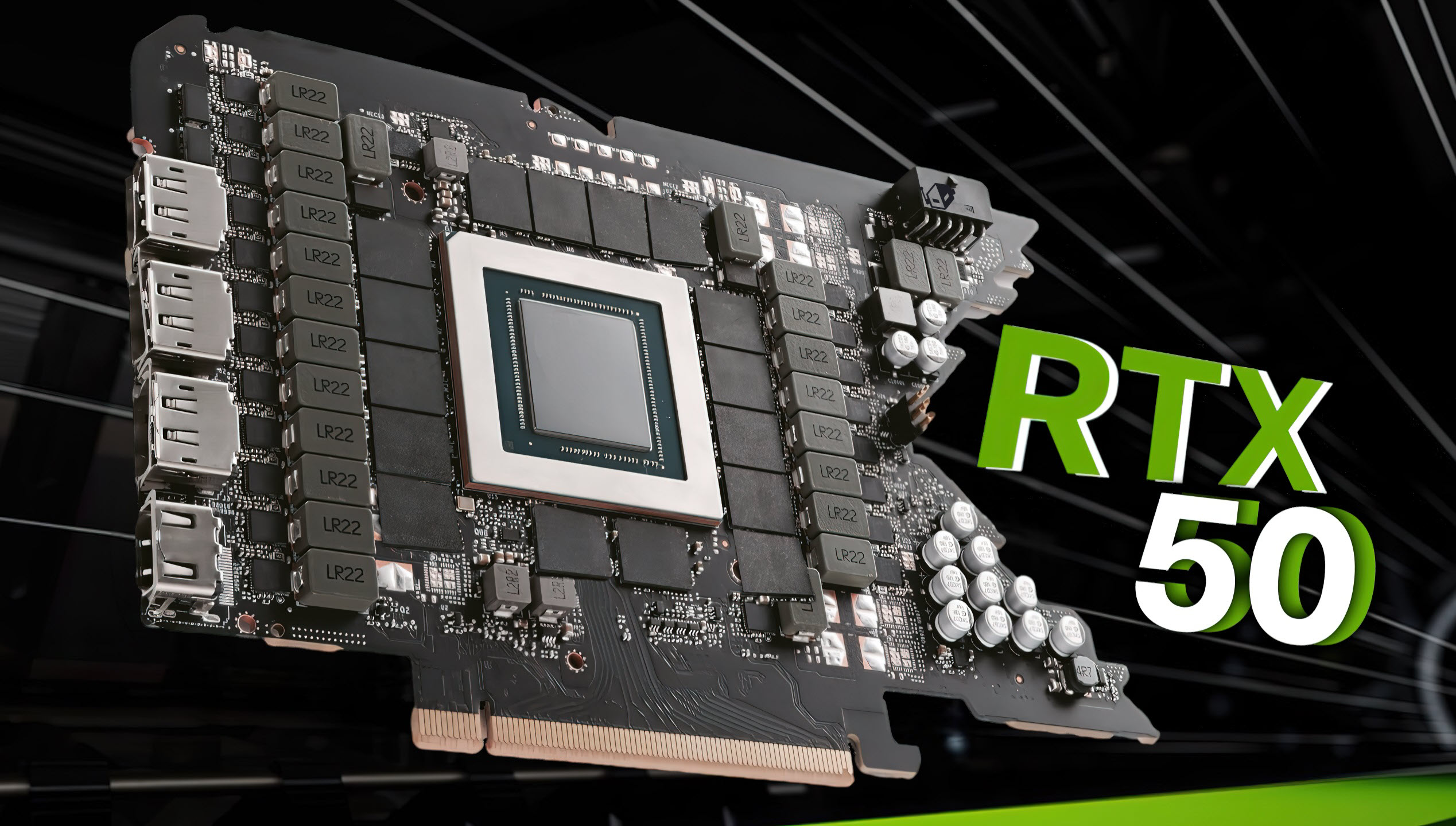
Emerging rumors about NVIDIA’s GeForce RTX 5090, code-named “Blackwell,” suggest significant advancements in its design, particularly with regards to its PCB and memory interface. The GeForce RTX 5090 is lining up to be a powerhouse in NVIDIA’s graphics card offerings, if these industry whispers prove true.
According to insights gathered, NVIDIA is expected to evolve beyond the current 384-bit memory interfaces seen in high-end graphics cards, rejuvenating the 512-bit memory era with its RTX 5090. This leap suggests a move towards incredible memory bandwidth and performance that could redefine the landscape of gaming and professional graphics work.
The RTX 5090 is alleged to boast a 512-bit GDDR7 memory interface, which has been echoed by multiple sources and leakers within the industry. This new memory configuration requires a brand-new PCB design to accommodate 16 DRAM modules, resulting in an exceptionally dense layout. It is said that four modules will be positioned along the top, five on each side, and two on the bottom — such a design would mark a departure from previous norms and could entail significant improvements in data transfer speeds and, consequently, overall performance.
To support these advancements, NVIDIA plans to introduce a novel PCB solution, which may involve the use of three distinct PCB designs for the Founders Edition card. It remains unclear whether this means integrating three separate PCBs into one unit or developing three different layouts with one ultimately chosen for the final product. To handle the heat output of such a high-performance GPU, a robust cooling solution with a dual-fan system is expected. There’s also mention of dual-sided memory, hinting at a substantial on-card memory capacity — prognostications suggest up to 32 GB for standard models, with workstation variants potentially offering up to 64 GB.
The industry is no stranger to NVIDIA’s exploratory approach toward PCB design, as demonstrated by prototypes of the RTX 4090 that showcased innovative, yet ultimately unused, cooling and PCB designs. It remains to be seen if these new configurations for the RTX 5090 will reach the consumer market.
Anticipation is mounting for the forthcoming NVIDIA GeForce RTX 5080 and 5090, with a projected launch in the fourth quarter of 2024. This new lineup promises to deliver a spectrum of power and performance levels, ranging from the behemoth RTX 5090 down to the more modest RTX 5060.
As enthusiasts and professionals alike await further details, the potential for these upcoming GPUs to impact gaming, content creation, and computational tasks is palpable. If NVIDIA can bring these rumored specifications to fruition, the RTX 5090 could mark a significant milestone in the evolution of graphics technology.