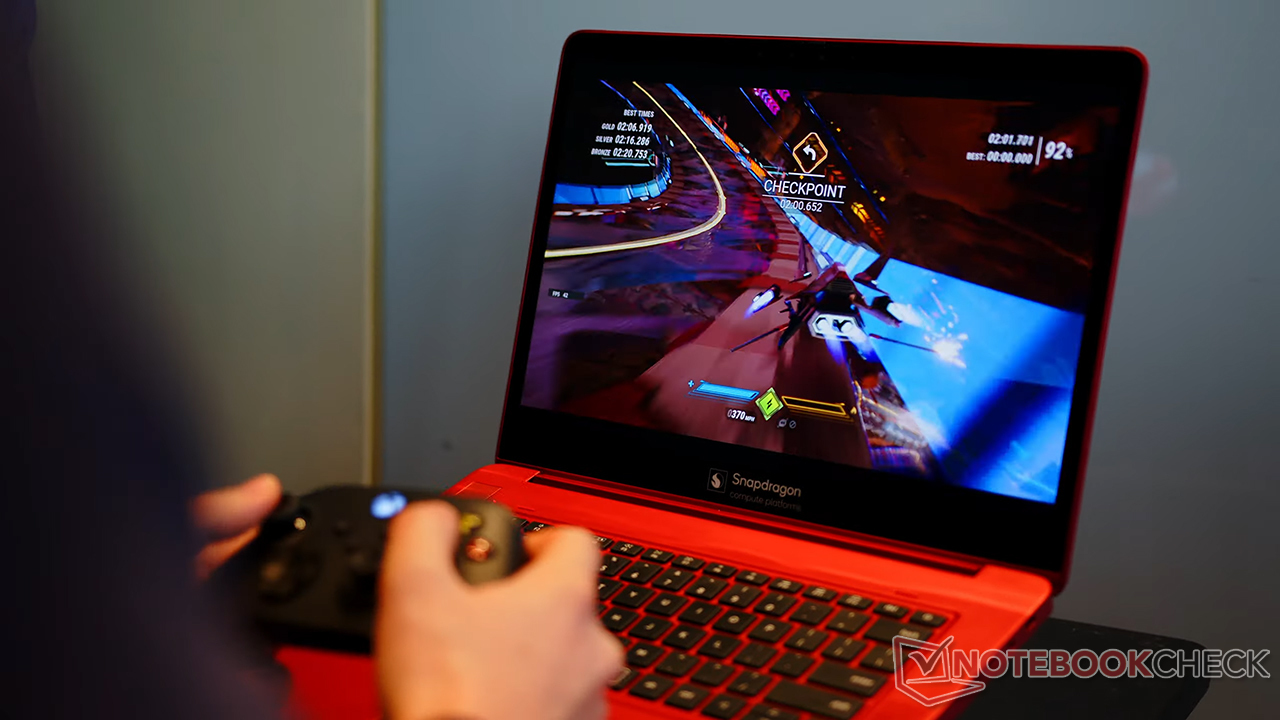
Qualcomm’s foray into the laptop market is making significant strides with the introduction of the Snapdragon X series ARM processors, offering users a new realm of Windows experience. Those interested in gaming capabilities have witnessed the compatibility of these processors with titles like Baldur’s Gate 3 and Control. However, the question remains – how well do other games run on these ARM chips?
To clarify this, Microsoft and Qualcomm have collaborated to launch a comprehensive resource for gamers. This official directory details how various Windows games perform on the new ARM architecture. The platform, named WorksOnWoA.com, features a list of over 1,400 games, providing insights into their compatibility and playability on devices equipped with the Snapdragon X series.
The website classifies games into four categories for clarity. Those that earn the “Perfect” status are games that operate seamlessly at 60 FPS or higher at 1080p resolution with no glitches or setbacks. A “Playable” rating implies that a game runs at a baseline of 30 FPS at the same resolution, though players might encounter occasional minor issues.
The “Runs” category is assigned to those games that will operate on Snapdragon X systems but may include bugs impacting the gameplay experience. Conversely, games marked as “Unplayable” are ones that will not function due to anti-cheat protocols or other significant operational failures.
Though some popular games fall into the unplayable category, including titles such as PUBG, Fortnite, and Roblox – which also face challenges on other platforms like Valve’s Steam Deck – there is a silver lining. The database lists nearly 750 games as “Perfect” and over 500 as “Playable,” indicating a substantial number of Windows games that are well-suited for ARM-powered machines.
The information provided on the platform serves as a preliminary guide and does not promise unequivocal performance across all ARM devices. The performance of a game may vary depending on the specific hardware and setup, meaning user experiences may not align perfectly with the site’s classifications. It’s also worth mentioning that the site does not divulge details regarding the graphics settings for the tested games, and there’s a possibility that lower settings were utilized for testing to ensure compatibility.
In sum, the launch of this resource site forms an essential tool for gamers looking to explore the gaming possibilities on ARM-based laptops. It also signals a growing ecosystem of support for gaming on these new, energy-efficient processor architectures, hinting at an exciting future where gamers have even more choice in their computing platforms. For players keen on diving into the world of ARM-powered gaming, the Microsoft and Qualcomm project offers a valuable foundation to make informed decisions about their next gaming experience.


