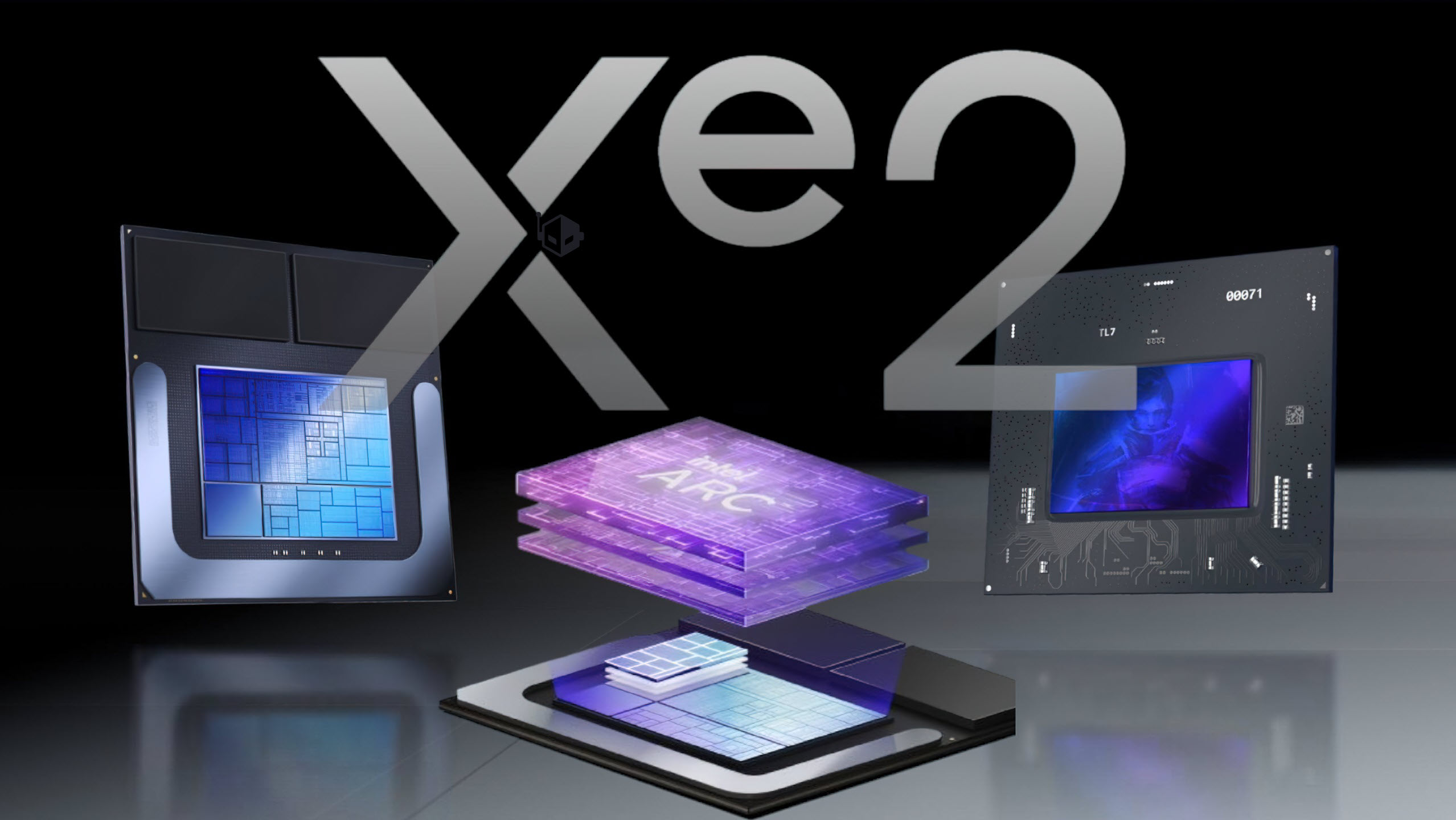
Intel’s Open Image Denoise (OIDN), an open-source GPU-accelerated library for denoising ray-traced images, has recently undergone significant updates, offering enhanced support for new Intel graphics technologies. Intel OIDN, known for its denoising capabilities which improve image quality by removing noise without sacrificing fidelity, has rolled out its version 2.3. This new version brings crucial improvements, including support for Intel’s future CPU and GPU designs, and an uptick in performance.
Expanding to New Intel Architectures
The latest update includes compatibility for upcoming Intel CPU architectures: Arrow Lake and Lunar Lake, as well as the forthcoming Battlemage Xe2 GPU architecture. With this expansion, users leveraging these Intel solutions will experience an enriched graphics performance when using Intel OIDN.
Arrow Lake integrated GPUs (iGPUs) are expected to feature the refined Alchemist+ or Xe-LPG+ architecture, while Lunar Lake will usher in the new Battlemage architecture, based on the novel Xe2 design. The Battlemage architecture promises a commendable 50% performance improvement over previous generation Alchemist Xe chips.
Performance Improvements and New Modes
Along with broader support, Intel OIDN version 2.3 brings a 1.5 to 2 times increment in performance for real-time previews while in high-quality mode. This is especially beneficial for professionals in visual effects and animation industries, where render times are critical.
Moreover, the update introduces a ‘fast quality’ mode intended for swift interactive or real-time previews, further enhancing performance with a smaller impact on image quality. While the focus remains on higher performance, this mode operates with lower default memory usage, ideal for systems handling complex workloads or multitasking.
It’s important to note that although the update does introduce more complex filters that can impact performance, users have the option to switch to the balanced quality mode to maintain previous performance levels.
Compatibility Beyond Intel
Intel’s commitment to openness with OIDN extends to hardware compatibility; the denoise library is not limited to Intel’s own hardware but is compatible with a variety of other hardware manufacturers, including AMD, NVIDIA, and Apple. This means users with diverse hardware ecosystems can benefit from the advanced ray-tracing denoise capabilities provided by Intel OIDN.
Looking Forward
The enhancements introduced with Intel OIDNR version 2.3 are a leap forward for users and developers interested in high-quality, ray-traced image rendering. With the added support for Intel’s latest architecture and the improved denoising performance, creators can render more lifelike images, and game developers can offer more immersive experiences.
Intel’s push to continually improve and update OIDN not only benefits the immediate users but the broader community as well. As the library progresses, it is expected that even more developers will utilize this technology, improving workflows and pushing the boundaries of visual fidelity in rendering.
Intel’s forward-looking support for the next generation of CPUs and GPUs ensures that as technology evolves, tools like Open Image Denoise will evolve as well, maintaining its relevance and usefulness in an ever-changing tech landscape.
Stay informed of the latest advancements in rendering technology, and be ready to embrace the powerful capabilities of the Intel Open Image Denoise as we step into a new era of high-fidelity graphics.