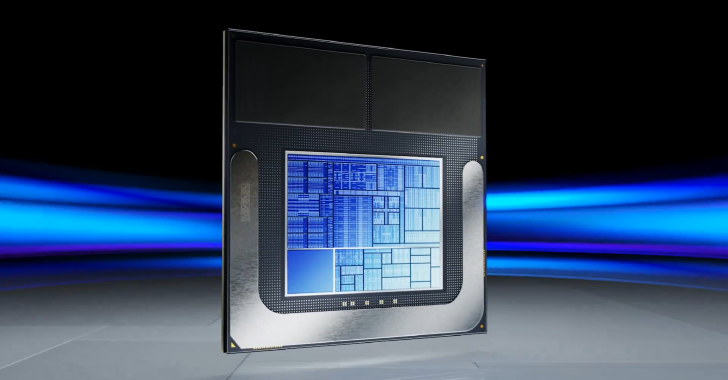
Intel’s upcoming processing units, including the Lunar Lake and Panther Lake CPUs, along with their Battlemage discrete GPUs, are being prepped with expanded support in the Linux 6.11 kernel. This forward-looking development is crucial for ensuring that these emerging technologies integrate smoothly with Linux-based systems upon their release.
Intel Lunar Lake CPUs Gain DLVR and Audio Capabilities
The Lunar Lake CPUs, expected to hit the market in the coming quarter, are set to benefit from heightened efficiency thanks to a new patch that introduces support for the Digital Linear Voltage Regulator (DLVR). This technology is designed to curtail power intake, which is especially beneficial for ultra-low power System on Chips (SOCs). Although this patch doesn’t introduce new functional features distinguishable from previous generations like Meteor Lake and Arrow Lake, there are notable changes in the MMIO offset and bit positions when compared to these older CPU models.
Early Support for Panther Lake CPUs
Looking further ahead, Panther Lake CPUs are scheduled for launch in the latter half of 2023, but proactive measures are already in place. Recent panther Lake patches include the integration of a new PCI device ID added to the HDA driver and the DSP configuration, paving the way for audio support. While these updates are not extensive in scope, further significant patches are likely to be unveiled with Linux 6.11’s release. Among the anticipated features of Panther Lake CPUs are the cutting-edge Cougar Cove P-Cores and the Celestial “Xe3” integrated GPUs, signaling notable advancements in processing technologies.
Display Connectivity for Intel’s Battlemage GPUs
The buildup to the launch of Intel’s Battlemage GPUs, categorized under the “Xe2” family, includes a series of Linux patches aimed at bolstering the graphics architecture’s support. The introduction of drm-intel-next-patches for the Direct Rendering Manager (DRM) driver is a significant move, allowing the Battlemage GPUs to establish display connections. Furthermore, Intel’s kernel graphics drivers have also activated Panel Replay technology for Xe2 GPUs, complying with the eDisplayPort 1.5 specification, to curate a low-power data transfer protocol and facilitate power conservation.
This streamlining effort by Intel indicates a commitment to timely and effective support for their forthcoming CPU and GPU architectures. The industry is anticipating the entrance of Lunar Lake CPUs and Battlegage GPUs into the market in the latter half of the current year, while Panther Lake CPUs are poised to make their debut in the second half of the following year. This array of advancements from Intel signals an exciting horizon of technological progress that is eagerly awaited by enthusiasts and professionals alike.