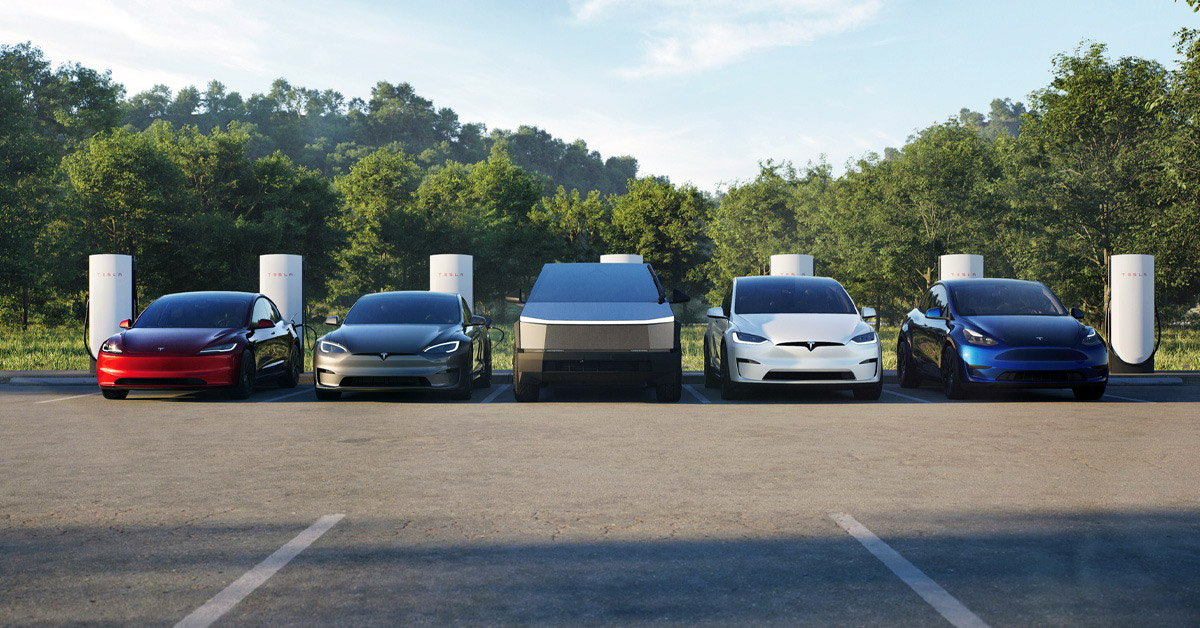
Elon Musk’s decision to move the Tesla Model S charging port to the rear of the vehicle stemmed from a rather personal consideration. Concerned about possibly tripping over the charging cable in his rented Bel Air garage, Musk directed Tesla’s engineers to relocate the NACS port from its initially planned position at the front left of the car. This personal touch in design decisions has echoes of innovation and insistence seen in the leadership style of Steve Jobs.
Lucid Motors’ CEO, Peter Rawlinson, who previously served as a lead engineer at Tesla, shared these insights. Rawlinson has since made a name for himself by producing prime electric vehicles like the Lucid Gravity SUV, known for its impressively long range. The Gravity was also one of the first non-Tesla models to integrate a NACS charging port, now part of the extensive Supercharger network.
Originally, Rawlinson and his team considered placing the charging port at the front of the Model S. This made sense in the U.S., where drivers typically prefer not to reverse into parking spaces. The proposed location was just behind the front wheel, ensuring convenience for the driver without needing a trek around the car. However, this spot was eventually deemed too vulnerable in the event of even minor accidents.
Musk’s reasoning held sway, prioritizing safety and practicality in personal use, leading to the rear port placement. This decision has since influenced charging behavior, requiring Tesla owners to reverse into charging bays—a move that some might find less practical, but now a standard due to this unique precedent.
With the increasing adoption of the Supercharger network by major EV manufacturers, rear-left port placements are expected to become more prevalent. This trend continues even as Tesla rolls out their V4 Superchargers, which boast not just enhanced power, but longer, more strategically designed cables. As the EV landscape evolves, Musk’s influence on design and functionality is evident, showcasing how personal preference can sometimes drive industry standards.