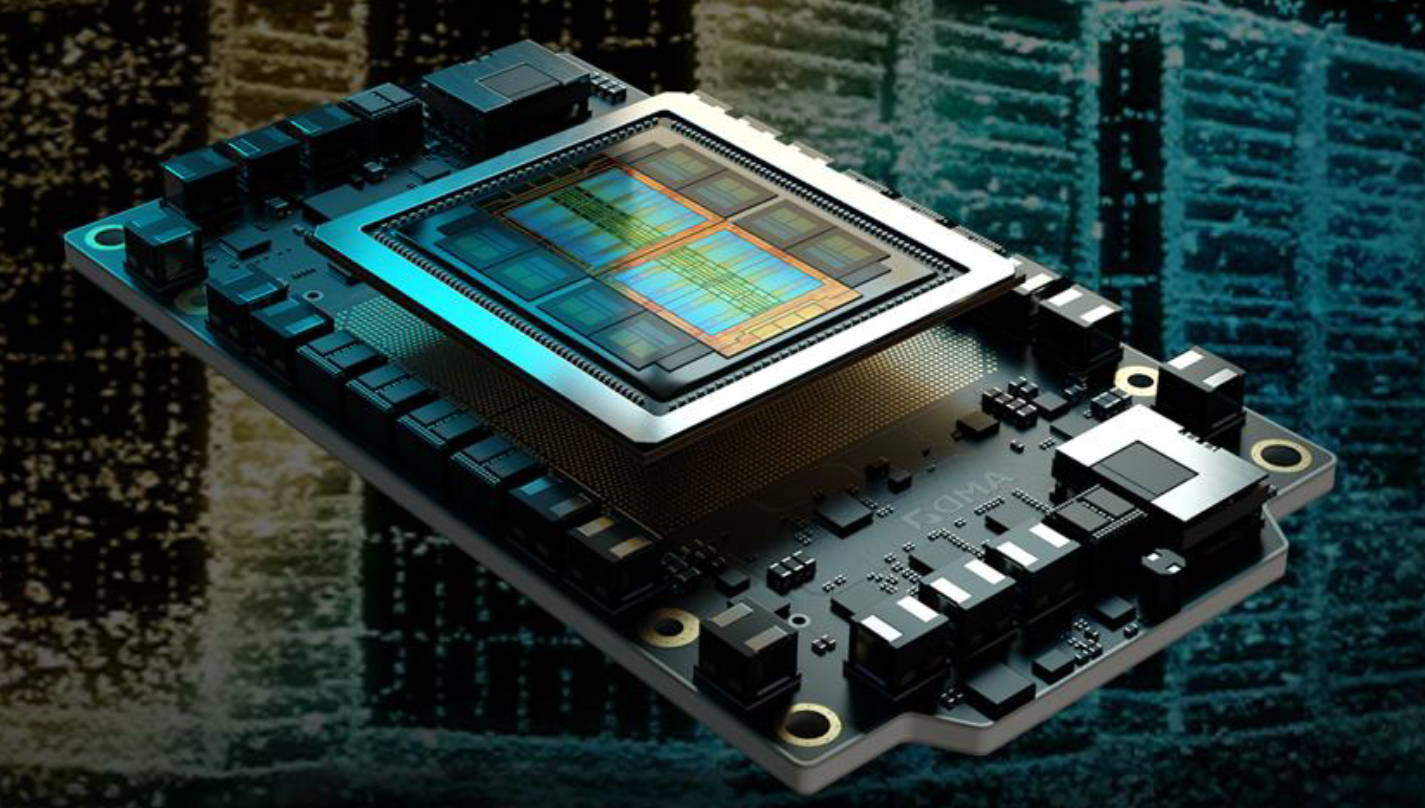
Elon Musk has weighed in on the state of AI hardware, saying AMD’s latest accelerators handle small-to-medium models “pretty well,” while NVIDIA remains the top choice for training the largest and most demanding AI systems. His take underscores how far AMD has come in a short time, even as the industry continues to lean on NVIDIA for cutting-edge workloads.
For years, NVIDIA’s early bet on AI and its CUDA software ecosystem gave it a commanding lead. That head start created a powerful moat: developers built and optimized their models around NVIDIA’s tools, and data centers standardized on its GPUs. The result is a flywheel that’s hard to disrupt. Still, momentum is shifting. AMD has steadily improved both hardware and software, and endorsements like Musk’s point to meaningful progress.
AMD’s Instinct lineup, including the MI300 and MI300X accelerators, has been tapped by xAI and has seen growing interest across the industry. While NVIDIA is still the default for massive model training, AMD hardware is increasingly attractive for use cases such as inference, fine-tuning, and mid-sized foundation models. These are areas where latency, efficiency, and cost-per-token can matter more than absolute peak training throughput.
The distinction matters. Training frontier models requires not just raw compute, but also mature software stacks, robust libraries, and seamless scaling across thousands of GPUs. This is where NVIDIA’s ecosystem depth still gives it the upper hand. On the other hand, production inference, custom fine-tuning, and domain-specific models often have different constraints and can benefit from AMD’s improving price-performance, memory capacity, and availability.
A key challenge for AMD has been breaking into Big Tech deployments at the same scale as its rival. While large cloud and consumer internet firms do use Instinct GPUs, adoption isn’t yet as pervasive. That gap is closing as AMD pushes updates to the ROCm software stack, expands framework compatibility, and works with partners to make migration and mixed environments easier. As ROCm matures, developers gain more incentive to optimize for AMD, weakening the gravitational pull of CUDA.
Why Musk’s comment matters is simple: real-world validation influences buying decisions. AI buyers—from startups to enterprises—are increasingly pragmatic. If AMD delivers strong results for small and medium models, many teams will diversify hardware to improve availability, control costs, and avoid vendor lock-in. That creates a healthier, more competitive market and pressures all vendors to innovate faster.
What to watch next:
– Software parity: Continued progress in ROCm, compiler optimizations, and out-of-the-box support for popular frameworks and toolchains.
– Memory and networking: High-bandwidth memory configurations and interconnects that scale well for both training and inference.
– TCO metrics: Transparent comparisons of cost, performance per watt, and throughput for common workloads like LLM inference, RAG pipelines, and fine-tuning.
– Ecosystem momentum: Case studies, open-source contributions, and community tooling that reduce friction for teams adopting AMD hardware.
The bottom line: NVIDIA still dominates the most complex training runs and ultra-large-scale deployments, but AMD has become a compelling option for a wide range of AI workloads. With accelerating improvements in hardware and the ROCm software stack, competition between the two is set to intensify—good news for developers, data center operators, and anyone looking to scale AI without being pinned to a single vendor.