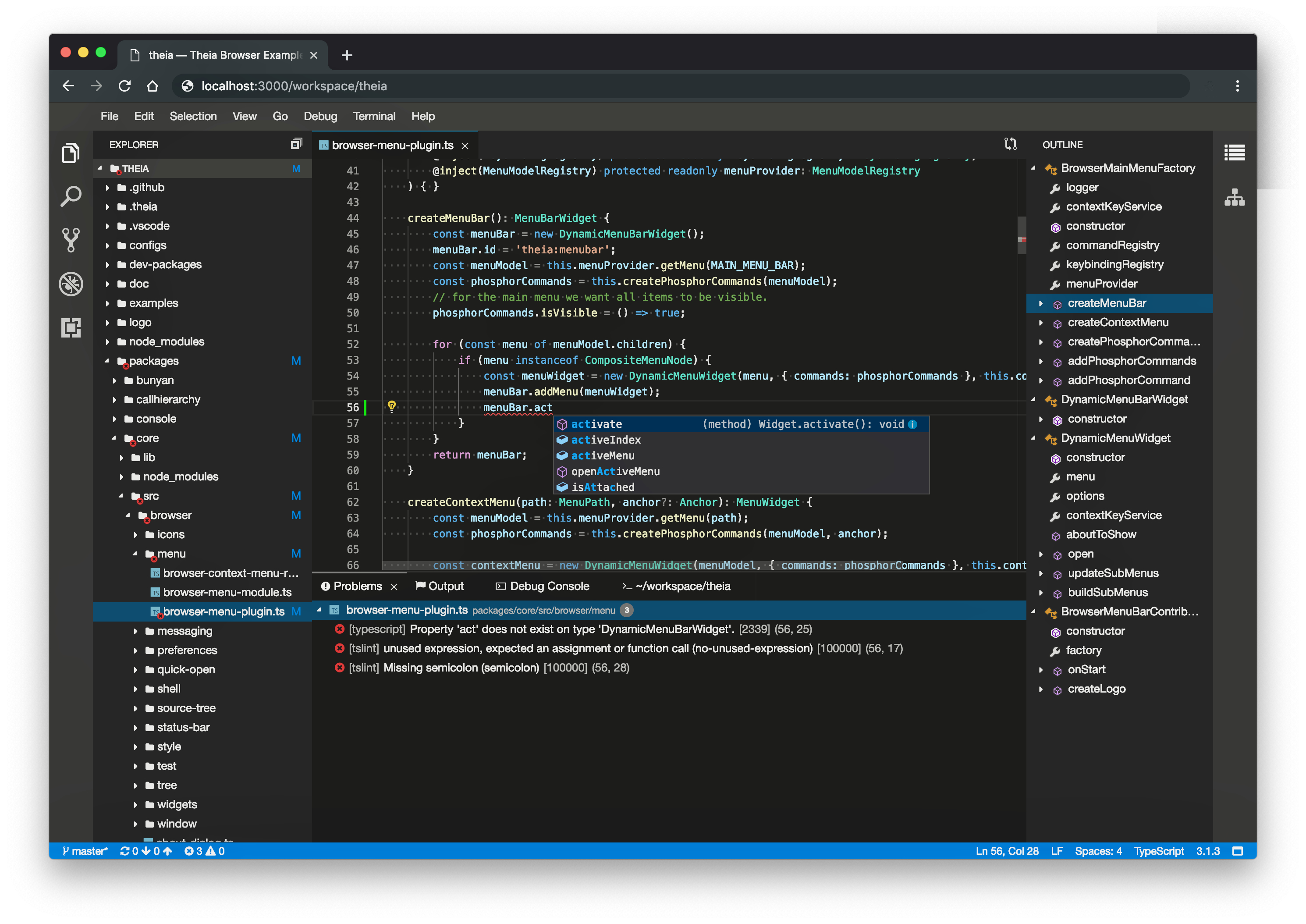
The Eclipse Theia project has recently unveiled its 1.48 version, delivering a suite of enhancements to its web-based platform and integrated development environment (IDE). Engineers and developers who rely on Eclipse Theia will discover a range of improvements, with the standout feature being the ability to support secondary windows for code editing.
The collaborative efforts of the Eclipse Theia team are evident as they amalgamated 53 pull requests to bring this version to fruition. Additionally, the onboarding of two new developers to the project underscores the team’s growth and dedication.
Eclipse Theia serves a dual function: It’s a foundational platform that aids in the construction of customizable development environments and tooling for both web and desktop applications, and it’s also a standalone IDE designed for cloud and desktop operations by software developers. This resourceful IDE, Eclipse Theia IDE, is currently navigating its beta stage.
One of the highlights of version 1.48 is the introduction of detachable editors, which can be moved from the main environment window to secondary windows. This feature is particularly advantageous for developers harnessing multi-monitor setups, enabling them to optimize their workspace layout across several screens for an improved coding experience.
Previously, Eclipse Theia’s multi-window capability was confined to the Terminal and WebView components. With the latest release, this versatility extends to the primary code editor, further enriching the development process. Moreover, the terminal within the IDE now features interactive efficiency; clicking file names directly opens them in the editor, streamlining workflow within the current workspace.
The Eclipse Theia IDE, which is readily available for direct download across Windows, Linux, or macOS platforms or for a 30-minute preview via its cloud iteration, has seen further refinements in this release. Among the improvements is the enhanced usability of metrics in Electron application performance analysis. Additionally, the notebook editor—an invaluable tool similar in functionality to Jupyter notebooks that fuses documentation with executable code areas—has undergone substantial stabilization efforts.
For a comprehensive overview of the advancements in Eclipse Theia 1.48 and its IDE, interested parties are encouraged to explore the details laid out in the development team’s blog post. Demonstrations showcasing the new multi-window functionality in the code editor exemplify the intuitive advancements Theia is integrating to better serve the needs of the development community.
Reflecting on the evolution of technology, it’s clear how it significantly shapes our interactions and workflows. From the early days of gaming consoles to embracing the diversity of operating systems like Linux, technology has been a constant companion in our professional journeys. It continues to shape the roles of IT professionals and journalists who specialize in disseminating news and insights about the ever-evolving tech landscape.
Sharing insights on tools like Eclipse Theia is beneficial for the community, as continuous feedback and exchange of information drive the tech industry forward, encouraging innovation and improvement of the resources available to developers.