Samsung, SK Hynix, and Micron Hit With U.S. Class Action Lawsuit as DRAM Prices Surge
Samsung, SK Hynix, and Micron are facing a new class action lawsuit in the United States as consumers push back against rapidly rising memory prices. The case centers on allegations that the three major DRAM manufacturers restricted supply in a way that helped drive up prices across the market.
DRAM prices have climbed sharply as demand continues to outpace available supply. The pressure has been especially intense due to the explosive growth of artificial intelligence hardware, data centers, and high-performance computing systems, all of which require massive amounts of memory. At the same time, regular consumers, PC builders, repair shops, and small businesses are feeling the impact through higher prices for RAM, laptops, desktops, servers, and other electronics.
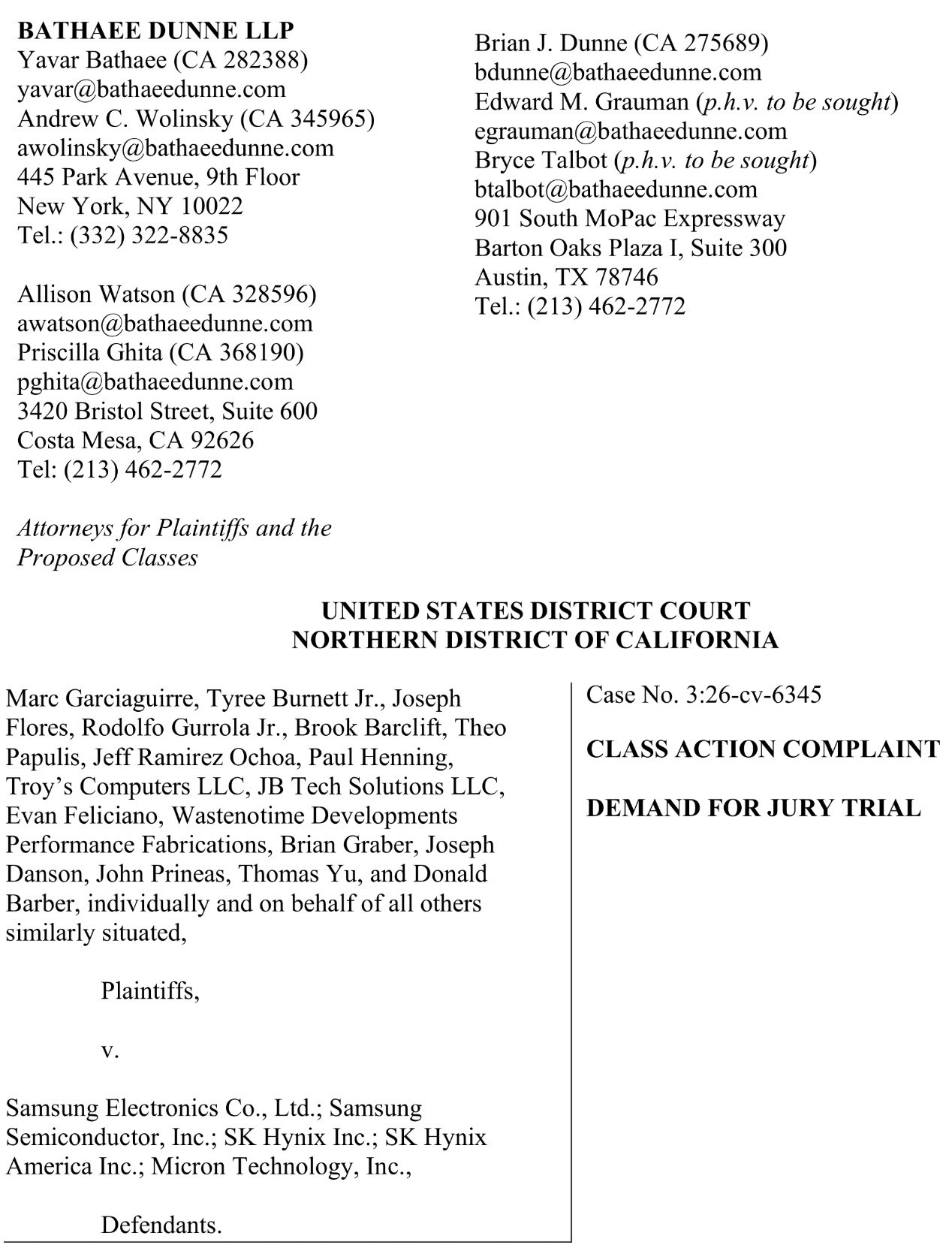
The lawsuit, listed as case 3:26-cv-06345, has been filed as an antitrust matter in the United States District Court for the Northern District of California. Judge Noel Wise is assigned to oversee the case. According to the filing, the plaintiffs are seeking compensation and claim that Samsung, SK Hynix, and Micron artificially limited DRAM supply, contributing to inflated prices in the memory market.
The plaintiffs include a mix of individual consumers and businesses, including PC-related companies and development firms. The case was filed on June 25, 2026, and reflects growing frustration over memory shortages that have affected both everyday buyers and the broader technology industry.
The lawsuit arrives during a period when DRAM and memory pricing has become one of the biggest concerns in the PC hardware market. Prices for memory products have been rising due to limited supply, while major customers in AI and cloud computing are securing long-term agreements with memory suppliers. These strategic deals can make it even harder for the consumer market to access enough supply at reasonable prices.
This is not the first time the memory industry has faced legal scrutiny over pricing. In 2005, Samsung Electronics agreed to pay a $300 million criminal fine to the U.S. Department of Justice over DRAM price-fixing practices that took place between April 1999 and June 2002. Major PC makers at the time, including Dell, Compaq, Hewlett-Packard, Apple, IBM, and Gateway, were among those affected by the conduct.
However, the current situation is different in several ways. Today’s memory shortages are tied to a real and significant increase in demand, especially from the AI sector. Samsung, SK Hynix, and Micron have also stated in various industry updates that they are working to expand production capacity through new fabs, upgraded facilities, and additional production lines.
Still, the plaintiffs in the new case argue that the companies’ actions have placed unfair pressure on buyers by keeping supply constrained while prices continue to rise. If the court allows the case to move forward, it could bring increased attention to how the world’s largest memory manufacturers manage production, pricing, and customer allocation during periods of extreme demand.
For now, DRAM prices remain under pressure, and the outlook for consumers is uncertain. With AI companies, cloud service providers, and enterprise customers competing for high-capacity memory, the consumer PC market may continue to see elevated prices for some time.
The outcome of this class action lawsuit could have major implications for the memory industry, especially if it leads to closer examination of supply practices among Samsung, SK Hynix, and Micron. Until then, buyers looking to upgrade their PCs may need to prepare for continued volatility in RAM and memory prices.