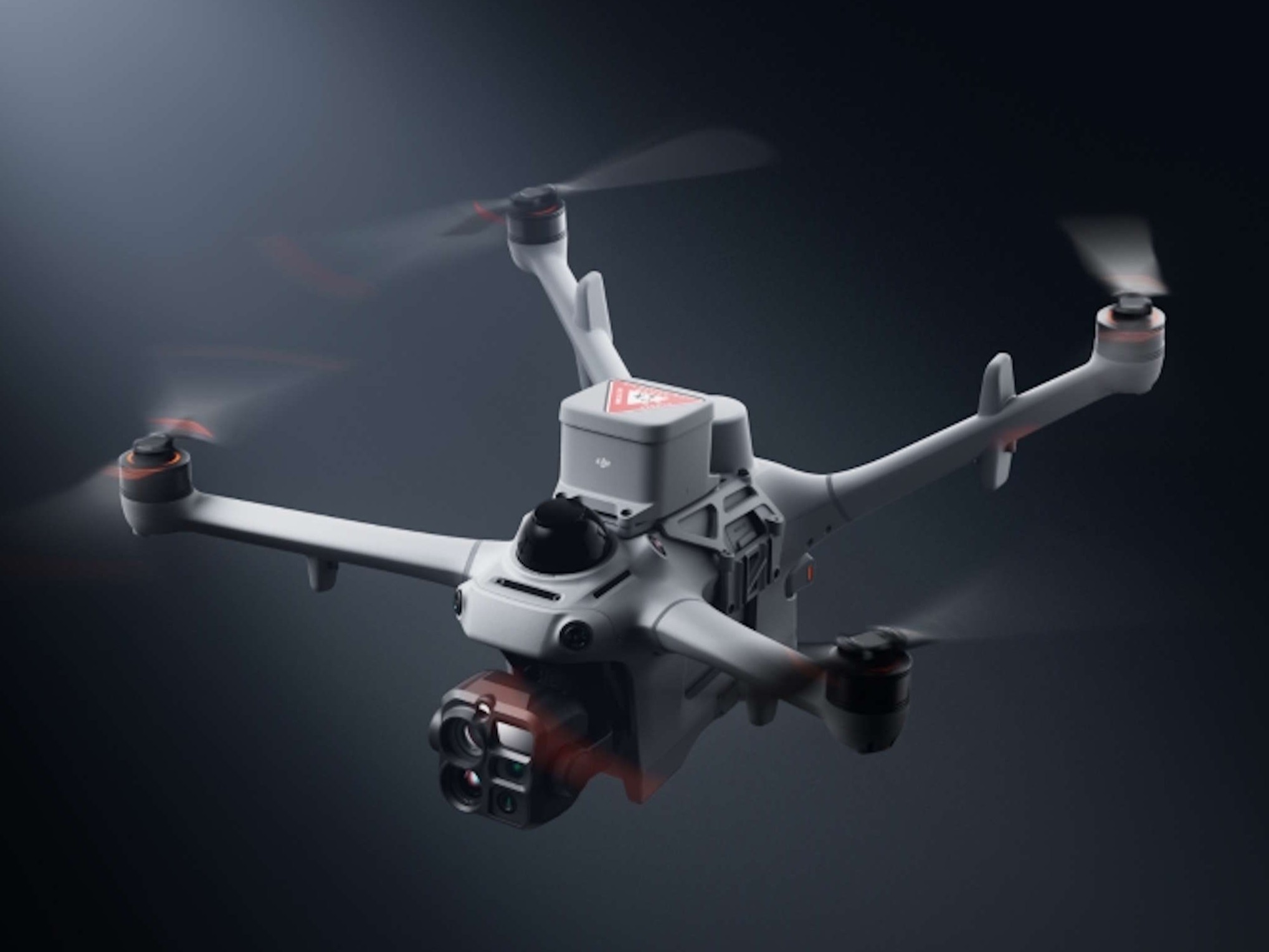
DJI has introduced a new enterprise drone system designed to dramatically reduce downtime during critical missions. While the company is widely recognized for consumer drones, its latest launch is aimed squarely at professional users such as emergency responders, industrial operators, public safety teams, and infrastructure inspectors.
The centerpiece of the new system is the DJI Dock 4, an automated docking station built to work with the new Matrice 5TD drone. Its standout feature is an ultra-fast battery replacement process that takes just 25 seconds. Instead of waiting for a drone to recharge, operators can quickly send it back into the air, making the system especially useful for time-sensitive operations.
What makes the setup even more impressive is that the Matrice 5TD stays powered on during the battery swap. DJI uses inductive power delivery inside the dock, allowing the drone to remain active while its battery is being replaced. This helps reduce mission interruptions and keeps the aircraft ready for continuous deployment.
DJI claims the Matrice 5TD can deliver up to 59 minutes of flight time, giving it the endurance needed for long-distance routes, wide-area monitoring, and extended emergency response missions. For organizations that depend on aerial coverage, this could make the drone a practical alternative to helicopters in certain scenarios. It is smaller, easier to deploy, and potentially more cost-effective for rapid field operations.
The Matrice 5TD weighs 2,600 grams with its battery installed and comes equipped with a broad range of sensors for demanding environments. It supports standard aerial imaging, nighttime missions, and can be paired with an optional near-infrared auxiliary light for improved visibility in low-light conditions.
Another key feature is the integrated laser rangefinder, which can measure distances of up to 3 kilometers. This can be valuable for firefighters, rescue crews, and survey teams that need to quickly assess terrain, measure distances, or map out dangerous zones. For example, during a wildfire, the drone could help estimate the perimeter of the affected area without putting personnel at unnecessary risk.
DJI has also added real-time object recognition to the Matrice 5TD. The drone can identify 17 different object types while in operation, helping teams detect important targets more quickly. First responders can search for specific objects using text or image prompts, making the drone more useful in complex missions such as search and rescue, disaster response, and security monitoring.
The system can also send automated anomaly alerts through SMS or email. This means operators do not need to constantly monitor every feed manually. If the drone detects something unusual, it can notify the relevant team members, allowing for faster decision-making in the field.
The DJI Dock 4 and Matrice 5TD are clearly built for enterprise and public safety use rather than hobby flying. Professional drones of this kind often come with higher costs, heavier takeoff weights, and stricter operating requirements, including regulations around beyond visual line of sight flights. Because of that, this system is aimed at organizations with specialized operational needs.
DJI has not announced public pricing for the Matrice 5TD or Dock 4. The drone is expected to be sold through enterprise-focused commercial dealers. Availability may vary by region, and a launch in the United States appears unlikely at this stage.
With its rapid battery swapping, long flight time, advanced sensors, and automated detection features, DJI’s new Matrice 5TD and Dock 4 system could become a powerful tool for emergency services, industrial inspections, and large-scale monitoring operations where every second in the air matters.