South Korea’s Safety-Tech Boom Is Moving From AI Concepts to Real-World Deployment
South Korea is rapidly becoming one of the most active markets for safety technology, with artificial intelligence now playing a central role in how cities, companies, and public institutions think about risk prevention. From AI-powered surveillance cameras and autonomous patrol robots to drones, predictive monitoring tools, and emergency response systems, the country’s safety-tech industry is shifting from futuristic demonstrations to practical, everyday use.
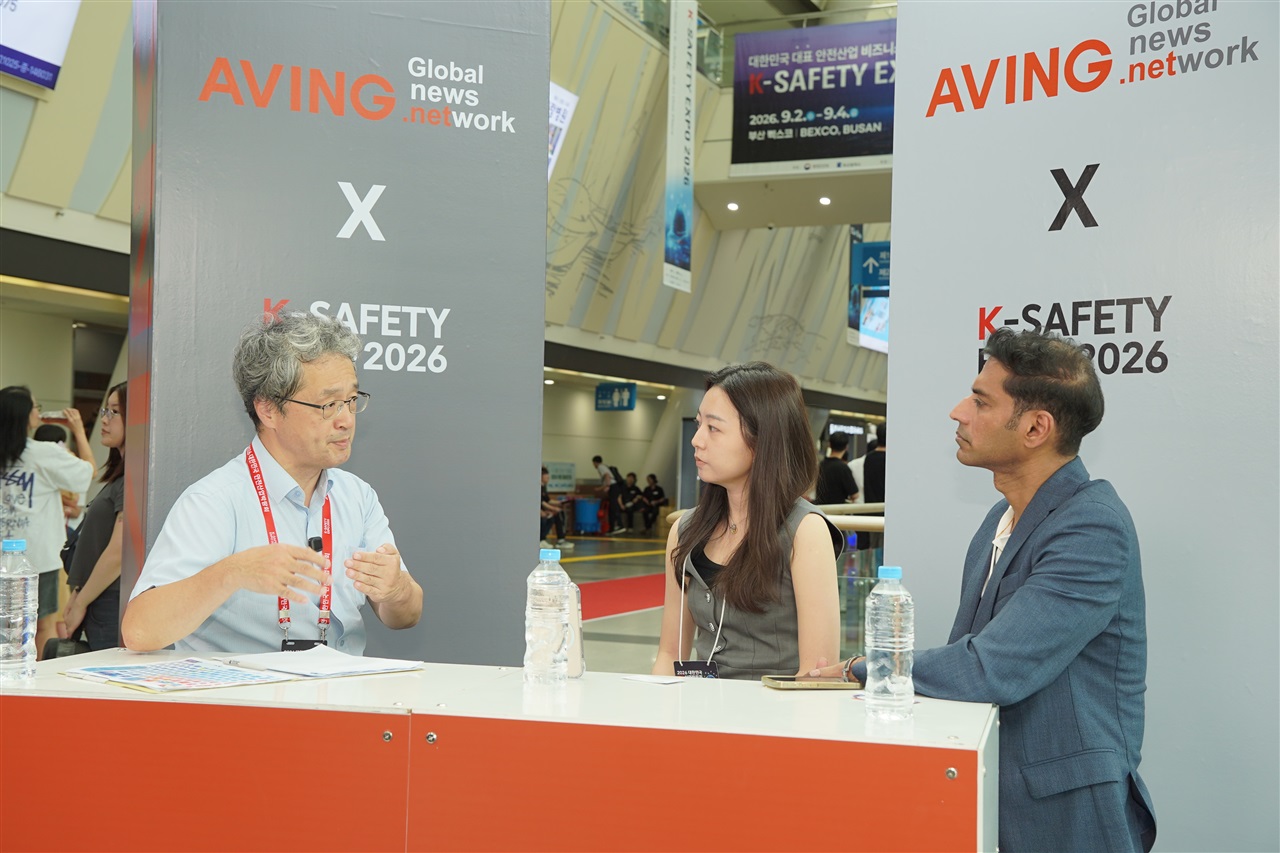
But according to BEXCO general manager Tom Choi, the real momentum behind this transformation is not coming only from flashy devices or breakthrough algorithms. Instead, much of the progress starts in a more grounded place: the platforms that bring governments, technology developers, buyers, and safety professionals together.
Choi argues that exhibitions, industry events, and business forums are becoming a key engine for turning South Korea’s AI safety ideas into deployable solutions. These spaces allow companies to showcase their latest systems, while public agencies and private-sector decision-makers can evaluate which technologies are ready to solve real safety challenges.
The demand is clear. South Korea faces growing pressure to improve public safety, workplace monitoring, disaster prevention, and urban security. Dense cities, aging infrastructure, extreme weather risks, and increasingly complex industrial environments have created a strong need for smarter systems that can detect danger early and respond quickly.
AI cameras are one of the most visible examples of this shift. Modern systems can do far more than record footage. They can identify unusual movement, detect fires or smoke, recognize crowd congestion, and alert operators before a situation becomes critical. For city managers and facility operators, this kind of real-time awareness can make emergency response faster and more accurate.
Robots are also gaining attention in the safety-tech sector. Autonomous machines can patrol large buildings, industrial sites, airports, shopping centers, and public spaces, collecting visual data and detecting potential hazards. In dangerous environments, robots can reduce human exposure to risk while keeping operations under constant observation.
Drones are another major part of South Korea’s expanding safety ecosystem. They can be deployed for disaster assessment, search-and-rescue missions, infrastructure inspections, and monitoring of hard-to-reach areas. When paired with AI analysis, drones can help authorities understand unfolding situations more quickly and make better decisions in the field.
Predictive safety systems may be the most important long-term development. By analyzing data from cameras, sensors, weather systems, traffic networks, and public reports, AI platforms can identify patterns that suggest a potential accident, equipment failure, or emergency. Instead of reacting after damage has already occurred, organizations can move toward prevention.
This is where South Korea’s safety-tech growth becomes especially significant. The industry is not just focused on creating smarter tools; it is focused on changing the entire approach to safety. The goal is to move from passive monitoring to active prevention, from manual response to automated support, and from isolated devices to connected safety networks.
Choi’s perspective highlights an often-overlooked part of innovation: technology needs the right environment to become useful. A company may build an impressive AI system, but deployment requires trust, testing, partnerships, regulation, and market access. Industry gatherings help close that gap by giving technology providers direct contact with the people who can implement their solutions.
For startups and established companies alike, this kind of exposure can be critical. Safety technology often requires cooperation with public institutions, construction firms, manufacturers, transportation operators, and emergency services. A product must prove not only that it works, but that it can integrate into existing systems and deliver measurable value.
South Korea is well positioned for this kind of growth. The country has strong digital infrastructure, advanced manufacturing capabilities, a highly connected urban environment, and a government that has shown interest in smart city development and AI adoption. These strengths give local safety-tech companies a solid foundation for testing and scaling new solutions.
At the same time, the global market for AI safety technology is expanding. Cities around the world are looking for better ways to manage crowds, monitor disasters, secure public facilities, protect workers, and reduce response times. If South Korean companies can prove their systems at home, they may find strong opportunities overseas.
The rise of AI-driven safety technology also raises important questions. Privacy, data protection, algorithmic accuracy, and responsible deployment will remain major concerns as cameras, robots, and sensors become more common in public and private spaces. For the industry to grow sustainably, companies and policymakers will need to balance innovation with transparency and public trust.
Still, the direction is clear: South Korea’s safety-tech sector is moving quickly, and AI is becoming a practical tool rather than a distant concept. The most successful solutions will likely be those that solve immediate problems, fit into real operating environments, and help organizations prevent danger before it escalates.
Choi’s view suggests that the future of safety innovation will not be shaped by technology alone. It will depend on collaboration between developers, buyers, regulators, and safety professionals. In that sense, South Korea’s AI safety boom is being built not just in research labs, but also in exhibition halls, business meetings, demonstration zones, and the conversations that turn promising ideas into real-world systems.
As AI cameras, drones, robots, and predictive platforms become more capable, South Korea could emerge as a major force in the global safety-tech market. The next phase will be defined by deployment, trust, and measurable impact, and the companies that can deliver all three may help set the standard for the future of intelligent safety.