DJI EV50 Drone Reaches Mount Everest Heights to Study High-Altitude Pollution
DJI is pushing drone technology far beyond everyday aerial photography with a new high-altitude mission on Mount Everest. The company has revealed details of a demanding Himalayan project that used advanced drones to collect environmental data in one of the harshest flight environments on Earth.
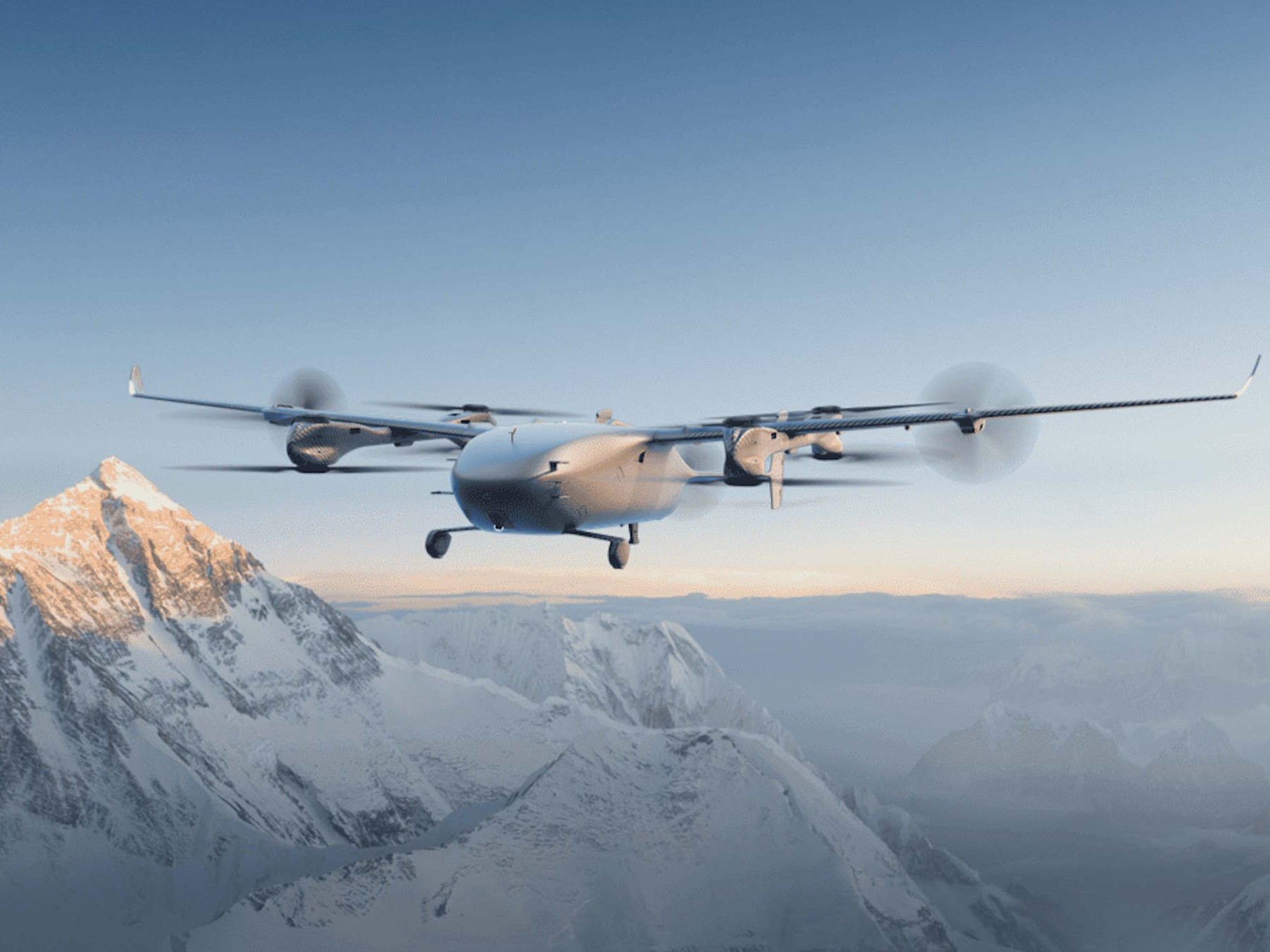
The star of the mission was the DJI EV50, a new eVTOL delivery drone designed to take off and land vertically before switching to fixed-wing flight. During testing on Mount Everest, the EV50 reached a maximum altitude of 8,861 meters and completed a continuous climb of up to 3,730 meters. Those figures highlight the drone’s ability to operate in conditions where many aircraft would struggle.
Flying at extreme altitude is far more complicated than simply adding a bigger battery or stronger motors. Near the top of the world, temperatures can drop dramatically, wind gusts can become unpredictable, and thin air creates a major challenge for aircraft. Because there is less air density at high elevation, propellers generate less lift, forcing the drone’s motors and rotors to work much harder to stay stable.
For this mission, the EV50 carried specialized ozone-measuring equipment to study atmospheric pollutants at high altitude. These measurements can help researchers better understand how pollution behaves in the upper atmosphere and how it may affect fragile mountain environments.
DJI also used other enterprise drones during the Everest project. The Matrice 4E helped map complex glacier formations, providing valuable aerial data in terrain that can be dangerous and difficult for people to access. Accurate glacier mapping is especially important as scientists continue to monitor climate-related changes in high-mountain regions.
Another major part of the operation involved the FlyCart 100, DJI’s heavy-lift transport drone. It carried a total of 10,073 kilograms of materials during the project, including the removal of 2,585 kilograms of waste from the mountain. That achievement shows how cargo drones could support cleanup efforts and logistics in remote environments where traditional transport is expensive, risky, or limited.
Unmanned aircraft can offer several advantages over conventional manned aircraft in this kind of work. They can reduce operating costs, access difficult areas more safely, and, in the case of electric drones, avoid direct exhaust emissions during flight. For environmental research and mountain cleanup operations, these benefits could make drones an increasingly important tool.
The DJI EV50 is not yet commercially available, but its Everest performance suggests that future delivery and research drones could play a major role in high-altitude science, disaster response, environmental monitoring, and remote-area logistics. By combining vertical takeoff, fixed-wing efficiency, and specialized payload support, the EV50 points toward a new generation of drones built for more than convenience or entertainment.
DJI’s Mount Everest mission shows how drone technology is evolving from consumer gadgets into serious scientific and industrial equipment. In one of the most extreme places on the planet, drones are proving they can help gather critical data, move heavy loads, and support cleaner, safer operations in places where human access remains extremely challenging.