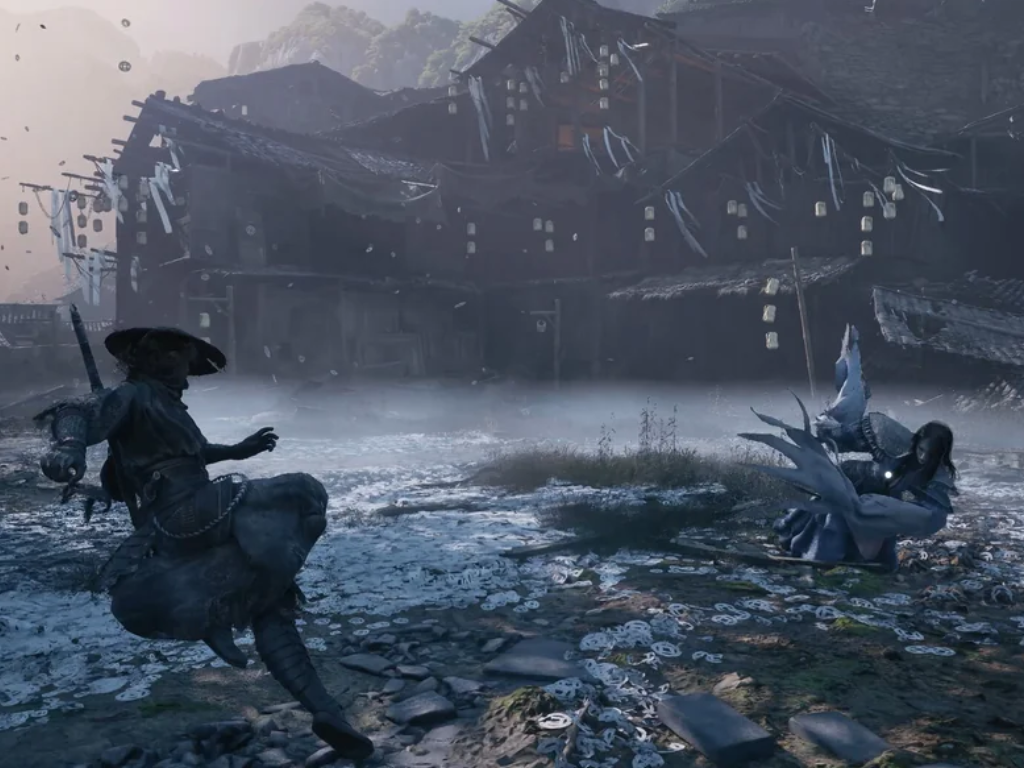
Phantom Blade Zero is closing in on its global release date of September 9, 2026, and its director is making one message unmistakably clear: the game was built by human hands, not generated by machines.
Liang, CEO of S-Game and creative director of Phantom Blade Zero, shared an in-depth update on social media describing what he calls the project’s “intense final stages” of development. With launch approaching, he says the team is pushing every part of the experience to the limit, pouring all remaining time and resources into polishing the game.
What’s drawing the most attention, however, is Liang’s direct stance on generative AI in game development. As more studios experiment with AI-assisted visuals and content creation, he says S-Game has chosen the opposite route. According to Liang, Phantom Blade Zero uses zero generative AI, and every asset in the game is created by real artists to preserve the original creative intent. In other words, the studio isn’t treating AI as a shortcut for art direction, visual design, or content production.
To back that up, Liang outlined exactly how the team is building Phantom Blade Zero from the ground up with an intensely hands-on process.
For character creation, the studio began with 3D scans of real actors, using those scans as the foundation for character models. Performances were also handled traditionally: voice work in both Chinese and English was recorded with professional actors and directors, and then the development team handled lip-syncing.
Even parts of the game that many players might assume are digital or procedurally created were made the old-fashioned way. Liang pointed to the game’s guiding maps in particular, emphasizing they are not AI-generated and not even digital paintings. Instead, they were hand-drawn with Chinese brushes on Xuan paper (rice paper) by young artists from the Chinese Painting Department at the Central Academy of Fine Arts—bringing traditional technique into a modern action game.
Weapon design received the same real-world treatment. Inspired by ancient Chinese styles, the studio went as far as hiring master swordsmiths to forge physical replicas. The goal wasn’t just authenticity for marketing—it was practical. By holding real weapons, animators could better understand weight, balance, and movement, then translate that feeling into more believable, grounded combat animation.
Combat itself was developed with extensive martial-arts motion capture. Liang says more than twenty experienced martial artists contributed, guided by kung fu masters, sword masters from Mount Emei, and lion dancers from Guangdong. That mix of disciplines is meant to help Phantom Blade Zero deliver action that looks sharp, culturally rooted, and physically credible rather than “gamey” or overly synthetic.
The world design also leans heavily on reality. The team traveled across China to scan real locations, including ancient halls in Fujian, towns in Zhejiang, and old factories in Beijing. Those scans were then blended and reimagined to shape what Liang describes as the game’s distinctive “Kungfupunk” aesthetic—a fusion of traditional influence and gritty, stylized edge.
Liang closed his message by framing the approach as a creative principle, not just a production decision. He argues that human artistry isn’t simply a tool for making something valuable—it is the value. For S-Game, Phantom Blade Zero is positioned as a project built around craft, pride, and a team-driven identity, with the studio aiming to ship a game its developers can stand behind without compromise.
With September 2026 nearing, Phantom Blade Zero is setting itself apart not just with its visual style and martial-arts action, but with a development philosophy that puts human-made game art and handcrafted design at the center of the experience.