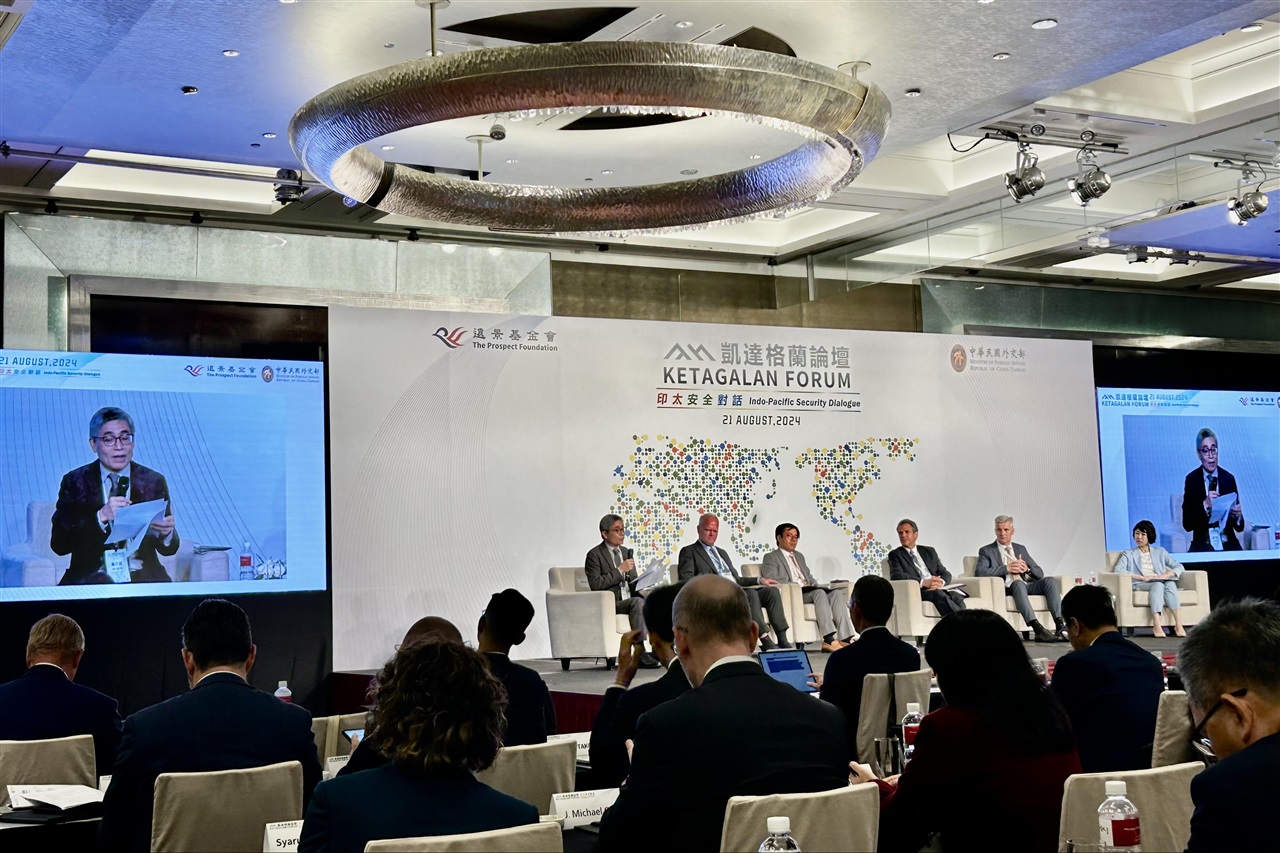
The 2024 Ketagalan Forum: Indo-Pacific Security Dialogue was a significant event where scholars and former diplomats from North America, Europe, and Taiwan discussed methods for enhancing economic resilience. The increasing geopolitical tension, especially between the US and China, elevates the importance of supply chains, trade agreements, and renewable energy as critical components of diplomatic strategies.
The forum featured significant figures including Taiwan President Lai Ching-te and former leaders from Japan, Slovakia, and the US, who emphasized the importance of economic security and the development of robust trade partnerships.
Strategic diplomacy for economic security is a complicated but essential undertaking. Roland Paris, from the University of Ottawa, underscored the importance of developing strategies to mitigate vulnerabilities while also promoting alliances with countries that share similar values. He warned against rising protectionistic tendencies that threaten global prosperity and peace.
Paris also cited Canada’s proactive measures, including new foreign investment regulations in crucial sectors and a focus on critical minerals, as an example of balancing security and partnership. Further, he mentioned a Taiwanese company’s investment in a renewable-energy-powered battery plant in British Columbia, which serves as a testament to aligning economic and environmental goals.
Another perspective from Han-Koo Yeo, a Senior Fellow with extensive trade, investment, and industrial policy experience, brought to light the fact that nations need to diversify their trade and investment relationships, exemplified by Taiwan and South Korea’s shifting trade focus towards ASEAN and India. Yeo highlighted the dynamic role supply chains play in geopolitical strategy, especially in the face of US-China trade tensions and the rapid shift towards prioritizing domestic manufacturing in the US.
Taiwan’s President Lai Ching-te shared the success of the Southbound Policy, leading to increased exports and new alliances, demonstrating how nations adapt to geopolitical shifts. The forum also delved into the strategies South Korea has adopted, navigating the tricky waters of international trade and sanctions against Russia.
Supply chains are increasingly being leveraged as diplomatic tools. Franz Jessen questioned how industries and Europe could adjust to the changing global trade landscape. He pointed out the different responses to US-China trade tension and the importance of considering economic security within both traditional trade policy and the context of national security. Jessen echoed the sentiment that strategic political, military, and economic measures are key to effective diplomacy.
One crucial insight at the event was Jieh-Min Wu’s discussion on the “silicon shield” concept, emphasizing that Taiwan’s semiconductor strength holds global implications. He noted the potentially asymmetrical damage that could occur from any disruption in the chip supply chain. In Wu’s vision for “Silicon Shield 2.0,” he argued for a more integrated approach to Taiwan’s semiconductor ecosystem within international production networks.
In conclusion, the forum offered compelling arguments for the need to enhance economic security through diplomatic strategies, diversification, and leveraging supply chains as a form of geopolitical strategy. It is clear that in our interconnected world, the stability and resilience of supply chains are vital for global security and prosperity.