Digg, the once-iconic link-sharing and community discussion site originally created by Kevin Rose, is going through a major shakeup as its rebooted version lays off a significant portion of its staff. The company confirmed the cuts on Friday, but emphasized that Digg is not shutting down. Instead, the move signals a reset as the startup tries to regain momentum in an internet landscape that has changed dramatically since Digg’s heyday.
Digg CEO Justin Mezzell said the company is refocusing, with Kevin Rose stepping back into a full-time role to help steer the next phase. Rose will still serve as an advisor at the investment firm True Ventures, but Digg will now be his main priority as the team works to figure out what a modern community platform should look like—and how it can survive.
A reboot built for discussion ran into a very 2020s problem
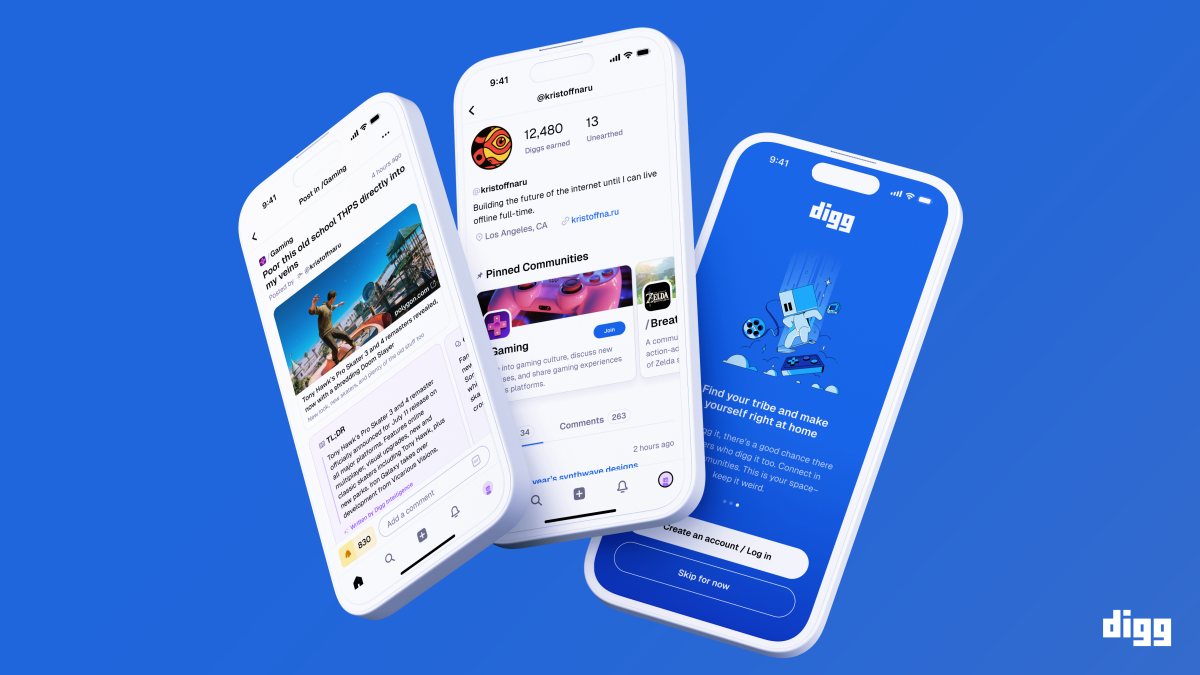
The new Digg positioned itself as an alternative to today’s large community forums, aiming to blend link-sharing, media posts, and text-based discussions organized around topics. It also planned smarter moderation strategies and stronger user verification, designed to reduce bad actors and improve trust.
But the biggest obstacle hit almost immediately: bots.
In a post on Digg’s site, Mezzell described how quickly the beta became a target, with automated accounts and sophisticated spam operations flooding the platform. He referenced the so-called “dead internet theory,” the idea that much of today’s online activity is driven by bots rather than real people, as a way of framing what Digg encountered firsthand.
According to the company, SEO spammers rapidly realized Digg still carried meaningful Google link authority. That discovery triggered a surge of bot-driven abuse. Digg says it banned tens of thousands of accounts, built internal systems to detect manipulation, and even brought in outside vendors—but the bot problem remained too severe.
Why it mattered: Digg’s core mechanics depend on trustworthy votes
Digg’s ranking system relies on user votes to surface the best content. That approach works only if the votes represent real people making genuine choices. With bots capable of swarming submissions, amplifying posts, and distorting what trends, the fundamental trust behind the feed breaks down.
Mezzell argued this isn’t only Digg’s struggle. It reflects a broader internet-wide problem: modern spam and automated accounts aren’t just larger in volume—they’re faster, more adaptive, and more difficult to stop.
Competition was “a wall,” not just a moat
Mezzell also acknowledged that competing with entrenched community platforms proved far tougher than expected. He suggested that established rivals were not merely protected by typical competitive advantages, but by something closer to an impenetrable wall—an indicator of just how difficult it is for a new social/community platform to break through, even one with a recognizable brand name.
What happens now: smaller team, pulled app, podcast continues
Digg did not disclose the number of employees affected, but said a smaller group will remain to rebuild the product into something “genuinely different.” As part of this reset, the Digg app has been removed from the App Store, and at the moment, the company’s layoff announcement is the only content visible on Digg’s website.
One part of the broader Digg revival effort will continue: Diggnation, the video podcast hosted by Rose, is still moving forward.
How Digg got here in the first place
The reboot traces back to last year, when Kevin Rose and Reddit co-founder Alexis Ohanian acquired what remained of the original Digg with plans to reimagine it for today’s web. Their goal was to build a platform where communities would have more control, including stronger ownership and better tools for moderators and administrators.
The deal was described as a leveraged buyout involving True Ventures, Ohanian’s firm Seven Seven Six, Rose and Ohanian personally, and venture firm S32. Financial details were not made public.
For now, Digg’s message is clear: the company is still alive, but the reboot is being rebuilt under intense pressure from automated manipulation, SEO spam, and the realities of competing in today’s social internet.