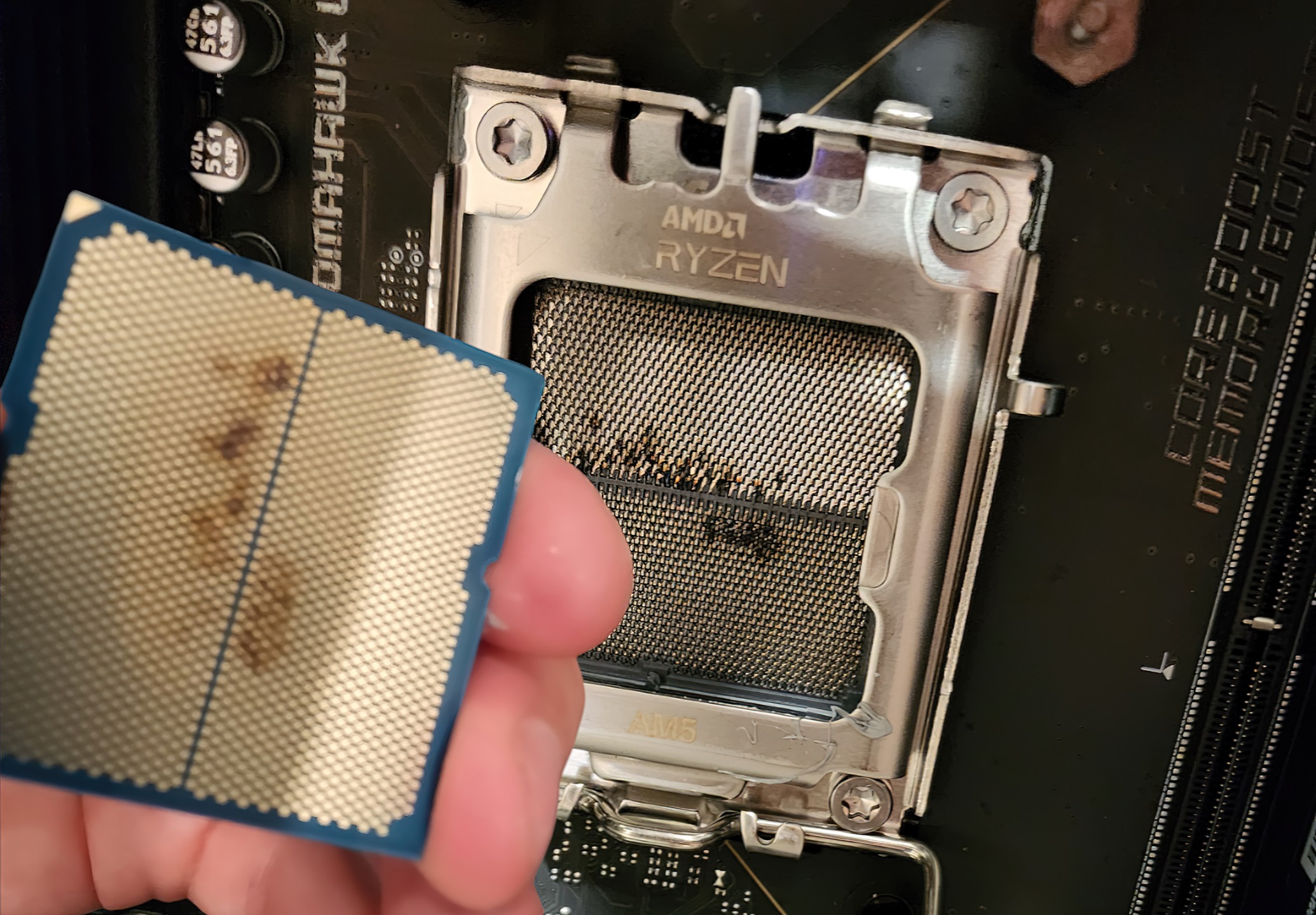
The AMD Ryzen 7 9800X3D CPU, renowned as the top-tier choice for gaming enthusiasts due to its unparalleled performance, has unfortunately encountered its first case of overheating, leading to the complete burnout of both the CPU and the AM5 motherboard socket.
A Reddit user, known as TrumpPooPoosPants, shared their troubling experience with an image of the damaged CPU, which was connected to an MSI MAG X870 Tomahawk motherboard. According to the post, the PC failed to boot up, prompting further investigation. It was discovered that not only had the CPU suffered, but several golden contact pins on the AM5 socket were charred, leaving a “00” postcode error on the system. This coincides with another user’s report on MSI forums, though whether they experienced the exact same issue remains unclear.
This incident with the Ryzen 7 9800X3D is unprecedented. Preliminary analysis suggests that the motherboard might have been responsible, possibly by delivering excessive voltage through the contact pads, thus frying the CPU. A similar incident occurred with the Ryzen 7 7800X3D CPU on an ASUS X670 motherboard due to voltage surges via the SoC rails; however, that problem was swiftly resolved with a BIOS update.
Some Reddit users have observed that the pins appear bent and the socket shows damage on one side. This raises the possibility of user error during installation. CPUs are designed to fit in a single orientation, minimizing the likelihood of installation mishaps, but human error can never be entirely ruled out.
To differentiate this incident from past occurrences, the burn did not display the usual patterns, such as a distinct bulge under the CPU typically seen in similar cases. Thus far, no similar reports have surfaced. Users are advised to rigorously ensure that their contact pads and pins remain pristine before installing their CPUs. Even minor alignment issues can have catastrophic effects on PC hardware. By being vigilant and cautious during installation, users can potentially avoid such damages in their systems.


