Taiwan’s next major growth opportunity in Physical AI may not come from building better individual robot parts alone. Instead, its competitive edge could depend on how well it brings hardware, software, sensors, control systems, and industrial know-how together into complete, ready-to-deploy solutions.
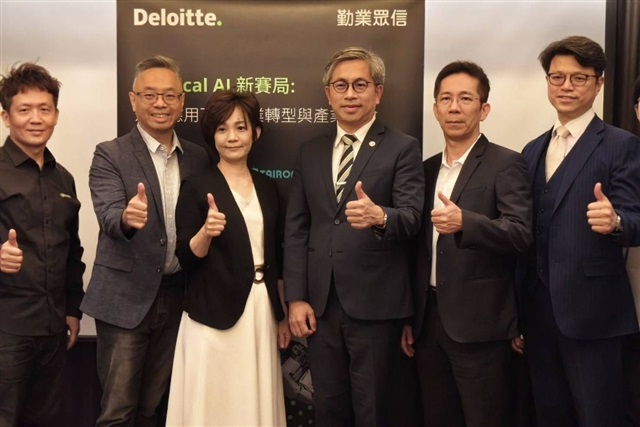
That message was highlighted during a Deloitte Taiwan seminar, where industry and research leaders discussed how Physical AI is moving from concept to real-world application. As factories, logistics centers, healthcare providers, and service industries look for smarter automation, Taiwan is being encouraged to focus on system integration as the key to capturing new value.
Physical AI refers to artificial intelligence that interacts with the real world through machines, robots, sensors, and automated systems. Unlike traditional AI that mainly processes digital information, Physical AI must understand physical environments, make decisions in real time, and perform tasks safely and accurately. This makes integration especially important.
Taiwan already has strong foundations in semiconductors, electronics manufacturing, precision machinery, communications, and industrial supply chains. These strengths give the island a natural advantage in the Physical AI market. However, experts suggest that future success will depend on moving beyond component manufacturing and toward complete industrial systems that solve specific business problems.
For example, a smart robot used in a factory is not defined only by its motors, chips, cameras, or mechanical frame. It also needs software that can interpret data, sensors that can detect changes in the environment, control systems that can respond instantly, and integration with factory workflows. If these elements do not work together smoothly, the robot may fail to deliver real productivity gains.
This is where system integration becomes crucial. Companies that can combine robotics, AI algorithms, edge computing, machine vision, networking, cybersecurity, and industrial process knowledge will be better positioned to deliver practical solutions. These solutions may include autonomous mobile robots, smart inspection systems, AI-powered production lines, warehouse automation, collaborative robots, and intelligent healthcare equipment.
The rise of Physical AI also creates new opportunities for Taiwan’s small and medium-sized enterprises. Many local companies already specialize in precision parts, embedded systems, sensors, industrial PCs, and automation equipment. By working together more closely, these firms could form stronger ecosystems capable of competing in global markets.
Collaboration between industry, academia, and research institutions will also play an important role. Physical AI requires talent across multiple fields, including mechanical engineering, electrical engineering, AI software development, data science, industrial design, and safety certification. Building a strong talent pipeline will be essential as demand grows for engineers who can connect digital intelligence with physical machines.
Another major factor is deployment. Businesses are increasingly looking for AI solutions that can be installed, tested, scaled, and maintained with minimal disruption. This means Physical AI providers must understand customer needs in detail and design systems that fit real operating environments. A successful solution must be reliable, cost-effective, safe, and easy to integrate with existing equipment.
Taiwan’s manufacturing sector could become an early testing ground for Physical AI adoption. With many advanced factories already using automation and data-driven production methods, there is strong potential to introduce more intelligent machines into production lines. These systems could help improve quality control, reduce labor pressure, increase efficiency, and support more flexible manufacturing.
The global Physical AI market is expected to grow as companies seek automation that can handle complex, real-world tasks. Aging populations, labor shortages, supply chain pressures, and the demand for higher productivity are all driving interest in smarter machines. Taiwan has an opportunity to become a key player in this trend if it can turn its component strengths into integrated platforms and industry-specific solutions.
The seminar’s key takeaway was clear: the next stage of AI competition will not be won by technology alone. It will be won by companies and ecosystems that can transform advanced components into working systems with measurable value.
For Taiwan, Physical AI represents more than another technology trend. It could be a strategic opportunity to upgrade its industrial role, expand beyond hardware manufacturing, and become a global hub for intelligent automation systems. To achieve that, the focus must shift from individual parts to complete solutions that can operate in the real world.