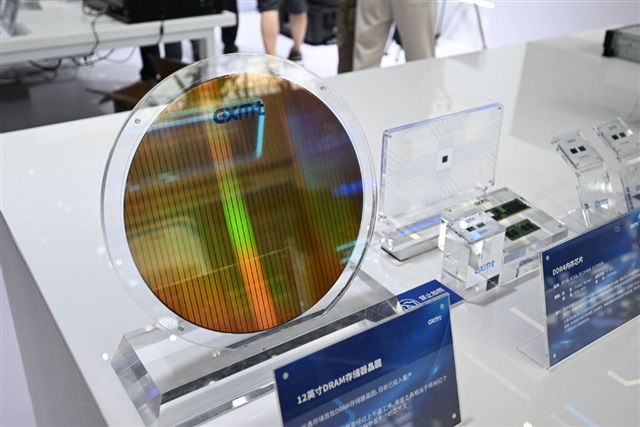
As the world grapples with a sharp shortage of memory chips, China’s two biggest memory makers are moving fast to boost supply. ChangXin Memory Technologies (CXMT) and Yangtze Memory Technologies (YMTC) are pushing ahead with their most ambitious expansion plans yet, aiming to narrow the distance between themselves and the long-established global leaders in DRAM, NAND flash, and next-generation high-bandwidth memory (HBM).
The timing isn’t accidental. Demand for memory has surged across multiple industries at once, from smartphones and PCs to data centers and AI servers. At the same time, supply has struggled to keep pace, creating tight inventories and intensifying competition for production capacity. In this environment, companies that can scale output quickly stand to benefit—not just financially, but strategically—by securing long-term contracts and strengthening their position in global supply chains.
CXMT is widely seen as China’s flagship DRAM producer, and its expansion is closely watched because DRAM is one of the hardest memory categories to scale competitively. Building DRAM capacity requires massive investment, advanced process expertise, and consistent yields at high volume. Even small gains in production can have an outsized effect when the market is tight, particularly for mainstream DRAM used in everyday devices.
YMTC, known primarily for NAND flash, is also associated with China’s broader push to strengthen homegrown semiconductor capabilities. NAND remains essential for storage in phones, laptops, SSDs, and enterprise systems, and growing production is key to meeting both domestic needs and broader market demand. Alongside the drive to increase standard memory output, attention is also turning to more specialized products tied to AI and high-performance computing.
One of the biggest keywords reshaping the memory conversation is HBM. High-bandwidth memory has become critical for AI accelerators and advanced GPUs, where bandwidth and efficiency can determine overall system performance. With AI infrastructure expanding worldwide, HBM capacity has become one of the most contested pieces of the semiconductor supply chain. Any move by manufacturers to ramp HBM output signals an intent to compete in a market segment that’s expected to keep growing rapidly.
For consumers and businesses, these expansion plans matter because memory pricing and availability ripple across the entire tech ecosystem. When DRAM and NAND are scarce, PC and smartphone prices can rise or promotions can shrink, while enterprise customers may face longer lead times for servers and storage gear. Increased output can help stabilize supply, ease bottlenecks, and gradually relieve pressure on pricing—although the pace of relief depends on how quickly new capacity comes online and reaches reliable yields.
More broadly, the expansion underscores how memory manufacturing has become a high-stakes race. Scaling fabs is expensive and time-consuming, but the payoff is influence: the ability to supply major device makers, support growing AI data center needs, and reduce dependence on external sources during periods of geopolitical or market volatility.
With CXMT and YMTC accelerating their capacity growth during a global memory chip shortage, the next phase of the DRAM, NAND, and HBM market could become even more competitive. If these ramp-ups succeed, they could reshape how memory supply is distributed worldwide—and potentially change the balance of power in one of the most essential parts of modern computing.