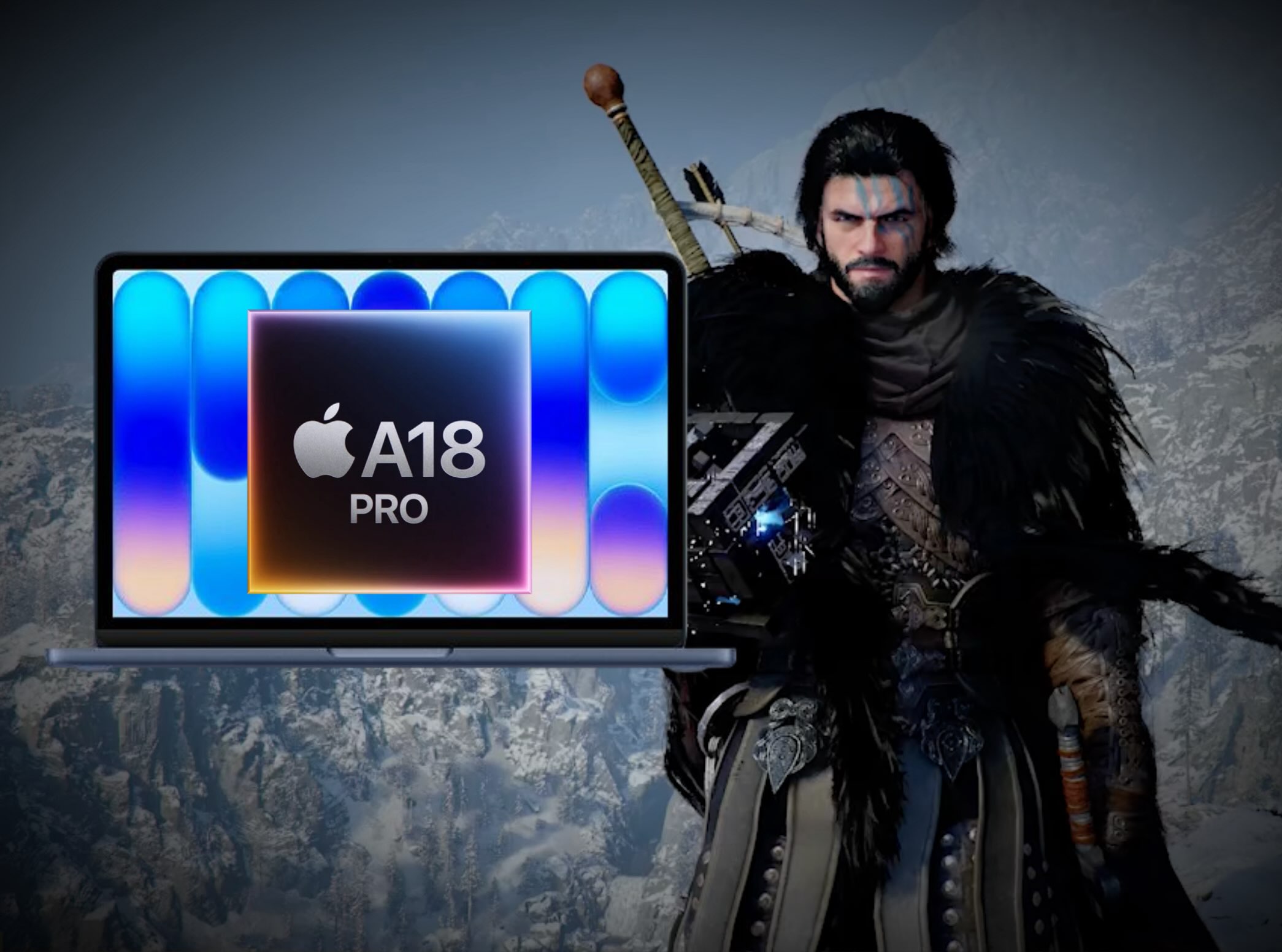
Apple’s A18 Pro-powered MacBook Neo has been in the spotlight lately for one big reason: it’s a rare Apple laptop built with affordability as the top priority. And now, it has another talking point for budget gamers—according to a recent hands-on test from YouTuber Andrew Tsai, the $599 MacBook Neo can run Crimson Desert, one of 2026’s most visually ambitious open-world games, at surprisingly acceptable performance levels.
Crimson Desert has sparked mixed reactions so far. Many players and reviewers praise its huge world and impressive visual fidelity, while others feel the gameplay systems and story don’t always live up to the spectacle. Still, there’s a clear upside for anyone watching their wallet: the game appears to scale well and can run on modest hardware, which is great news in a year where high-end PC requirements keep creeping upward.
That makes the MacBook Neo an especially interesting test case. This entry-level laptop uses Apple’s A18 Pro chip—originally designed for iPhones—paired with just 8 GB of unified memory. On paper, that’s a tough starting point for modern AAA gaming, especially when the official minimum requirements for the Mac version of Crimson Desert are much higher, calling for an M2 Pro or an M3-class chip. The key difference, however, is that Crimson Desert runs natively on Apple Silicon, giving it a better chance to perform decently even on lower-end Apple hardware.
In Andrew Tsai’s testing, the MacBook Neo did manage to run Crimson Desert at around 50 FPS, but there’s an important catch: it required extremely low settings plus aggressive image reconstruction. The setup involved the minimum graphics preset, MetalFX upscaling from a tiny 180p up to 540p, and frame generation turned on. The result is playable motion, but with a noticeably soft and blurry image—essentially a performance-first configuration designed to keep frame rates up rather than deliver sharp visuals.
Even so, the outcome is notable. The A18 Pro variant used here includes a 5-core GPU and supports hardware-accelerated mesh shaders, and in this scenario it delivered performance that comes surprisingly close to Apple’s older M1-level territory in certain conditions. If you aim for a more practical experience, a steadier 30 FPS should be achievable with a slightly higher resolution when leaning on upscaling and frame generation. Tsai also mentioned that, despite the compromises, the frame-generated gameplay can still feel enjoyable—something that could make a real difference for people trying to play demanding games on entry-level Apple Silicon devices.
None of this suddenly turns the MacBook Neo into a dedicated gaming laptop. The limited unified memory and the need for heavy upscaling make that clear. But the fact that Crimson Desert can run at all on a $599 Mac with 8 GB of shared CPU/GPU memory says a lot about the game’s low-end optimization efforts—and about what’s possible when a modern AAA title is built to take native Apple Silicon performance seriously.
For anyone searching for a budget Mac that can handle more than casual games, this is an intriguing sign. The MacBook Neo may be designed for everyday computing, but its ability to run a demanding open-world title like Crimson Desert—even with major visual trade-offs—adds a new angle to the conversation around Apple gaming in 2026.