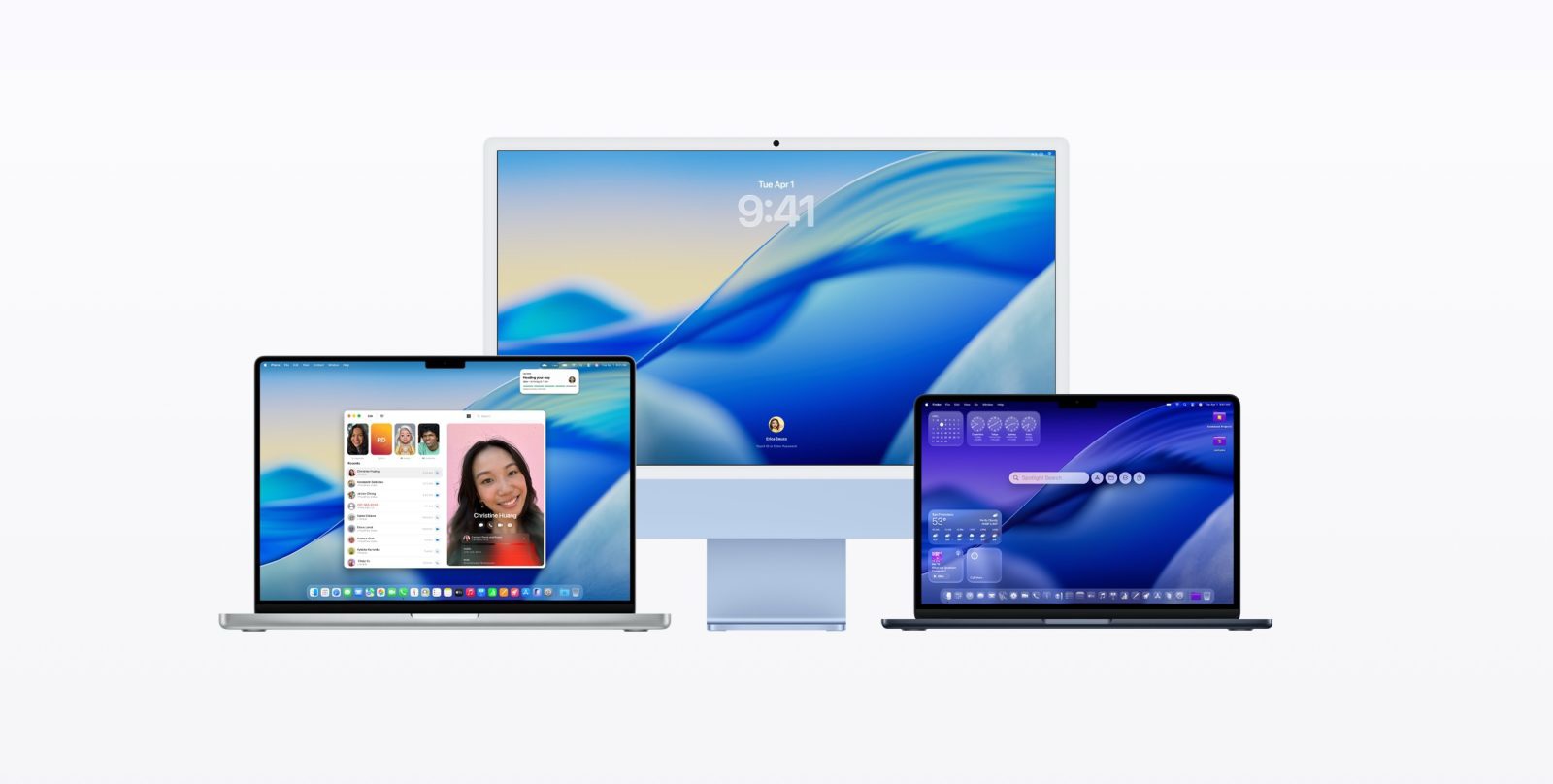
Apple is gearing up for a sweeping upgrade across its entire Mac lineup, with the next-generation M5 chip at the center of the plan. While the exact launch dates are still in flux, the roadmap is becoming clearer: expect first waves to arrive in late 2025, followed by a broader rollout through 2026. If you’re considering an upgrade, here’s what the M5 transition could look like for each Mac—and when you might expect to see it.
Apple’s M5 chip is expected to debut in 2025, with full adoption likely stretching into 2026. As usual, the MacBook Pro line is poised to lead, with the Air and desktop models following. The focus won’t be on radical redesigns but on meaningful internal improvements that boost performance, efficiency, and wireless connectivity.
MacBook Pro (14-inch and 16-inch)
The MacBook Pro is positioned to kick off the M5 generation, with configurations rumored to include the standard M5 as well as more powerful M5 Pro and M5 Max options. A late 2025 launch is on the table, though the higher-end Pro and Max variants may slip into early 2026 due to production timing.
Don’t expect major changes to the exterior. Apple is likely to keep the premium chassis introduced with the M1 Pro era, complete with the notch, a strong selection of ports, and a mini‑LED display. The big news is inside: faster performance, improved efficiency, and upgrades like Wi‑Fi 7, Bluetooth 6, and possibly Thunderbolt 5 are anticipated. For pro users, this should translate into smoother workflows, better connectivity, and higher ceilings for demanding tasks without sacrificing battery life.
MacBook Air (13-inch and 15-inch)
The MacBook Air typically trails the Pro models, and the M5 version is expected to arrive in early 2026, likely in Apple’s usual spring window. The design introduced in 2022—with its slim profile, flat edges, and modern aesthetic—should remain intact, potentially with fresh color options.
The Air’s advantage will be efficiency. The M5 chip is expected to deliver noticeable gains in battery life and sustained performance, making it a compelling option for students, commuters, and anyone who values portability and endurance over sheer horsepower. If long battery life and a fanless experience are priorities, the M5 Air could be the sweet spot of the lineup.
Mac mini
Among desktops, the Mac mini looks set to be one of the earliest to get the M5 treatment, potentially as soon as late 2025, possibly alongside the M5 MacBook Pro. Expect configurations with both M5 and M5 Pro chips, giving buyers a choice between a capable compact desktop and a more performance-focused machine without stepping up to a Mac Studio. The compact aluminum enclosure isn’t likely to change; the emphasis is on bringing next-gen Apple Silicon to a proven form factor.
24‑inch iMac
Apple refreshed the 24‑inch iMac with M4 in 2024, but an M5 version is already in the cards for early 2026. The design should remain familiar, featuring the same enclosure and 4.5K Retina display, with the primary gains coming from the new chip’s performance and power efficiency. New color options may help distinguish it from the M4 model. It won’t be a radical redesign, but it will keep the all‑in‑one desktop current in Apple’s lineup with faster internals and cooler, quieter operation.
Mac Pro
The Mac Pro remains the biggest question mark. Hints suggest a new model could surface as early as late 2025, but details are scarce. If it appears in this window, it would likely feature the M5 Ultra, delivering the kind of workstation-class power pro users expect. Given its niche audience and unique production cadence, its release timing could diverge from the rest of the Mac family.
Projected M5 rollout at a glance
– MacBook Pro (14-inch, 16-inch): Late 2025 for M5; higher-end M5 Pro and M5 Max possibly in early 2026. Familiar design, expected upgrades to Wi‑Fi 7, Bluetooth 6, and potentially Thunderbolt 5.
– MacBook Air (13-inch, 15-inch): Early 2026, likely spring. Same slim design, efficiency and battery life take center stage, possible new colors.
– Mac mini: Late 2025. Options with M5 and M5 Pro, same compact chassis.
– 24‑inch iMac: Early 2026. Same enclosure and 4.5K display, upgraded internals, and potentially new colors.
– Mac Pro: Late 2025 remains possible, though unconfirmed. Potential M5 Ultra for demanding pro workflows.
What this means if you’re planning an upgrade
Apple’s hardware cadence isn’t always straightforward, and manufacturing realities can shift dates. Still, the direction is consistent: the M5 generation is focused on meaningful leaps in performance and efficiency, stronger wireless standards, and longer-lasting battery life, rather than wholesale redesigns. If you need a Mac immediately, current models remain strong; if you want Wi‑Fi 7, next-gen efficiency, and the latest Apple Silicon, waiting for the M5 cycle could pay off.
As timelines firm up, expect clearer signals on which configurations land first. Whether your priority is a powerhouse MacBook Pro, an all-day MacBook Air, a compact Mac mini, a colorful iMac, or a modular Mac Pro, the M5 era aims to deliver broader speed, smarter efficiency, and better connectivity across the board.
Do you think the jump to M5 will be enough to justify upgrading from an M4 Mac, or will you wait to see real‑world performance before making the switch?


