Apple’s MacBook Ultra and iPhone 18 Plans Point to a Major Hardware Strategy Shift
Apple appears to be entering a major transition period, with new supply chain details suggesting the company is rethinking several upcoming products, including its first OLED touchscreen MacBook and the base iPhone 18. The latest reports point to a mix of premium hardware upgrades, chip roadmap changes, and cost-driven compromises as Apple prepares for a more AI-focused future.
The biggest surprise centers on Apple’s rumored high-end OLED MacBook, a device some industry watchers believe could arrive under the “MacBook Ultra” name. While expectations were growing that this model would debut with a newer generation of Apple silicon, fresh information suggests Apple may instead launch it with existing M5 Pro and M5 Max chips.
That would be an unusual move for a product expected to sit at the very top of Apple’s laptop lineup. A touchscreen OLED MacBook would represent one of the most significant design changes to the MacBook Pro family in years, so many buyers may have expected it to arrive with an equally fresh chip platform. Instead, Apple may be saving its bigger silicon jump for a later refresh.
The rumored MacBook Ultra is still shaping up to be a major upgrade. It is expected to feature a hybrid OLED display that combines oxide TFT technology with tandem OLED layers. In practical terms, that could mean higher brightness, better contrast, deeper blacks, improved power efficiency, and longer battery life compared with current mini-LED MacBook Pro models.
The display may also be touch-sensitive, marking a major shift for Apple’s laptop strategy. For years, Apple resisted bringing touchscreens to the Mac, choosing instead to keep touch interaction focused on the iPad. If this new MacBook arrives as expected, it would mark a clear change in direction and could make the MacBook lineup more competitive with premium Windows laptops that already offer OLED touch displays.
Another rumored design change is a thinner chassis, giving the device a more modern and streamlined look. Apple may also replace the traditional camera notch with a pill-shaped cutout similar in spirit to the Dynamic Island design used on iPhones. This could help the new MacBook feel more refined while preserving space for the front-facing camera and related sensors.
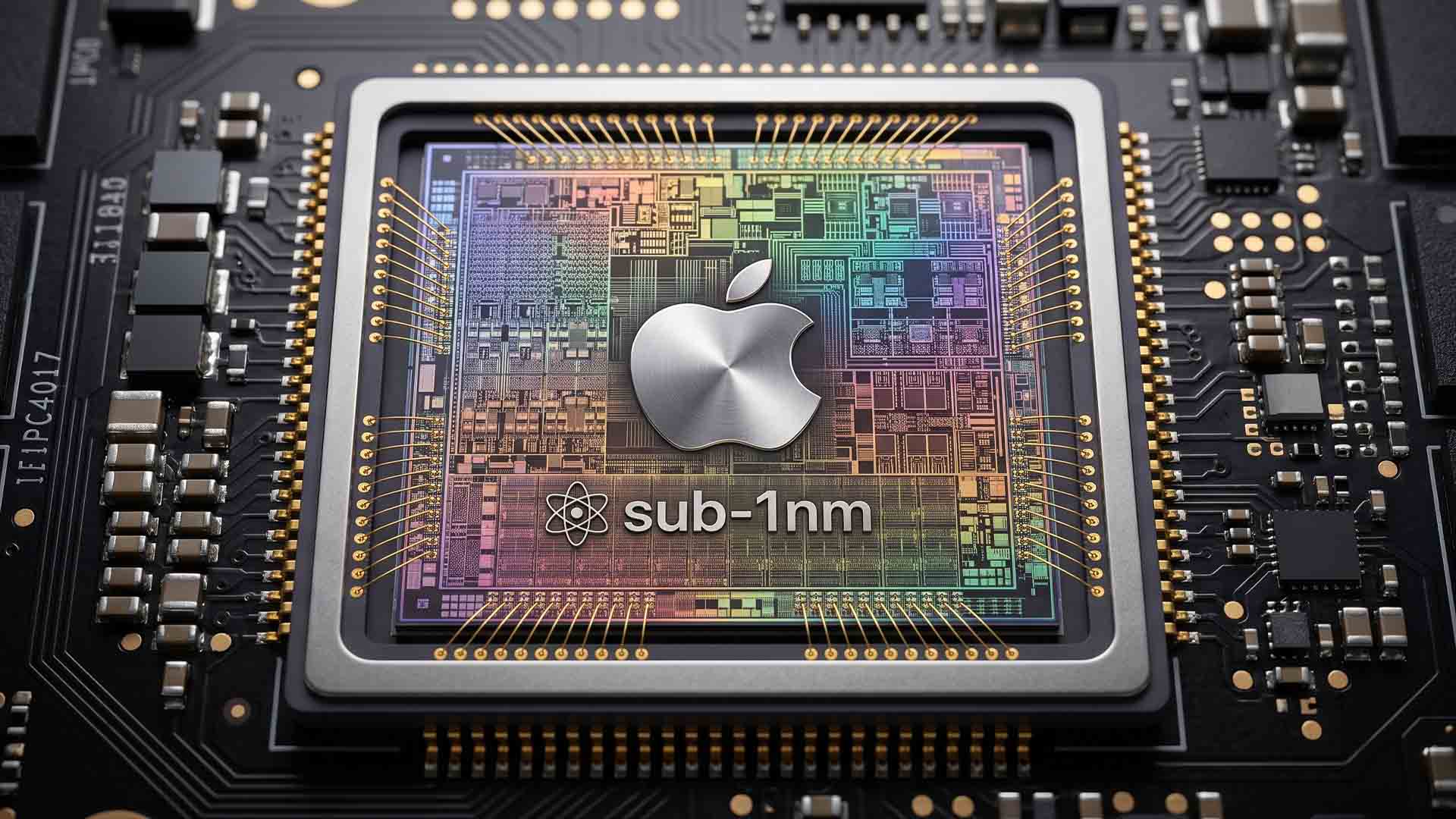
The chip strategy, however, is where things get especially interesting. Apple is reportedly planning to use M5 Pro and M5 Max chips in the first version of the OLED touchscreen MacBook, followed by a later version with M7 Pro and M7 Max chips as early as late 2027.
That means the M6 generation may play a smaller role than originally expected, at least in this premium MacBook category. One possible reason is that Apple may see the M7 architecture as a much more important platform for artificial intelligence workloads. Reports suggest the base M7 chip could offer significantly higher unified memory bandwidth than the base M5, with figures said to rise from around 153GB/s to about 240GB/s.
For everyday users, memory bandwidth may not sound exciting, but it matters a great deal for on-device AI. Faster memory can help large AI models run more smoothly, improve response times, and support more advanced local processing without always relying on cloud servers. If Apple wants future Macs to handle more Apple Intelligence tasks directly on the device, the M7 generation may be a more attractive long-term target than M6.
Manufacturing capacity may also be influencing Apple’s roadmap. Advanced chip production is becoming increasingly competitive, especially as the industry moves toward newer process nodes. If supply constraints are affecting next-generation chip production, Apple may be adjusting its launch schedule to secure enough capacity while preparing for a faster move to M7-based Macs.
The iPhone 18 may face its own AI-related limitations
Apple’s strategy shift is not limited to the Mac. New analyst information suggests the base iPhone 18, expected in the first half of 2027, may launch with 9GB of RAM. That would be an increase over current lower-end models, but it may still fall short of what Apple needs for its most advanced on-device AI features.
Apple Intelligence is expected to become more deeply integrated into iOS in the coming years, especially with the arrival of iOS 27. Future versions of Siri, dictation, writing tools, and smart system features are likely to depend more heavily on advanced AI models running both in the cloud and on the device.
The problem is memory. Apple’s more capable on-device AI model reportedly requires at least 12GB of RAM to operate properly. Even if the model activates only a portion of its full parameter count during a specific task, it still needs enough memory headroom to load and process those tasks efficiently.
If the base iPhone 18 ships with only 9GB of RAM, it may not support the full version of Apple’s most advanced local AI features. That could create a bigger gap between standard iPhone models and higher-end Pro versions, especially as AI becomes a more important reason to upgrade.
The likely reason is cost. Mobile memory prices have reportedly increased sharply, putting pressure on manufacturers across the industry. Higher RAM capacities, especially LPDDR5X memory, are becoming more expensive, and Apple may be trying to avoid raising costs too aggressively on its entry-level flagship models.
This could explain why Apple is choosing a modest RAM increase rather than jumping directly to 12GB across the entire iPhone 18 lineup. Higher-end iPhones may still receive the memory required for premium AI features, while the base model may be positioned as a more affordable option with a limited Apple Intelligence experience.
Apple’s next era may be defined by AI, OLED, and product segmentation
Taken together, the rumored MacBook Ultra and iPhone 18 details suggest Apple is carefully balancing innovation, cost, and supply chain realities. The company appears to be moving toward premium OLED displays, touchscreen Macs, faster AI-ready chips, and more powerful on-device intelligence. At the same time, it may be making selective compromises to protect margins and manage production challenges.
For Mac users, the first OLED touchscreen MacBook could be one of the most exciting laptop launches Apple has delivered in years, even if it arrives with M5 Pro and M5 Max chips rather than a newer silicon generation. For iPhone buyers, the base iPhone 18 may still bring improvements, but it could also highlight how important RAM is becoming in the age of mobile AI.
Apple’s future products are no longer just about faster processors and better cameras. The next battle will be about which devices can run the most advanced AI features smoothly, privately, and efficiently. If these reports prove accurate, Apple is already reshaping its hardware roadmap around that future.


