In the expanding world of smartphone photography, artificial intelligence (AI) and algorithmic processing have become hot topics of debate, especially as more users question the authenticity of the images produced by their devices. The practice has been particularly observed with images of the moon taken by cameras on devices from various manufacturers, leading to widespread discussions about the nature of so-called “real” photos.
Modern Cameras Include AI Enhancements, Says Samsung Executive
In an interview with TechRadar, a top executive at Samsung has contributed to the ongoing dialogue by claiming that no pictures today are entirely real. Patrick Chomet, Executive Vice President at Samsung, expressed his viewpoint on the essence of photography in the digital age. He challenged the notion of authenticity in photography by suggesting that all images are essentially recreations, where sensors and algorithms play a significant role. Citing a video from YouTuber Marques Brownlee, Chomet questioned the definition of a “real” picture:
“There was a very nice video by Marques Brownlee last year on the moon picture. Everyone was like, ‘Is it fake? Is it not fake?’ There was a debate around what constitutes a real picture. And actually, there is no such thing as a real picture. As soon as you have sensors to capture something, you reproduce [what you’re seeing], and it doesn’t mean anything. There is no real picture. You can try to define a real picture by saying, ‘I took that picture,’ but if you used AI to optimize the zoom, the autofocus, and the scene – is it real? Or is it all filters? There is no real picture, full stop.”
Chomet points out that contemporary smartphone brands universally adopt techniques like multi-frame capture to enhance various aspects of photos such as noise reduction, brightness, and dynamic range. Additionally, scene recognition algorithms are employed to adjust image attributes like colors, contrast, skin tones, and white balance, while certain elements might be selectively enhanced to make images more appealing. This raises the question: Are the output images accurate depictions of reality, or are they artistically tuned interpretations?
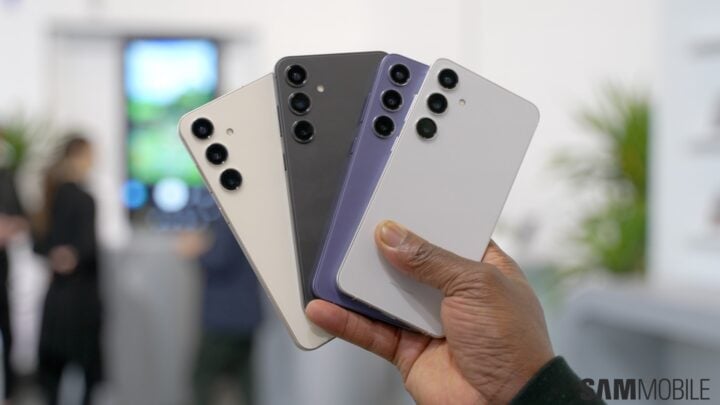
In response to consumer demands, Chomet explained that Samsung endeavors to provide two offerings: a means to capture moments and tools to create a new reality. Referring to the company’s latest Galaxy S24 series, he showcases how AI is integrated to serve both purposes. With an eye towards ethical concerns, he advocates for the regulation of AI and suggests Samsung’s support for such initiatives, notably by implementing watermarks on AI-assisted or edited photos to educate users about the distinction between unadulterated and AI-enhanced imagery.
The executive’s statements underscore the evolving relationship between technology and photography, where the lines between reality and digital enhancement are becoming increasingly blurred. As AI continues to play a prominent role in the way we capture and perceive images, the conversation around photographic authenticity is likely to grow more complex.