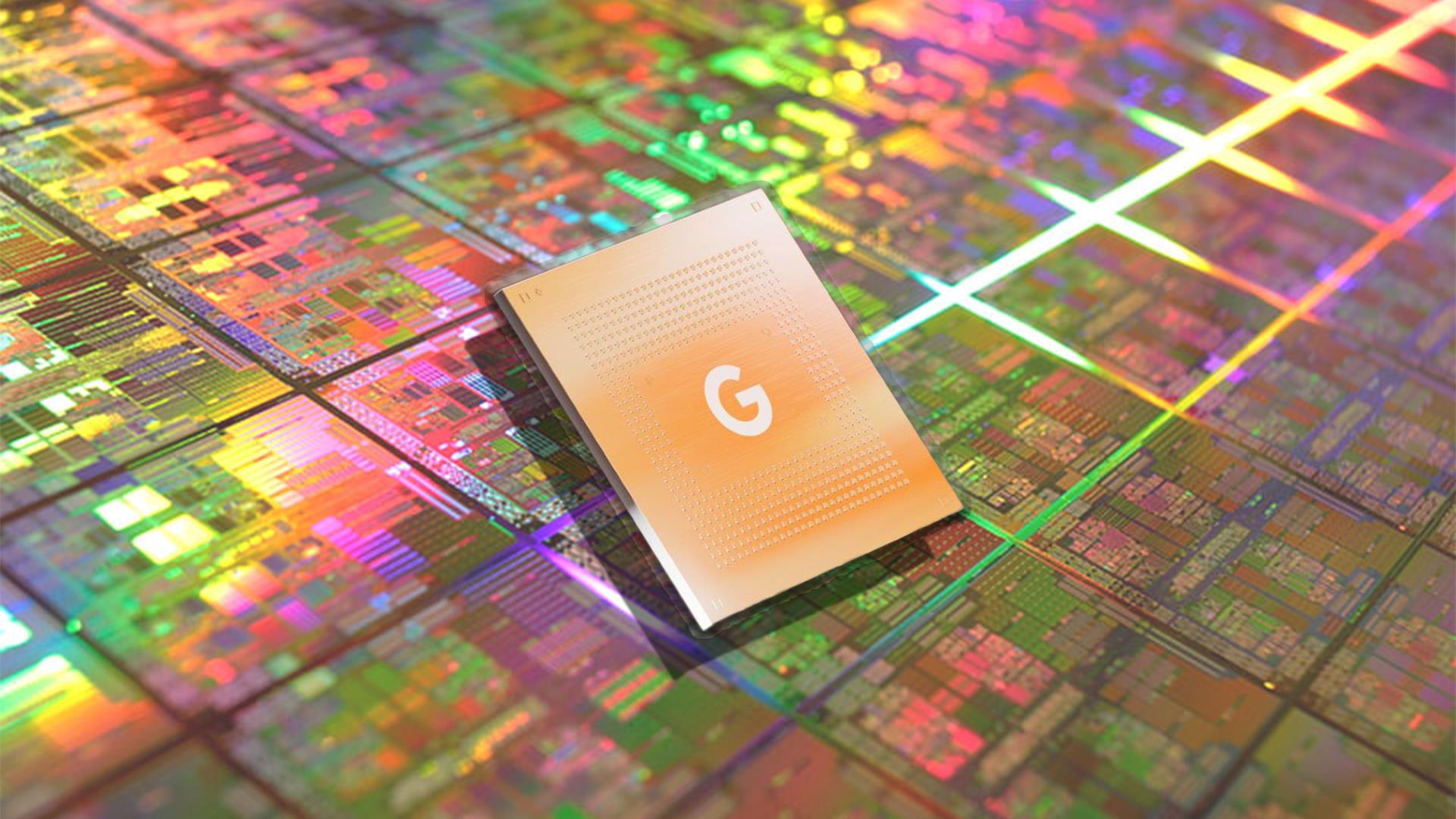
When it comes to the heart of Google’s Pixel smartphones, the Tensor chipsets are highly anticipated with each new iteration. As we compare the Tensor G3, which powered the Pixel 8 and Pixel 8 Pro, to its successor, the Tensor G4, prospective users might wonder about the real-world implications of the updates made between generations. Specifically, individuals eager for the Pixel 9 release may be weighing if the Tensor G4’s enhancements are sufficient reason to upgrade.
Key Differences in Specifications
A closer inspection of the specifications suggests that the Tensor G4 appears to have one less core than its predecessor, transitioning from a ‘1 + 4 + 4’ to a ‘1 + 3 + 4’ CPU cluster. Despite what seems like a downgrade, the G4 counterbalances this change with faster core speeds, with the Cortex-X4 and Cortex-A720 anticipated to replace the Cortex-X3 and Cortex-A715 of the Tensor G3. Furthermore, the efficiency cores upgrade from Cortex-A510 to Cortex-A520, which could potentially yield better performance if thermal management is effective.
GPU and Performance
Both the Tensor G4 and G3 utilize the ARM Mali-G715 GPU, but the G4’s is clocked slightly higher at 940MHz. Historically, such mild overclocking has not significantly impacted real-world performance, being more visible in benchmarking than in everyday usage. The full chipset configurations are as follows:
– Tensor G4: One Cortex-X4 at 3.10GHz, three Cortex-A720 at 2.60GHz, four Cortex-A520 at 1.95GHz, and a 940MHz ARM Mali-G715 GPU.
– Tensor G3: One Cortex-X3 at 3.00GHz, four Cortex-A715 at 2.45GHz, four Cortex-A510 at 2.15GHz, and an 890MHz ARM Mali-G715 GPU.
Some speculate that Google missed an opportunity by not adopting a 10-core configuration similar to the Exynos 2400, which could have given the Tensor G4 a significant boost in multi-core performance.
Real-World Performance Metrics
Leaks and preliminary benchmarks suggest variations in performance across the Pixel 9 lineup, with differences noted between base models and the more advanced Pixel 9 Pro and Pixel 9 Pro XL. These discrepancies could be due to a myriad of factors, including possible thermal solutions like vapor chambers, different versions of the Tensor G4, and varying levels of optimization for benchmarking tools.
Packaging and Thermal Management
There may be two versions of the Tensor G4: one leveraging advanced Fan-Out Wafer-Level Packaging (FOWLP) technology, which adds more I/O connections for faster and more efficient signal processing, and one that does not. This superior packaging method also offers better heat resistance, contributing to sustained performance under load.
Is Upgrading to Pixel 9 Worthwhile?
Even with incremental improvements in the Tensor G4, it is not just the chipset that should be considered when contemplating an upgrade. The inclusion of the Exynos 5400 5G modem, which is expected to support satellite connectivity and offer dramatic improvements in power efficiency, could be a major draw for users. Moreover, Google promises expanded on-device capabilities within the G4, though it’s possible that many functions may still rely on cloud-based processing due to its comparative lack of raw power.
As more tests and updates emerge, we’ll gain a clearer picture of the Tensor G4’s capabilities. For now, if the aspects like the efficient 5G modem and enhanced AI functionalities speak to your needs, upgrading to the Pixel 9 could be enticing. However, such features may not be on every potential buyer’s priority list.
As new smartphones continually push the boundaries in performance and capabilities, staying informed and evaluating what improvements matter most to you will help in making a well-rounded decision on whether to upgrade to Google’s latest offering.