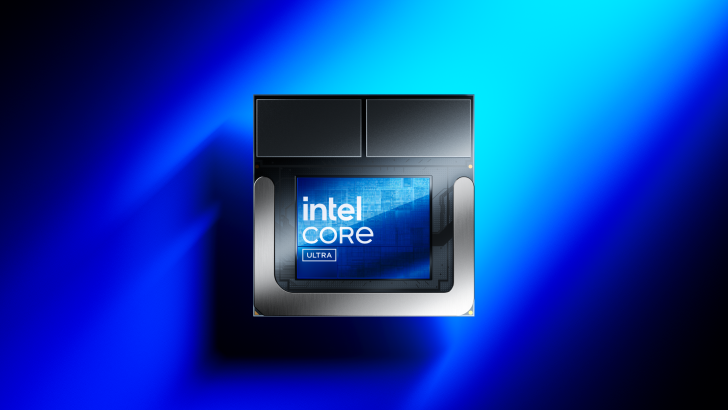
Intel’s Lunar Lake SoCs have officially hit the market, and the consensus among tech reviewers is overwhelmingly positive, signaling a substantial comeback for Team Blue.
The Lunar Lake “Core Ultra 200V” or “Core Ultra Series2” was eagerly awaited, and it appears the anticipation was well-founded. Initial reviews indicate that Intel has not only met but exceeded expectations, showcasing significant performance improvements, efficiency, and robust graphics capabilities—all in one compelling package.
The collaboration between Intel’s CPU design team and TSMC’s process technologies has produced a platform that stands out in efficiency, performance, and durability. Intel’s precision in this launch is unmistakable.
Currently, extensive reviews on Intel’s Lunar Lake platform with in-depth benchmarking are being prepared, so stay tuned for further insights soon.
One notable early review by tech YouTuber, ETA Prime, focused on ASUS’s Zenbook S14 equipped with the Intel Lunar Lake Core Ultra 7 258V mobile chip. This SoC features a balanced mix of eight cores: four high-performance P-cores (Lion Cove) and four efficiency E-cores (Skymont Cores), making it a solid mid-tier performer in the lineup. Benchmark tests on Geekbench, Cinebench R24, and 3DMark clearly demonstrate that the Core Ultra 7 258V surpasses its predecessors and competes closely with ARM-based chips like Apple’s M1 Max.
Gaming performance is another highlight, with the Core Ultra 7 258V showing consistent results in AAA titles such as Forza Horizon 5 and Red Dead Redemption 2. It achieves around 60-80 frames per second on low-to-mid settings, thanks to the enhanced Xe2 integrated GPU, while maintaining optimal temperatures without needing to switch to “Performance Mode.”
Battery life is another area where Intel’s Lunar Lake shines. Testing showed the Zenbook S14 lasted 16 hours and 37 minutes under 50% brightness while streaming 1080p video—a clear indicator of how far Intel has come in terms of efficiency. This exceptional battery performance isn’t limited to just high-end models but is consistent across the board.
Despite a minor hiccup with driver issues noted by The Phawx, Intel has already rolled out a patch to address these early concerns. This swift response signifies Intel’s commitment to fine-tuning user experience post-launch.
The performance metrics for the Arc 140V “Xe2” iGPU also deserve mention. The Phawx compared various TDP settings and benchmarked Lunar Lake against older generations like Meteor Lake and AMD’s Ryzen AI 300 APUs. Lunar Lake chips exhibit impressive performance per watt, particularly in low-wattage scenarios—a promising sign for upcoming gaming handhelds.
PCWorld commends Intel for this launch, saying Intel has significantly revitalized the x86 segment, especially in laptops. The efficiency and performance impressed so much so that the ASUS Zenbook S14 demonstrated up to 23 hours of battery life under 720p video streaming—a testament to Intel closing the efficiency gap in the market.
Intel’s Lunar Lake architecture could very well be the breakthrough that repositions the company as a leader in the SoC market. While there is still ground to cover vis-à-vis AMD’s “Strix Point” APUs, the generational leap in performance per watt is remarkable. The strategic design and choice of foundry have contributed to a slim and lightweight package capable of powerful performance.
Intel’s resurgence in the laptop segment is a promising development for the tech industry, and this latest product reaffirms their standing with a strong addition to their lineup.
What are your thoughts on the Intel Lunar Lake launch reviews? Let us know!