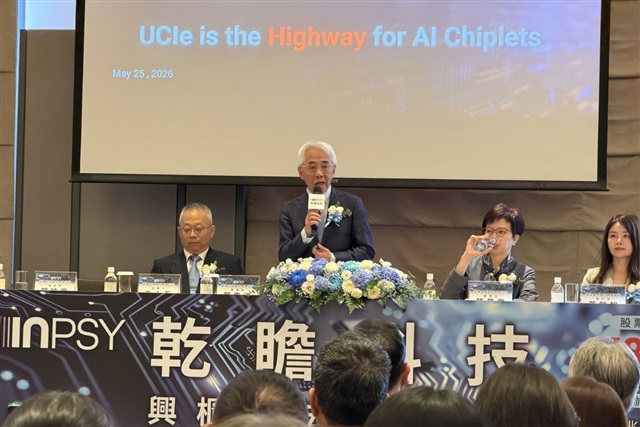
Taiwan’s InPsytech Draws Attention as the Chiplet Boom Fuels Demand for AI Connectivity IP
The semiconductor industry is moving quickly into a new era, and chiplet-based design is becoming one of its most important breakthroughs. Instead of building a large processor as one single piece of silicon, chiplet architecture allows multiple smaller chips to be packaged together and work as a unified system. This approach can improve performance, reduce manufacturing risks, and give chip designers more flexibility as demand for AI computing continues to rise.
As artificial intelligence workloads become larger and more complex, chipmakers are under pressure to deliver faster processors, higher bandwidth, and better energy efficiency. Traditional monolithic chip designs are becoming harder and more expensive to scale, especially at advanced process nodes. Chiplets offer a practical path forward by letting companies combine different types of chips, such as CPUs, GPUs, AI accelerators, memory controllers, and input-output components, inside one advanced package.
However, chiplet design is not simply about placing multiple dies side by side. The real challenge is making these separate components communicate with each other quickly, efficiently, and reliably. This is where specialized connectivity intellectual property, often called connectivity IP, becomes essential.
Taiwan-based InPsytech is gaining attention in this growing market thanks to its focus on AI connectivity IP. As chiplet adoption expands, companies that can provide high-speed, low-latency communication technology may become increasingly important to the next generation of semiconductor products.
Connectivity IP acts like the nervous system of a chiplet-based processor. It allows different chiplets to exchange data at extremely high speeds while keeping power consumption under control. For AI chips, this is especially critical because machine learning models require massive amounts of data to move between compute units and memory. If the connection between chiplets is slow or inefficient, overall performance can suffer, even if the individual chiplets are powerful.
The rise of generative AI, data center acceleration, autonomous systems, and edge AI has pushed the need for better chip-to-chip communication. Modern AI processors must handle huge parallel workloads, and that requires advanced interconnect technology. Reliable connectivity IP helps chip designers build scalable AI platforms without starting every design from scratch.
Taiwan already plays a central role in the global semiconductor supply chain, particularly in chip manufacturing, packaging, and hardware design. As the chiplet ecosystem grows, Taiwanese companies with expertise in semiconductor IP, verification, and advanced integration could find new opportunities. InPsytech’s focus on AI connectivity places it in a market segment that is becoming more valuable as chipmakers search for better ways to build powerful and efficient processors.
Chiplet architecture also supports heterogeneous integration, which means different chiplets can be made using different manufacturing technologies. For example, a high-performance compute chiplet may be produced on a cutting-edge process, while input-output or analog chiplets can use more mature, cost-effective nodes. This makes chip development more flexible and can reduce costs compared with producing one large, complex die on the most advanced node.
For semiconductor companies, this model can improve yield because smaller chips are generally easier to manufacture successfully than large monolithic dies. If one small chiplet has a defect, it may be easier and cheaper to replace than losing an entire large processor. This advantage is one reason the industry is increasingly interested in chiplet-based designs for AI, high-performance computing, networking, and consumer electronics.
Still, the success of chiplets depends heavily on standards, packaging technology, and interconnect design. Advanced packaging methods allow chiplets to sit close together and communicate at high bandwidth. Meanwhile, connectivity IP ensures that data can move smoothly across the system. As more companies adopt chiplet strategies, demand for proven IP solutions is likely to increase.
InPsytech’s position in AI connectivity IP reflects a broader shift in the semiconductor industry. The future of chip performance will not depend only on smaller transistors. It will also depend on how intelligently multiple components are connected, packaged, and optimized to work together. This creates opportunities for companies that specialize in the hidden but vital technologies behind modern chips.
The chiplet boom is still developing, but its impact is already clear. AI processors, data center chips, and next-generation computing platforms are becoming more modular, more complex, and more dependent on high-performance communication between dies. As this trend accelerates, connectivity IP could become one of the most important building blocks in semiconductor design.
For Taiwan’s semiconductor ecosystem, the growth of chiplets represents another major opportunity. Companies focused on advanced packaging, design services, and AI-focused IP may benefit as global chipmakers look for partners that can help them build faster and more efficient computing systems.
InPsytech’s role in this space highlights how the chiplet revolution is creating demand beyond fabrication alone. The industry now needs smarter architectures, stronger interconnects, and reliable IP that can support the next wave of AI innovation. As AI computing continues to expand, the companies enabling seamless chiplet communication may become key players in shaping the future of semiconductors.