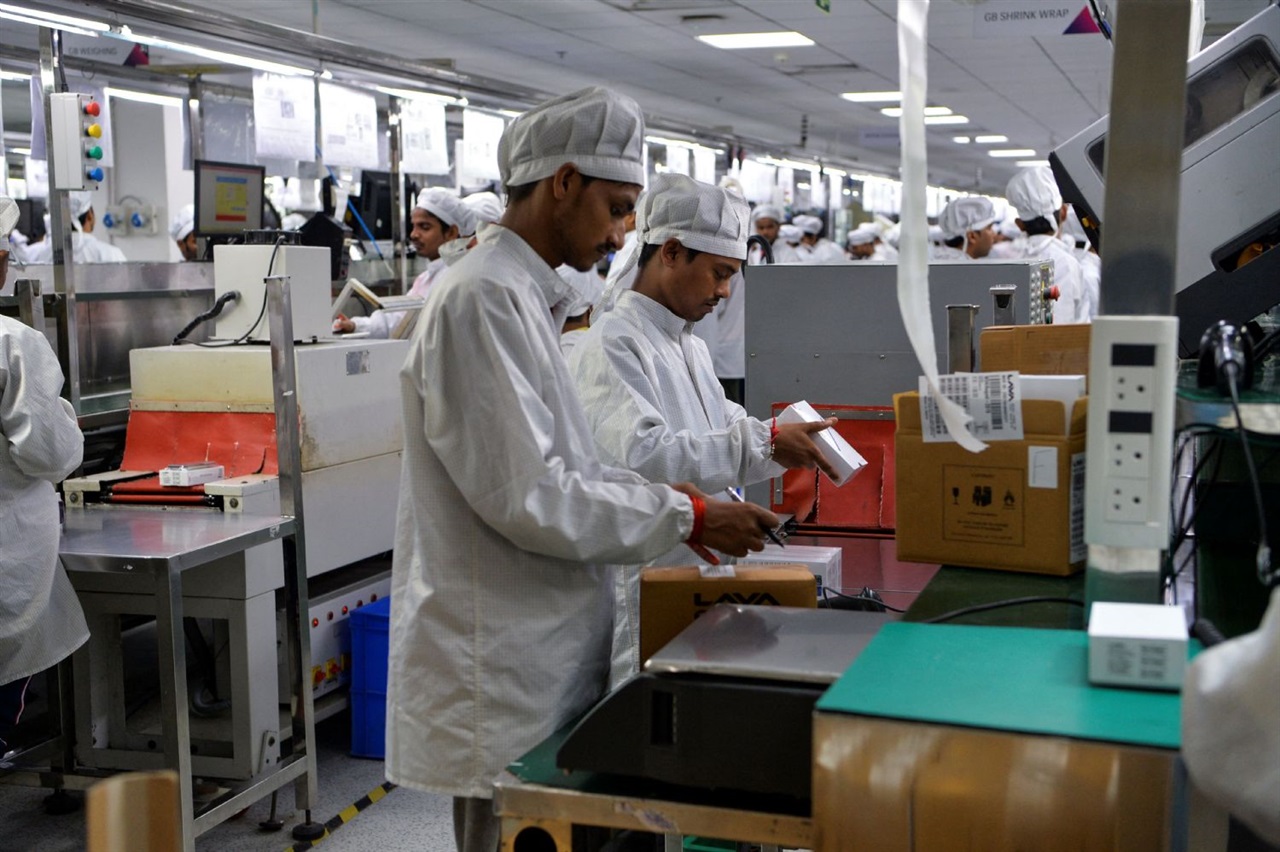
China’s Visa Curbs Put India’s Electronics Manufacturing Push Under Pressure
China’s move to sharply reduce visa approvals for Indian business travelers is creating a fresh challenge for India’s fast-growing electronics manufacturing sector. The restrictions are not just a travel issue. They are highlighting a deeper dependency that India has been trying to reduce for years: its reliance on Chinese machinery, components, tooling, and technical expertise.
India has made major progress in attracting global electronics brands and contract manufacturers, especially in smartphones, consumer devices, and hardware assembly. Government incentives, rising domestic demand, and efforts to build local supply chains have helped turn the country into an increasingly important manufacturing hub. However, the latest visa hurdles show that India’s electronics ecosystem still depends heavily on China at several critical stages.
For many Indian manufacturers, regular travel to China is essential. Business teams visit Chinese suppliers to inspect equipment, negotiate component orders, finalize production tooling, and solve technical issues. Engineers and technicians often need to travel for training, factory audits, quality checks, and machinery installation. When visa approvals slow down or become uncertain, production timelines can quickly come under pressure.
The impact could be especially serious for companies involved in smartphone manufacturing, printed circuit board assembly, display modules, batteries, chargers, wearables, and other electronic components. These industries rely on tightly coordinated supply chains, where even small delays in machinery setup or component shipments can affect output schedules.
India’s electronics manufacturing ambitions are built around moving beyond basic assembly and creating a stronger domestic ecosystem. The goal is to manufacture more components locally, develop advanced production capabilities, and reduce dependence on imports. But for now, many factories still require Chinese-origin equipment and technical support to scale production efficiently.
This is where the visa restrictions become a strategic concern. If Indian businesses cannot easily send teams to China or bring in Chinese specialists when needed, companies may face higher costs, longer setup times, and delays in meeting production targets. For global brands looking to diversify supply chains away from China, these bottlenecks could make India’s transition more complicated.
The situation also underlines the importance of building local technical skills. India has a large workforce, but advanced electronics manufacturing requires specialized know-how in precision tooling, automation, semiconductor-related processes, display technology, and quality control. Developing that talent at scale will take time, investment, and cooperation between industry, training institutes, and government bodies.
At the same time, India may need to accelerate partnerships with alternative suppliers from regions such as Taiwan, Japan, South Korea, Southeast Asia, Europe, and the United States. Diversifying sources for machinery and components could reduce the risk of future disruptions. However, replacing China’s role in electronics supply chains is not simple. China remains deeply embedded in global manufacturing because of its scale, supplier network, speed, and technical depth.
For India, the current challenge is a reminder that becoming a global electronics manufacturing powerhouse requires more than factories and incentives. It requires a complete supply chain, reliable access to tools and components, skilled engineers, strong logistics, and stable international business channels.
China’s tighter visa approach may slow some near-term plans, but it could also push India to move faster on self-reliance in critical areas. The next phase of India’s electronics growth will depend on how quickly the country can localize key capabilities while keeping global supply networks open.
If India succeeds, the current disruption may be remembered as a turning point. If not, visa restrictions and supply chain dependence could continue to limit the country’s manufacturing ambitions, even as demand for locally made electronics keeps rising.