China is taking a major step toward building a more open, homegrown computing stack, as the Chinese Academy of Sciences (CAS) unveiled a next-generation effort to develop chips and operating systems together. The announcement arrived during the 2026 Zhongguancun Forum, where CAS also introduced the Xiangshan open-source processor and a new native operating system called Ruyi.
The initiative highlights a growing push to design hardware and software as a unified platform rather than as separate projects. By co-developing a processor architecture and an operating system in parallel, the goal is to improve performance, compatibility, and long-term stability across devices that adopt the platform. This kind of “full-stack” approach can speed up optimization, reduce dependency on external ecosystems, and help developers build applications that run more efficiently.
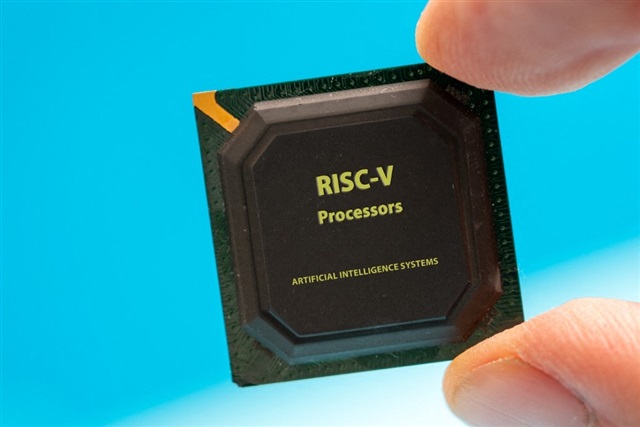
At the center of the news is Xiangshan, described as an open-source processor. Open-source chips have become an increasingly important topic in the semiconductor world, especially around RISC-V, the open instruction set architecture that enables companies and research groups to design processors without relying on proprietary CPU licensing models. An open processor project can encourage broader collaboration, academic research contributions, and faster iteration, while also giving local partners greater flexibility in how they customize and deploy the technology.
Alongside the processor debut, CAS presented Ruyi, a native operating system designed to complement the new chip direction. While details about features and rollout timelines were not fully spelled out in the announcement, the positioning is clear: Ruyi is intended to serve as a foundational OS layer that can take advantage of chip-level capabilities from the start, strengthening the overall platform and potentially simplifying support across different hardware implementations.
The combined introduction of the Xiangshan open-source processor and Ruyi OS signals a strategic attempt to build an open chip platform with a matching software foundation. If the ecosystem attracts developer adoption and industry participation, it could become an influential reference point for future RISC-V-based innovation, especially in environments where open standards, local control, and long-term maintainability are top priorities.