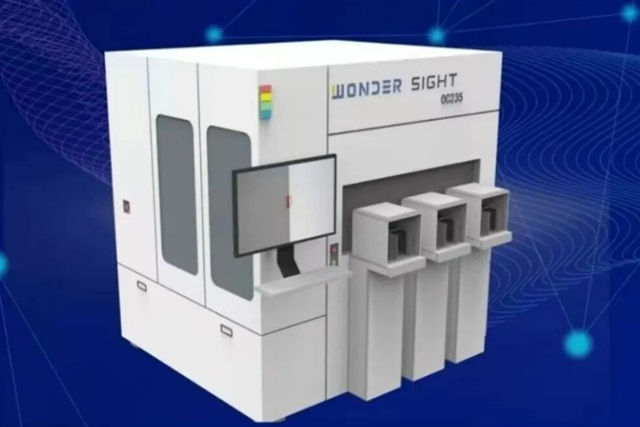
Shenzhen-based Wonder Sight has unveiled its first domestically developed high-precision stepper lithography machine, marking an important milestone for China’s semiconductor equipment industry. The debut signals growing momentum behind homegrown chipmaking tools and underscores how far the country’s engineering and manufacturing capabilities have advanced in precision optics, motion control, and semiconductor automation.
A stepper lithography machine is one of the most complex and critical systems in wafer fabrication. It projects intricate circuit patterns onto silicon wafers, layer by layer, with extreme accuracy. High precision here translates directly into better yields, tighter process control, and the ability to scale manufacturing for everything from consumer electronics to industrial, automotive, and telecommunications chips. By bringing a domestically designed stepper to market, Wonder Sight strengthens the local supply chain and reduces dependence on imported photolithography equipment.
Why this matters:
– It elevates China’s capacity to design, build, and support core semiconductor manufacturing equipment.
– It can accelerate collaboration among local optics, materials, software, and metrology suppliers, fostering a more resilient ecosystem.
– It gives domestic fabs an additional option for tool sourcing, service, and long-term maintenance, which are critical for uptime and yield.
– It supports talent development in precision engineering, control systems, and process integration—skills essential to next-generation chip production.
The significance also lies in the supporting technologies required to make a stepper viable on a fab floor. Beyond the optics, success depends on robust control software, vibration isolation, stage accuracy, overlay consistency, and repeatable throughput under real-world production conditions. Establishing a reliable service network, spare parts pipeline, and continuous firmware and metrology updates will be key steps as Wonder Sight scales from initial launch to broader adoption.
What to watch next:
– Pilot deployments at domestic fabs to validate uptime, overlay accuracy, and yield contributions over extended production runs.
– Partnerships with universities and research institutes for process refinement, photoresist tuning, and advanced patterning techniques.
– Iterative improvements to system stability, calibration routines, and automation that reduce total cost of ownership for manufacturers.
– Expansion of local supplier bases in precision optics, motion stages, and environmental controls to support volume production.
Shenzhen’s role as a hardware innovation hub adds another layer of momentum. The city’s established ecosystem—from component sourcing to rapid prototyping and systems integration—can help Wonder Sight iterate faster, address real-world feedback from fabs, and scale manufacturing capacity.
For China’s semiconductor trajectory, the launch of a domestically developed high-precision stepper is more than a product debut; it is a foundational capability. As the tool matures through field testing and process integration, it could open new opportunities for localized chip production, enhance supply chain resilience, and spark further innovation across the country’s microelectronics landscape.