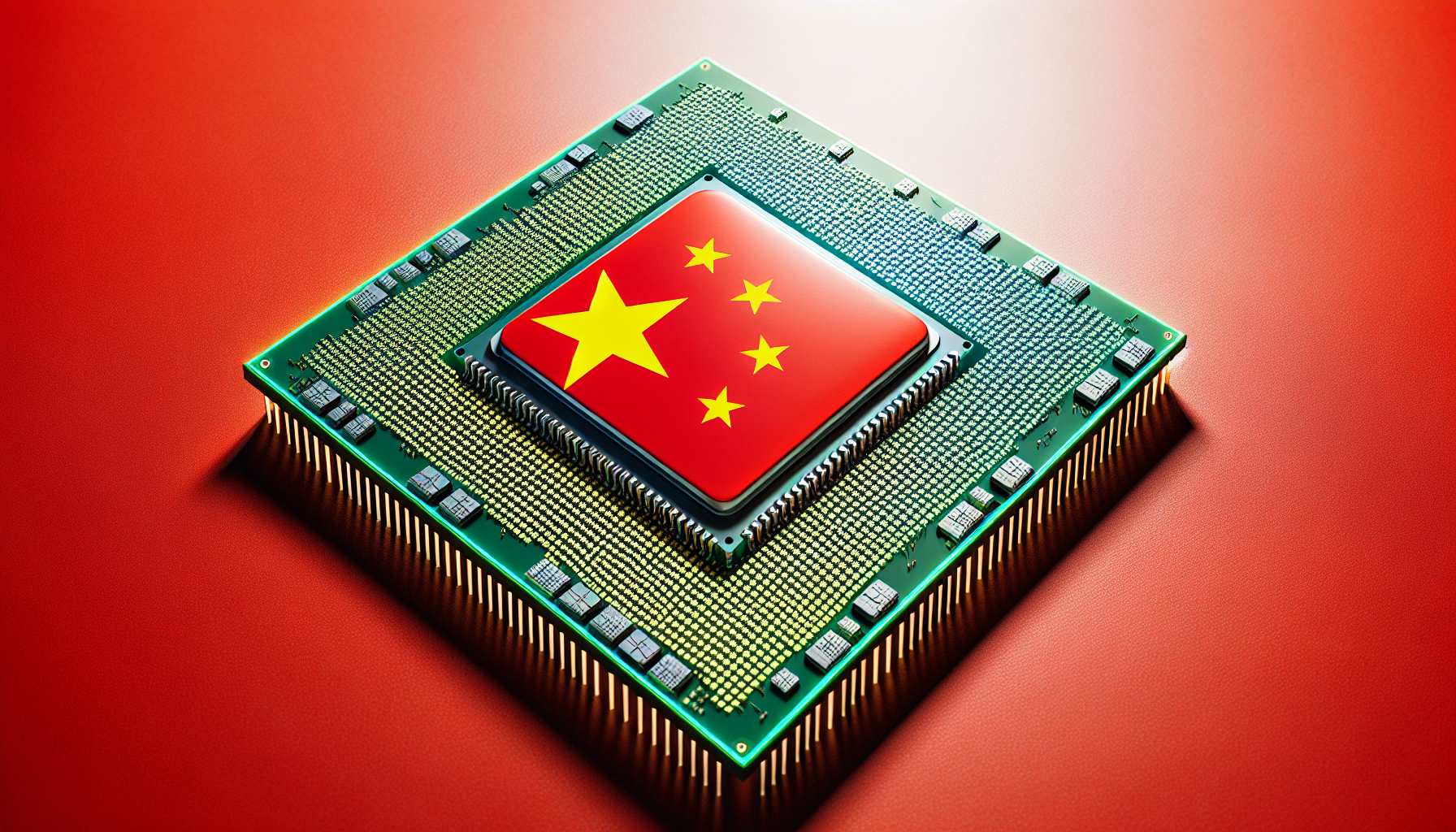
China has made a remarkable leap in technology by unveiling its first ever silicon photonics chip, thanks to the innovative work at JFS Laboratory. This breakthrough is poised to transform areas like artificial intelligence (AI) and high-performance computing (HPC). Unlike traditional chips that rely on copper wires, this new technology uses lasers for data transmission, which paves the way for higher bandwidth, minimal latency, and enhanced energy efficiency.
Established in 2021 with a massive government investment of 8.2 billion yuan (approximately $1.2 billion), JFS Laboratory has dedicated three years to perfecting this groundbreaking innovation. The laboratory’s team successfully integrated a laser light source directly onto a silicon chip. However, they are currently keeping the specifics, such as data transfer speeds and energy consumption, under tight wraps.
This development marks a significant milestone in China’s quest to strengthen its semiconductor industry. Utilizing optical interconnects offers the potential to craft chip designs capable of efficiently handling the intensive demands of AI and HPC, while also being energy-efficient—a crucial factor for large-scale data centers.
One of the alluring benefits of the technology is its potential to reduce costs in data centers. Optical signals generate less heat and consume less energy over long distances compared to traditional copper, which could ultimately translate to savings on operational expenses.
Although some of the finer details of JFS Laboratory’s silicon photonics chip remain undisclosed, this innovation is a notable stride forward in China’s chip-making objectives. It promises to meet the burgeoning requirements of modern technology landscapes, promoting more sustainable and cost-effective solutions in data processing.
This development not only represents a leap forward for China’s semiconductor industry but also highlights the continuous race and evolution within global tech innovation—a race where China is undeniably securing its position on the leaderboard. The successful application of this technology could have far-reaching implications, suggesting potential shifts in how data centers globally might operate in the future.