US-China AI Race Intensifies as China Restricts Engineer Travel and NVIDIA Targets $500 Billion in AI Financing
The technology rivalry between the United States and China is moving into a sharper phase, with both countries taking aggressive steps to protect their strengths in artificial intelligence, semiconductors, cloud computing, and data center infrastructure.
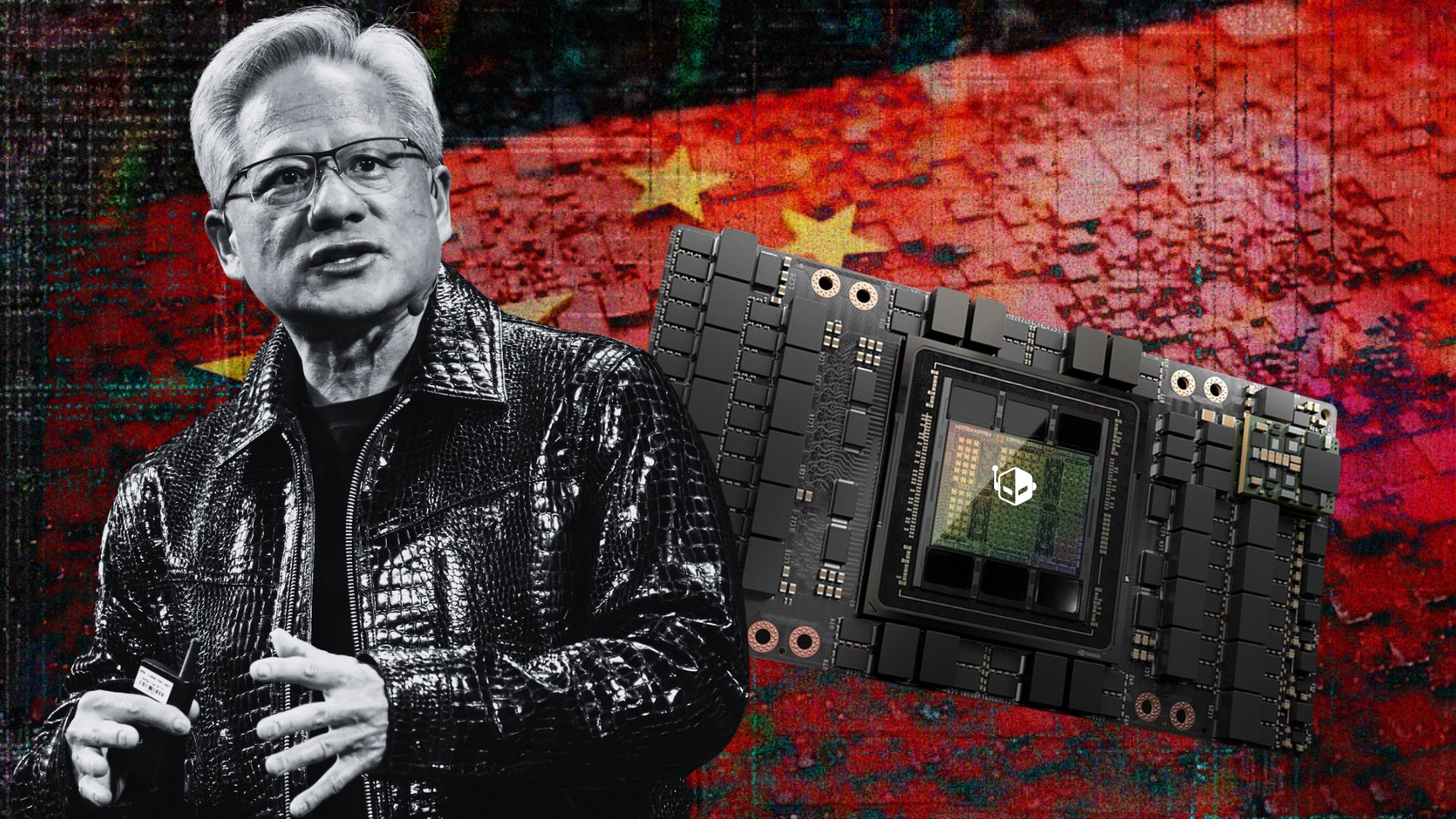
China is reportedly preparing new travel restrictions for AI engineers working at strategically important technology companies, including major firms involved in advanced AI development. At the same time, NVIDIA is expanding its role in the global AI infrastructure boom through new partnerships with leading financial institutions that could help unlock more than $500 billion in capital for AI data centers and GPU-powered computing platforms.
Together, these developments show how quickly the AI race is evolving from a competition over chips and software into a broader battle over talent, financing, energy, and infrastructure.
China Moves to Keep Key AI Talent at Home
China is said to be introducing tighter foreign travel rules for AI engineers employed by companies considered vital to the country’s technology ambitions. The restrictions are expected to require government approval before certain engineers can travel overseas.
The move appears designed to reduce the outflow of technical talent at a time when AI expertise has become one of the world’s most valuable strategic resources. Engineers working on large language models, advanced algorithms, AI chips, cloud infrastructure, and high-performance computing are increasingly central to national competitiveness.
For China, keeping top AI talent inside the country could help protect sensitive knowledge and support domestic innovation. It also reflects growing concern that engineers with critical experience could be recruited by overseas companies or become part of foreign AI ecosystems.
This comes as the United States continues to apply pressure on China’s technology supply chain. One area reportedly under review involves China-made optical transceivers, which are essential components in high-speed data transmission. These devices convert electrical signals into light signals for fiber optic networks, then convert them back into electrical signals at the receiving end.
Optical transceivers play a key role in modern AI data centers, where massive amounts of data must move quickly between servers, GPUs, storage systems, and networking equipment. Any restriction on Chinese-made components could affect AI infrastructure planning and increase costs for companies building large-scale computing clusters.
NVIDIA Pushes Forward With Massive AI Infrastructure Financing Plan
While China focuses on talent retention and domestic AI expansion, NVIDIA is taking another route: helping create a new financing ecosystem for AI infrastructure.
NVIDIA has reportedly signed memorandums of understanding with major global financial institutions, including Apollo, BlackRock, Blackstone, Brookfield, Goldman Sachs, and KKR. The goal is to mobilize more than $500 billion in third-party capital over time to support the buildout of AI infrastructure.
Although full details have not been disclosed, the plan appears to involve debt-based financing for NVIDIA GPUs, data center racks, and related AI computing systems. This could make it easier for hyperscalers, cloud providers, and emerging AI infrastructure companies to purchase and deploy NVIDIA hardware at scale.
One of the most important ideas behind the initiative is the creation of a credit market backed by NVIDIA compute. In simple terms, GPUs and AI server equipment could function as collateral for loans, allowing companies to finance expensive AI deployments without relying entirely on upfront capital.
This could be a major shift for the AI industry. NVIDIA’s high-end GPUs are among the most sought-after assets in technology, and demand continues to outpace supply in many areas. If financial institutions begin treating AI compute as a bankable asset class, it could accelerate the construction of data centers and make large-scale AI projects more accessible to more companies.
It may also reduce some of the financial risk NVIDIA currently faces when working directly with AI cloud providers and infrastructure partners. Instead of relying on complex financing arrangements between NVIDIA and individual companies, major financial firms could provide capital through broader credit platforms.
AI Data Centers Become the New Strategic Battleground
The competition between the US and China is no longer only about who can design the best AI model or manufacture the most advanced chip. Increasingly, the key question is who can build and power the largest AI infrastructure at the lowest cost.
China is already moving aggressively in this area. Large AI data centers are being built in regions such as Inner Mongolia, where vast land availability and abundant solar energy can help reduce electricity costs. Energy is one of the biggest expenses in AI computing, especially for massive GPU clusters that require continuous power and cooling.
By locating AI data centers in areas with cheaper renewable energy, China may be able to lower operating costs and expand computing capacity more efficiently. This approach could give Chinese AI companies a cost advantage, especially as training and running advanced AI models becomes more energy-intensive.
In contrast, some futuristic AI infrastructure ideas, including proposals to place data centers in low-Earth orbit, remain far more expensive and technically complex. While space-based computing may eventually have niche applications, terrestrial data centers powered by low-cost energy remain the more practical path for large-scale AI deployment today.
The Bigger Picture: AI Decoupling Is Accelerating
These developments highlight the accelerating decoupling between the US and China in critical technology sectors. The two countries are increasingly building separate ecosystems around AI chips, engineering talent, data center hardware, financing, and energy infrastructure.
For China, the priority is to retain skilled engineers, reduce dependence on foreign technology, and build cost-efficient AI computing capacity at home. For the United States and its allies, the focus remains on limiting China’s access to advanced components while supporting the growth of Western AI infrastructure.
NVIDIA’s $500 billion AI financing push could become a powerful advantage for the US-led AI ecosystem. If successful, it would bring Wall Street and global private capital deeper into the AI buildout, giving cloud providers and AI startups new ways to fund expensive GPU infrastructure.
At the same time, China’s efforts to protect its talent base and build large renewable-powered data centers show that it is not standing still. The country is looking for ways to compete even under tighter export controls and rising geopolitical pressure.
The result is a fast-moving global AI race where capital, talent, energy, and infrastructure are now just as important as software breakthroughs. As both sides protect their advantages and reduce dependence on each other, the next stage of artificial intelligence development may be shaped as much by policy and financing as by innovation itself.