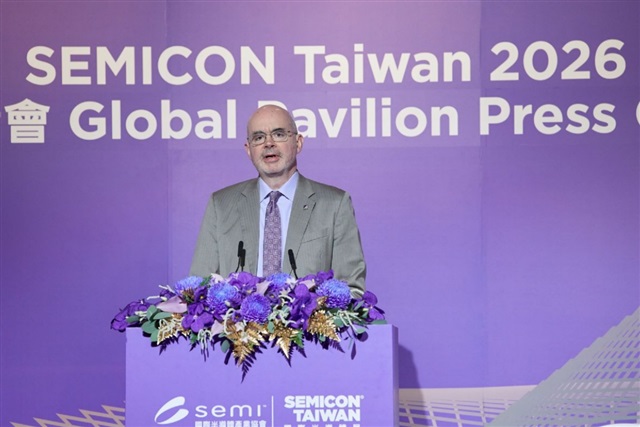
Taiwan’s Semiconductor Industry Expands Global Partnerships in AI, Packaging, and Chip Innovation
Taiwan’s semiconductor sector is entering a new phase of global expansion, moving beyond traditional chip fabrication and strengthening partnerships across the United States, Europe, and Asia. As demand for artificial intelligence, high-performance computing, advanced packaging, and secure digital infrastructure continues to rise, Taiwan is positioning itself as a central force in the future of global technology.
For decades, Taiwan has been known as one of the world’s most important semiconductor manufacturing hubs. Its chip ecosystem supports everything from smartphones and consumer electronics to cloud computing, electric vehicles, industrial automation, and AI data centers. Now, the industry is broadening its international strategy by building deeper cooperation in areas that go far beyond chip production alone.
One of the biggest areas of focus is advanced packaging. As chips become more powerful and complex, the way they are assembled and integrated has become just as important as the manufacturing process itself. Advanced packaging allows multiple components, such as processors, memory, and specialized accelerators, to work together more efficiently. This is especially important for AI applications, where performance, power efficiency, and speed are critical.
Taiwanese semiconductor companies are increasingly working with global partners to develop next-generation packaging technologies that can support the growing needs of AI servers, data centers, and high-performance computing platforms. These partnerships are expected to help improve chip performance while addressing the physical and technical limits of traditional semiconductor scaling.
AI infrastructure is another major area where Taiwan’s role is expanding. The rapid growth of generative AI, machine learning, and cloud-based services has created massive demand for powerful chips and reliable hardware systems. Taiwan’s semiconductor supply chain is deeply connected to this trend, supplying key components that enable advanced computing workloads around the world.
Cooperation with the United States, Europe, and Asian partners is helping Taiwan strengthen its presence in the global AI ecosystem. This includes not only chip manufacturing, but also server hardware, networking components, optical technologies, and system-level integration. As AI continues to reshape industries, Taiwan’s expertise in semiconductors gives it a strategic advantage in supporting the infrastructure behind this transformation.
Research and development is also becoming a larger part of Taiwan’s overseas expansion. Rather than focusing only on production capacity, the industry is investing in collaborative innovation with universities, research institutes, and technology companies in key global markets. These efforts are aimed at accelerating breakthroughs in chip design, materials science, energy efficiency, photonics, and next-generation computing.
Photonics, in particular, is gaining attention as data centers and AI systems require faster and more efficient ways to move information. By combining semiconductor expertise with optical communication technologies, Taiwan’s tech sector could play a larger role in enabling faster connections between chips, servers, and large-scale computing systems.
Talent development remains another important priority. The global semiconductor industry faces a growing need for skilled engineers, researchers, and technical specialists. Taiwan is expanding cooperation with international partners to support education, workforce training, and knowledge exchange. These efforts are designed to build a stronger global talent pipeline and ensure that the semiconductor industry can keep pace with rising demand.
Cybersecurity is also becoming more important as the chip industry becomes more globally connected. Semiconductors are essential to critical infrastructure, defense systems, communications networks, financial services, and healthcare technology. As a result, protecting chip supply chains, design data, and manufacturing systems has become a major concern.
Taiwan’s partnerships increasingly include cybersecurity cooperation to improve resilience across the semiconductor ecosystem. This includes protecting intellectual property, strengthening secure manufacturing practices, and reducing risks linked to supply chain disruptions or cyber threats. As chips become more central to national security and economic stability, cybersecurity will remain a key part of international semiconductor collaboration.
Another important area is the development of international standards. As countries and companies work together on advanced chips, AI hardware, and digital infrastructure, common technical standards are essential. Taiwan’s participation in global standards discussions can help ensure smoother cooperation across markets and improve compatibility between technologies.
The expansion of Taiwan’s semiconductor industry also reflects a broader shift in the global chip landscape. Governments and companies around the world are seeking more resilient supply chains after years of disruption, shortages, and geopolitical uncertainty. Taiwan’s strategy of building stronger international ties allows it to remain a critical player while also supporting more balanced global production and innovation networks.
This does not mean Taiwan is moving away from its core strengths. Instead, the industry is building on its leadership in chip manufacturing while expanding into higher-value areas such as packaging, AI systems, research, cybersecurity, and global technology standards. This broader approach could help Taiwan maintain its competitive edge as the semiconductor market evolves.
The future of the chip industry will depend on more than building new fabrication plants. It will require close cooperation across design, materials, packaging, software, security, talent, and infrastructure. Taiwan’s growing partnerships with the US, Europe, and Asia show how the semiconductor ecosystem is becoming more interconnected and more strategic than ever before.
As artificial intelligence, cloud computing, and advanced digital services continue to grow, Taiwan’s semiconductor industry is likely to remain at the center of global innovation. Its expanding international partnerships signal a future where chip leadership is defined not only by manufacturing capacity, but also by collaboration, resilience, and the ability to support the next generation of intelligent technologies.