China’s National Development and Reform Commission has taken an ambitious step by setting up a new department dedicated to accelerating the country’s low-altitude economy. Targeting significant growth by 2025 and stretching beyond, this initiative is part of Beijing’s strategic aviation reforms. The focus is sharp: revamping airspace management, refining traffic systems, and bolstering low-altitude infrastructure.
Reports from various sources suggest that this new department is geared to create robust strategies, implement long-term plans, and draft policies that tackle the pressing challenges within the low-altitude sector. This development is timely, given the department’s active engagement in seminars that address smart low-altitude networks, infrastructure planning, and collaborative approaches alongside key ministries and industry experts.
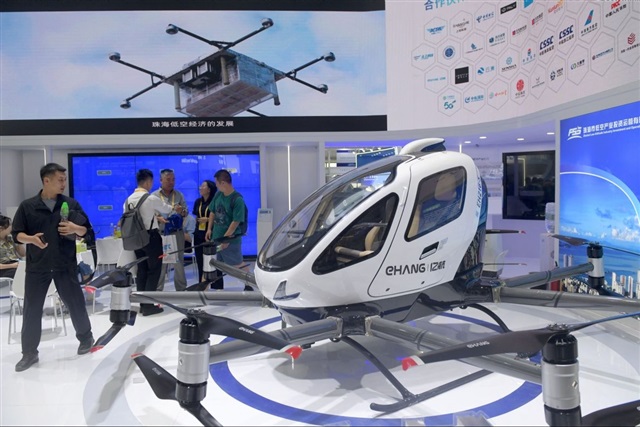
The low-altitude economy is vast, encompassing aerial activities below 1,000 meters, with specific allowances in some areas up to 3,000 meters. This includes innovative uses like drone transportation, passenger transport services, and electric vertical takeoff and landing (eVTOL) uses such as air taxis, agricultural operations, and health monitoring. This emerging sector is revolutionizing how civil aviation operates, weaving significant impacts on logistics costs, urban transport solutions, emergency deliveries, and reaching remote logistical networks.
President Xi Jinping’s vision of creating “new productive forces” through technological innovation and economic self-reliance seems to be reflected clearly in this initiative. Reports indicate that this sector already surpassed a market value of CNY500 billion (approximately US$68.2 billion) in 2023, with projections to exceed CNY2 trillion by 2030. Despite its promise, the industry confronts hurdles due to immature business models, making the forthcoming years crucial.
Policy support and innovative strides are poised to position the low-altitude economy as a pillar in China’s high-quality growth and industry upgrades. An example of this commitment to development was evident on December 20, 2024, when Shanghai launched a major investment initiative. The Shanghai Low-Altitude Economy Industry Development Co., Ltd., with a capital infusion of CNY900 million, has attracted key stakeholders spanning airport operations to communications.
Meanwhile, the Chinese automotive sector is not trailing behind, revving up efforts in airborne vehicle research and development. Noteworthy advancements include GAC Group’s unveiling of its Govy AirJet prototype and Changan Automobile’s collaboration with UAV leader EHang Intelligent in the flying car arena.
Recognizing a critical need for skills, the education sector has responded swiftly. Institutions like the Hong Kong Polytechnic University are designing advanced programs related to aircraft hardware and AI-integrated software. Across China, similar courses are gaining traction as vocational schools address the high demand for drone operation training.
In the broader industry landscape, analyzing platforms hint at a promising future driven by robust policy support, burgeoning growth prospects, and a surge in innovation. Segments like drones, eVTOLs, and smart low-altitude networks are ripe with potential, bolstered by China’s leadership in drone production and its global adoption for varied uses.
However, significant challenges lurk. Experts highlight critical gaps, such as a scarcity of general aviation airports and drone takeoff facilities, limitations of airspace management, and sparse urban three-dimensional transport infrastructure—all formidable barriers to immediate progress.
Moreover, while the low-altitude economy’s innovations could revolutionize delivery and logistics, they also pose risks to traditional job sectors, potentially displacing workers without providing equivalent economic benefits.
Another substantial hurdle is airspace regulation, predominantly under military control, which significantly restricts the potential breadth of the low-altitude economy. Future industry expansion heavily relies on the government’s stance concerning airspace accessibility, underscoring a crucial interplay between innovation and regulation.