CATL Targets EV Range Anxiety With Sodium-Ion Batteries and Rapid Battery Swapping
CATL is preparing a major push to make sodium-ion batteries more practical for electric vehicles by combining them with a fast-growing battery swap network. The strategy is designed to solve the biggest concern surrounding sodium-ion technology: lower energy density, which can limit driving range compared with some lithium-based batteries.
At an industry event in Shanghai, CATL chairman Robin Zeng explained that sodium-ion battery packs are already well suited for everyday city driving. Most urban commuters do not need extreme range for daily trips, but longer weekend journeys can still create range anxiety. CATL’s answer is simple: let drivers swap a depleted battery for a charged one in minutes instead of waiting at a charging station.
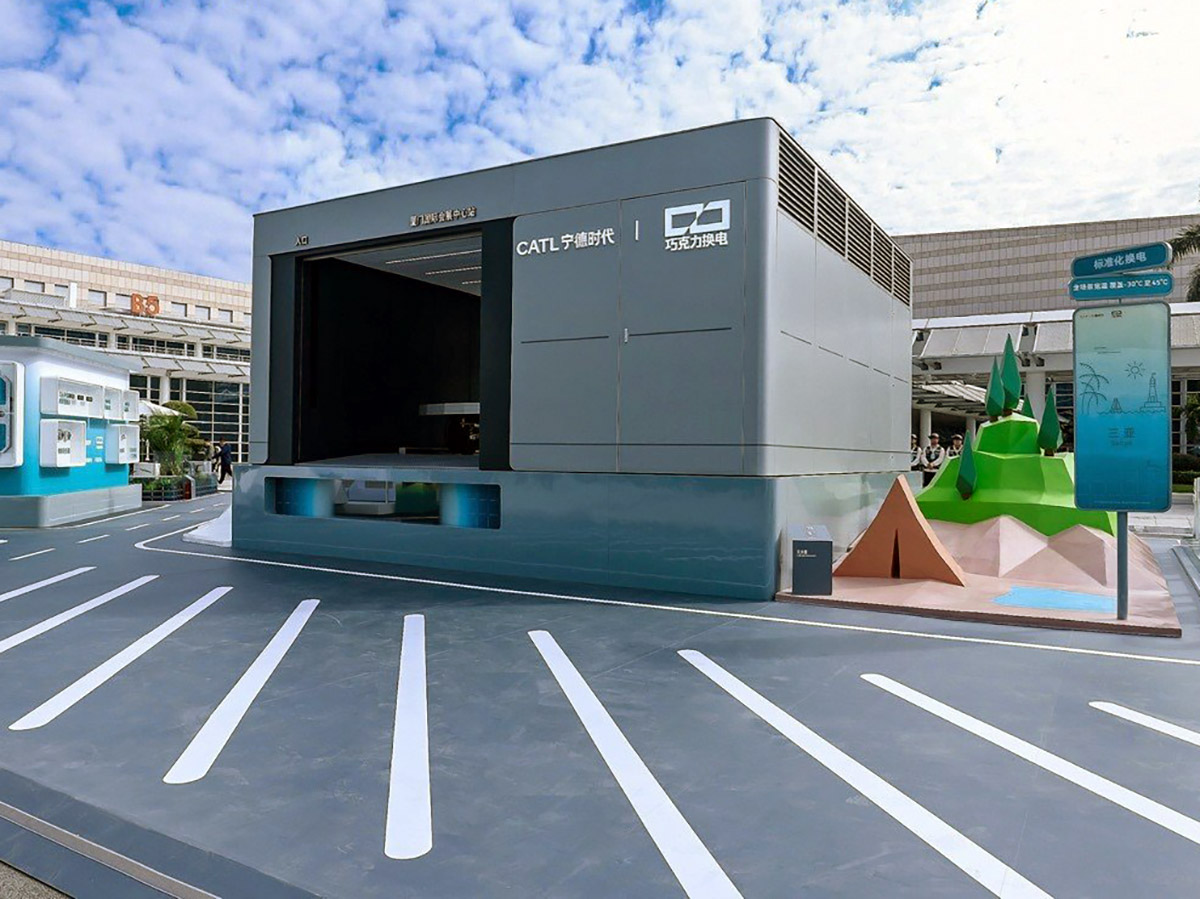
The company is building out its Choco battery swap network and plans to lease batteries to customers through the system. Zeng said CATL needs to expand the network both in major cities and along highways to make battery swapping more convenient for EV owners. The company’s swap stations are already operating in roughly 200 Chinese cities, and CATL aims to have more than 3,000 passenger car battery swap stations across China by the end of 2026.
That would mark a major expansion. CATL’s Choco-Swap network had 1,020 stations in 45 cities as of December 2025, meaning the company is targeting roughly three times that number within about a year. Given CATL’s track record in scaling battery production and infrastructure, the goal appears ambitious but realistic.
Sodium-ion batteries offer several major advantages that could make them important in the next phase of electric vehicle adoption. They are less dependent on lithium, helping reduce exposure to volatile lithium prices. They are also considered safer because they do not rely on the same flammable electrolyte materials commonly associated with lithium-ion batteries.
Another important benefit is cold-weather performance. CATL says its sodium-ion cells can retain more than 90% of their capacity at -40°C, making them especially appealing in regions where low temperatures can sharply reduce EV range.
Cost is another reason automakers are paying attention. Sodium-ion batteries are approaching cost parity with LFP batteries, one of the most widely used battery chemistries in affordable electric vehicles. If production scales successfully, sodium-ion technology could become a strong option for lower-cost EVs, city cars, and fleet vehicles.
The main drawback remains energy density. CATL’s sodium-ion car developed with Changan was announced with cells reaching up to 175 Wh/kg, offering more than 400 km, or around 249 miles, of driving range. That is enough for many drivers, especially in urban settings, but still below what some buyers expect from long-range EVs.
This is where battery swapping becomes critical. If drivers can exchange a low battery for a fully charged one in only a few minutes, the need for extremely high energy density becomes less urgent. A smaller or lower-density battery can still be practical if the supporting infrastructure is widely available.
CATL’s energy services division has already indicated plans to introduce Naxtra sodium-ion battery packs across the swap network starting this year. This could help accelerate adoption, increase production volume, and gradually bring down manufacturing costs.
For now, the rollout will begin on a modest scale. CATL expects around 10,000 to 20,000 electric vehicles to use its sodium-ion batteries in 2026. However, the company’s long-term ambitions are much larger. CATL has announced a $735 million investment to build 40 GWh of sodium-ion battery production capacity, signaling strong confidence that demand will rise as the swap station network expands.
If CATL succeeds, sodium-ion batteries could become a practical alternative for many EV drivers, especially those who prioritize affordability, safety, cold-weather reliability, and convenient battery swapping over maximum range. The combination of sodium-ion battery technology and a dense swap network could help reduce range anxiety and make electric vehicles more accessible to a wider market.