In an impressive stride towards revolutionizing the heavy-duty transportation industry, CATL has unveiled its latest range of commercial electric vehicle batteries, primed to tackle the pressing concerns of vehicle operators regarding cost efficiency, longevity, and range versatility. With their LFP (Lithium Iron Phosphate) technology, the newly launched Tectrans series promises a remarkable 15-year lifespan with minimal degradation – a standout feature, with CATL defining significant degradation as dipping below 85% of the original capacity. This is a marked improvement compared to existing battery packs, which often warrant service only when performance falls below 70%.
These newly-introduced batteries, boasting an ultrafast 4C charging rate that recharges them in a mere 15 minutes, present a significant cost-saving proposition. CATL has confidently asserted that for an average truck covering 125,000 miles annually over eight years, the Tectrans packs can save over $130,000 compared to traditional internal combustion engine vehicles. Such savings are largely attributed to the impressive efficiency and longevity of the batteries.
The lineup kicks off with core Tectrans packs offering a solid 300-mile range, supporting up to 750,000 miles over their lifetime. A step further in the range series is a long-distance variant, touting an incredible capacity to endure more than 1,800,000 miles. This version significantly undercuts operating costs compared to diesel alternatives, ensuring these electric trucks are more economical in the long run.
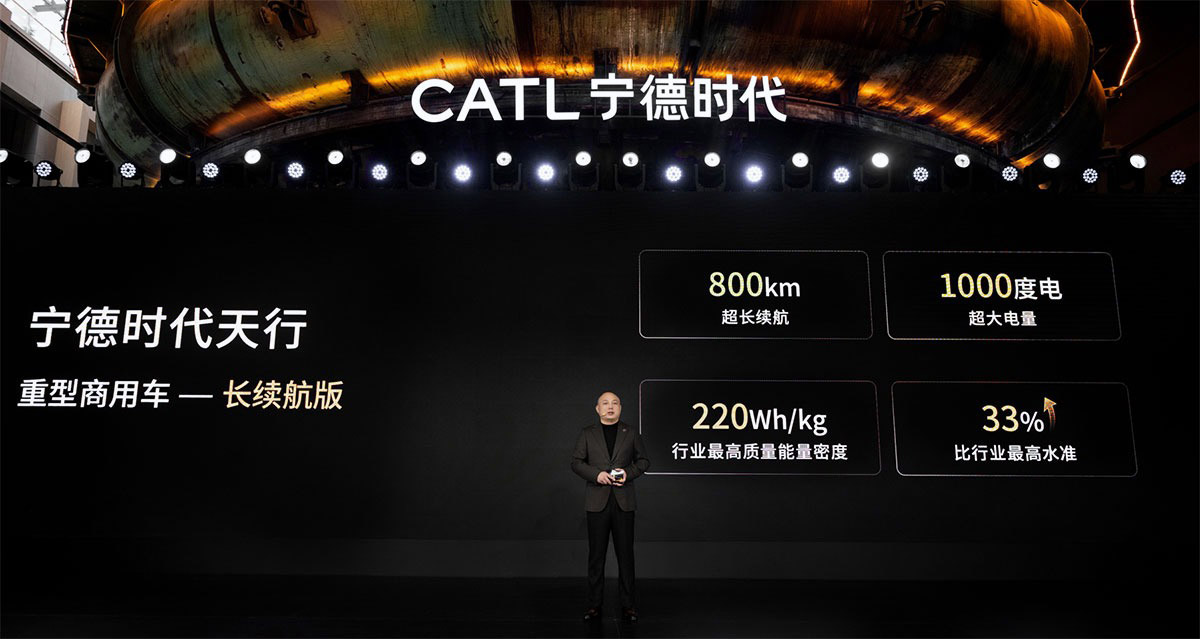
At the pinnacle of the Tectrans offerings is a battery pack providing an extended 500-mile range, exhibiting a remarkable energy density of 220Wh/kg. CATL proudly claims this to be the highest energy density available within the industry for heavy-duty electric vehicles, setting a new benchmark for commercial vehicle batteries prioritizing both endurance and performance.
Importantly, the Tectrans series is not just a futuristic concept far from realization. CATL unveiled extensive specifications as early as September, and the batteries have swiftly progressed to mass production. Already, some 20 leading heavy-duty vehicle manufacturers worldwide have integrated these cutting-edge energy solutions, signaling a transformative leap in sustainable transportation technology.


