CATL, the world’s leading battery manufacturer, has made a bold move towards revolutionizing the electric vehicle (EV) industry with their new standardized station battery packs. This innovation promises a seamless experience for EV users, comparable in convenience to traditional gas station refueling.
CEO Robin Zeng envisions a future where a significant portion of EV recharging is done through battery swaps, in addition to existing home and public charging options. The benefits of swappable batteries are clear: a quick exchange that takes only minutes, eliminating the need to wait for a charge that could last half an hour or longer. However, the key to widespread adoption of this model is the standardization of battery packs, a goal CATL is ready to tackle.
CATL introduces the #20 and #25 battery packs, named in a way that echoes fuel octane ratings like #95 or #98. These packs are available in various capacities: the #20 offers 42 kWh LFP and 52 kWh nickel versions, while the #25 provides 56 kWh LFP and 70 kWh ternary options. Rental plans start at an affordable $50 per month for 3,000 km (approximately 1,864 miles) and $60 for unlimited mileage.
Ambitiously, CATL plans to implement these battery packs in 10,000 EV battery swap stations soon, with a vision to expand to 30,000 stations as part of their battery-as-a-service (BaaS) initiative.
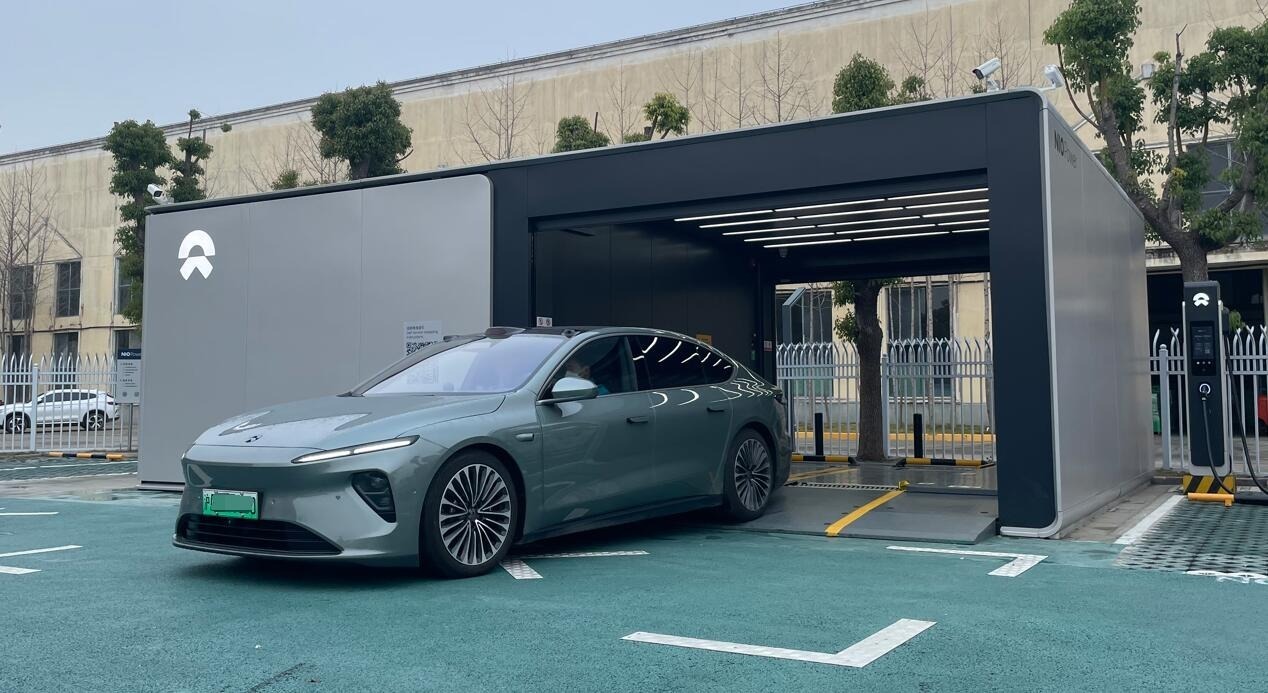
NIO, a frontrunner in EV battery swapping, has already embraced this technology, enabling its vehicles to autonomously navigate to swap stations, replace their batteries in under three minutes, and continue their journey. NIO utilizes CATL-produced packs with impressive warranties, aiming to push EV battery warranties to 15 years and ensuring 85% capacity retention, making electric vehicles more appealing in the used car market.
CATL has acknowledged the potential of this proposition, promoting extended EV warranties and the standardization of swap station batteries. Their standardized packs are engineered to leverage future advancements in battery technology.
With CATL’s commitment to innovation and standardization, the electric vehicle ecosystem is poised for a transformation, making EV ownership more accessible and convenient than ever before.