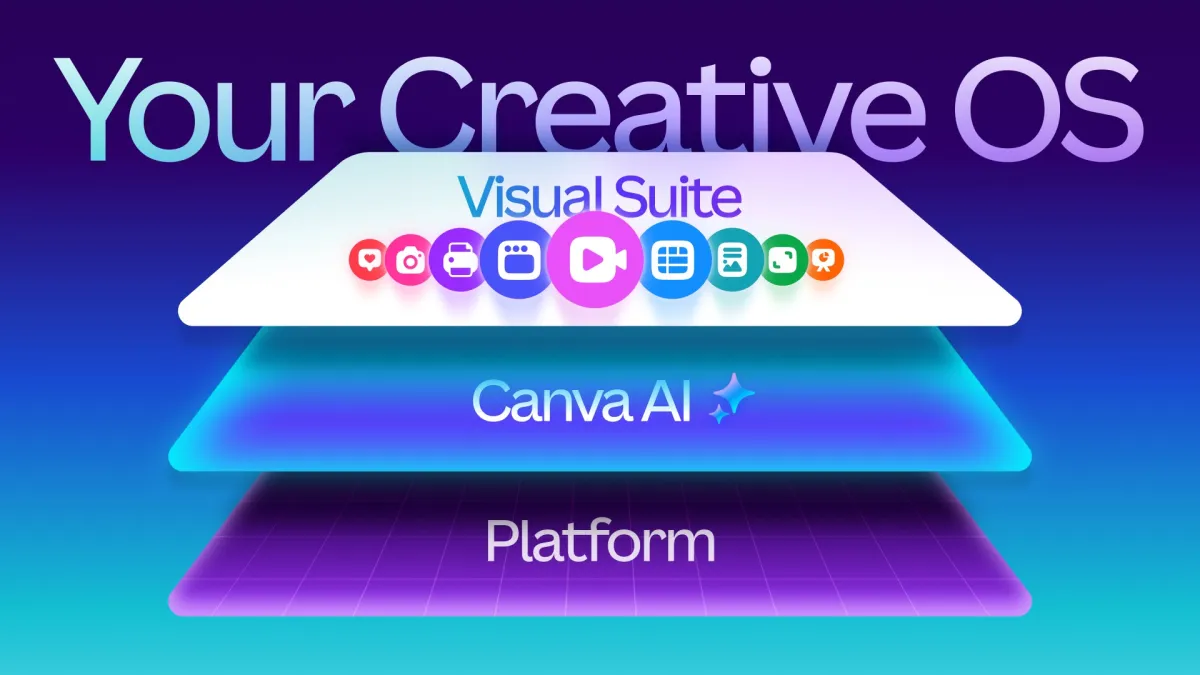
Canva just took a big leap in AI-powered design with a new foundational model built to generate fully editable designs instead of flat images. Trained on Canva’s own design elements, the model understands layers and objects, so creators can tweak text, shapes, and components directly. It works across key formats—social media posts, presentations, whiteboards, and websites—so teams can move from a prompt to a polished, customizable layout without starting from scratch.
This move goes beyond diffusion-based image generators. Canva’s approach combines the speed of prompting with hands-on editing, reflecting how most people actually design: get a strong first draft quickly, then iterate visually with precision.
AI is now infused across the platform through Canva AI, the company’s chat-style assistant that’s available throughout the editor, including the design and elements tabs. You can summon the assistant in comments to suggest copy, visuals, or layout ideas during real-time collaboration. New creative powers include generating 3D objects and copying the art style of any design to keep projects consistent without extra effort.
Canva is also connecting its spreadsheet product with its mini‑app builder. Using a simple coding tool for sheets, teams can turn data into reusable widgets and dashboards, making it easy to extract repeatable insights directly inside designs, presentations, and reports.
On the marketing side, Canva has rolled out Canva Grow, a full‑stack marketing platform that blends creation and measurement. Powered in part by the company’s acquisition of ad analytics startup MagicBrief, Canva Grow uses AI to help produce assets, analyze performance, and even publish ads directly to platforms like Meta—all from one place.
Beyond AI, Canva introduced several new products and upgrades:
– Forms: A built‑in forms solution for collecting inputs from clients, teammates, or audiences—an easy alternative to standalone tools like Google Forms.
– Email design: Create branded email templates and layouts for campaigns, announcements, or package tracking updates while keeping everything on-brand.
– Affinity integration: After acquiring pro design suite Affinity last year, Canva is making Affinity free forever for users. The Affinity interface is being redesigned to unify vector, pixel, and layout workflows in one place, and it now integrates tightly with Canva. Designers can create complex objects in Affinity, move them seamlessly into Canva, and even use Canva AI to generate images and designs within Affinity.
Taken together, these updates position Canva as an end‑to‑end creative and marketing platform. Whether you’re building a presentation, designing an ad, crafting a website, or managing brand assets, the new AI design model, Canva AI assistant, connected data tools, and pro‑grade Affinity integration make it faster to go from idea to finished work—without breaking your creative flow.