The 346 GW Question: Could Local Resistance Slow America’s AI Data Center Boom?
America’s artificial intelligence race is no longer just about chips, software, or cloud platforms. It is increasingly about land, electricity, water, and whether local communities are willing to host the massive data centers needed to power the next generation of AI.
As AI tools become more advanced, demand for computing power is rising at a historic pace. Behind every chatbot, image generator, business automation tool, and AI-powered search feature are rows of servers running around the clock. Those servers need enormous amounts of electricity, and that has turned data centers into one of the most important infrastructure debates in the United States.
The big question now is whether public pushback against new data center projects could slow America’s AI buildout.
Why data centers are suddenly a national issue
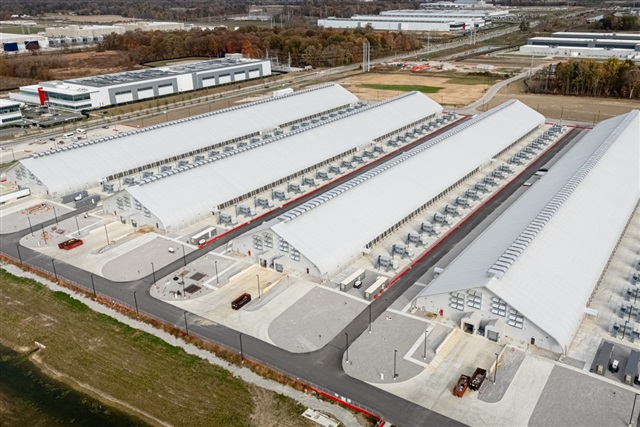
For years, data centers were seen as quiet, low-profile facilities that supported the internet economy. Today, they are becoming some of the most power-hungry developments in the country.
AI workloads require far more computing capacity than traditional web hosting or cloud storage. Training and running large AI models can demand huge clusters of high-performance chips, advanced cooling systems, backup power, and continuous grid access. As a result, developers are racing to build new facilities near reliable energy sources, fiber connections, and available land.
That rush is creating tension in many communities.
Residents in several regions have raised concerns over electricity demand, water use, noise, land development, and the impact on local utility bills. Some voters and local officials are beginning to question whether the economic benefits of data centers are worth the strain they may place on public infrastructure.
The 346 GW challenge
The phrase “346 GW question” reflects the scale of the energy challenge tied to America’s digital expansion. Gigawatts are used to measure large-scale power demand, and when discussions reach the hundreds of gigawatts, the issue moves far beyond ordinary real estate development.
If AI data centers continue expanding at the current pace, the U.S. power grid may need major upgrades. That includes new generation capacity, transmission lines, substations, battery storage, and potentially more renewable and nuclear energy projects.
The challenge is not only producing enough electricity. It is also delivering that electricity to the right places at the right time.
Many of the most attractive locations for data centers are already facing grid congestion. In some markets, utilities have warned that new large-scale power users may have to wait years for grid connections. That delay could affect AI companies, cloud providers, chipmakers, and any business depending on advanced computing capacity.
Why communities are voting against some projects
Opposition to data centers is not always opposition to technology. In many cases, it is a reaction to how quickly these projects are being proposed and how little residents feel they know about the long-term impact.
Common concerns include:
Higher electricity demand that could pressure local grids
Potential increases in utility costs for households
Heavy water use for cooling in drought-prone areas
Noise from cooling equipment and backup generators
Large buildings changing the character of rural or suburban areas
Limited permanent job creation after construction ends
Tax incentives that some residents believe favor large corporations
These concerns are especially strong in communities where data center development appears to be moving faster than public planning. When residents feel excluded from the process, opposition can grow quickly.
What supporters say
Supporters of data center expansion argue that these facilities are essential for economic growth, national competitiveness, and technological leadership.
AI is expected to reshape industries including healthcare, finance, manufacturing, education, defense, transportation, and scientific research. Without enough computing infrastructure, the U.S. could risk falling behind in one of the most important technology races of the century.
Data centers can also bring benefits to local economies. They may generate construction jobs, increase tax revenue, fund public services, and attract related technology investment. In some areas, they can become anchor projects that encourage broader infrastructure upgrades.
Supporters also argue that newer data centers are becoming more efficient. Many operators are investing in advanced cooling, renewable energy contracts, energy storage, and smarter power management systems to reduce environmental impact.
Still, efficiency gains may not fully offset the speed of AI-driven demand growth.
The power grid is becoming the bottleneck
The future of AI may depend as much on energy policy as on technology innovation.
The U.S. grid was not built for a sudden wave of massive, always-on electricity users. Many transmission systems are aging, and new power projects often face long permitting timelines. Even when energy generation is available, moving that power to data center hubs can be difficult.
This creates a bottleneck for AI expansion. Companies may have the money, chips, and demand to build, but without grid access, projects can stall.
That is why data center developers are increasingly exploring alternative energy strategies. Some are looking at on-site power generation, small modular nuclear reactors, natural gas plants, solar farms, wind power, battery storage, and direct deals with utilities.
The result could be a major transformation of America’s energy landscape, driven in part by AI.
Local votes could shape the pace of AI growth
City councils, county boards, zoning commissions, and local voters may become unexpected power brokers in the AI boom.
While national leaders talk about winning the AI race, many of the actual decisions happen at the local level. A proposed data center may need zoning approval, environmental review, utility agreements, road access, and community support.
If more communities reject or delay these projects, AI infrastructure growth could slow. Companies may be forced to shift projects to friendlier states or regions with more available power. This could create a new map of AI development, where energy access and political approval matter as much as proximity to major tech hubs.
States that can offer fast permitting, abundant electricity, clear regulations, and community buy-in may gain an advantage. Regions that cannot resolve local resistance may lose out on investment.
The search for a better deal
The debate does not have to be a simple choice between AI progress and community protection. Many residents are not asking to stop development entirely. They want stronger guarantees.
Communities may push for agreements that include:
Transparent energy and water use reporting
Investments in local grid upgrades
Noise limits and environmental safeguards
Fair tax contributions
Local hiring commitments
Renewable energy requirements
Protections against higher residential utility bills
Better site planning away from homes and sensitive land
If developers want public support, they may need to show that data centers will benefit the community rather than simply consume local resources.
This could become the new standard for AI infrastructure: not just building faster, but building with greater accountability.
AI’s future depends on infrastructure trust
The AI revolution is often described in terms of algorithms and breakthroughs, but its success will depend on physical infrastructure. Servers need buildings. Buildings need power. Power requires public approval, investment, and planning.
The 346 GW question is really about whether America can scale its energy and data infrastructure fast enough to match its AI ambitions.
If policymakers, utilities, developers, and communities work together, the U.S. could build a stronger digital foundation while upgrading the grid for the future. But if local opposition grows and energy planning falls behind, the AI boom may face delays that technology alone cannot solve.
The next phase of artificial intelligence will not be decided only in research labs or corporate boardrooms. It may also be decided in town halls, zoning meetings, and local elections across the country.